
 E-Paper



Letters, lore & a Yamaha RX100: Capt Vikram Batra’s memories live on
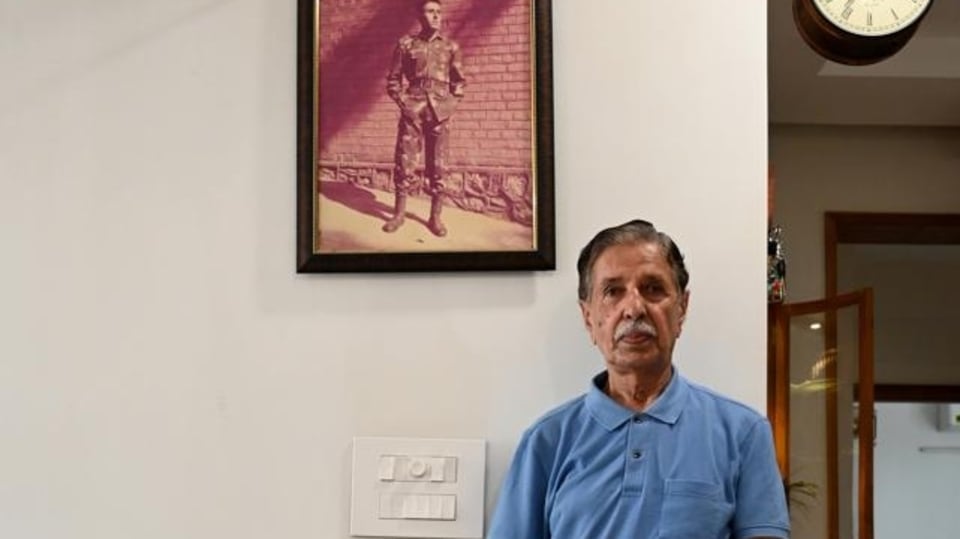
Girdhari Lal Batra, father of Captain Vikram Batra, holds on to his son’s Yamaha RX100 bike and letters

 Prefer HTon Google


{25 years of Kargil War}
Covered under a chequered table cloth in an unassuming parking lot stands a Yamaha RX100. All the rage in the ’80s and early ’90s, the bike is seldom taken out for a ride but the owners hold it dear.
Just looking at it takes GL Batra, Kargil martyr and Param Vir Chakra (PVC) awardee Captain Vikram Batra’s father, down memory lane to simpler times — an ordinary Punjabi Hindu family of educators Girdhari Lal Batra and Kamal Kanta Batra, their twin sons Vikram and Vikas and two daughters Seema and Nutan living in the small hill town of Palampur.
His elder son Vikram, who he remembers as a jolly yet disciplined youngster, moved to Chandigarh to pursue a science degree. At DAV College, Sector 10, he enrolled with the National Cadets Corps and thus began his storied journey.
Tales from the past
Vikram, as his father recalls, had a zeal for any task he would pick up. “Be it karate, table tennis or debates in school, or his role as an NCC cadet in college, he gave it his all,” GL Batra, still fit as a fiddle, says as he walks up the winding stretch of stairs to his flat.
After being adjudged the best NCC cadet in North India and being selected for the Republic Day parade in New Delhi, Vikram contemplated a job in the Merchant Navy.
“He had a change of heart at the last minute, told his mother ‘I want to make something of myself”,” his father recalls, adding that his son and his friends decided to join the army after a night of contemplation at the college hostel.
The tale of valour that followed is well-documented. The 13th battalion of the Jammu and Kashmir Rifles’ Delta Company captured Point 5140, pushing back Pakistan’s forces under the leadership of Vikram Batra, who rose to the rank of Captain.
“He always had leadership qualities. Even when he was young, his friends would follow his lead often. He was also brave. I remember once he jumped out of the school bus after a girl fell out due to a door malfunction,” his father recalls.
The Captain hoisted the Tricolour at Point 5140 with the now-famous “Yeh dil maange more (The heart wants more)” chant before volunteering for another successful mission — one to capture Point 4875. The offensive saw him kill five Pakistan soldiers in a close-quarter battle, destroy a machine gun nest and help the Indian troops gain a massive strategic advantage at a crucial juncture.
It was here that the Captain was struck by an enemy sniper in the chest during an evacuation op for an injured member of his company.
“Shortly before the tension began in Kargil, Vikram was home. He would often go out for coffee to Joy restaurant with his friends. Once, his friend Amit told him to be careful in view of the imminent danger. Vikram’s instant response was ‘Either I’ll hoist the Tricolour high, or come home wrapped in it’. He did both and I’m immensely proud,” GL Batra says, recalling the moment when the then chief of army staff General VP Malik called up Vikram to congratulate him on the Peak 5140 triumph.
Trinkets to hold on to
Over the years, the family has found ways to keep his memory alive. While brother Vikas takes the old RX100 for an occasional spin, his father revisits the letters he wrote to them from the warfront.
“He last wrote to us on July 5, right before his mission, asking us to pray for his success,” his father says, recalling the last unusually long phone call where he enquired about the well-being of all his siblings and friends a few days prior to the letter.
GL Batra, who finds solace in the Bhagavad Gita, would often climb the stairs of the museum that the family set up in Palampur for a moment of quiet reflection.
After his wife passed away earlier this year, he moved to Chandigarh. He and the rest of the family now hold on to the odd gifts — a blazer sewn out of the fabric that his son got him, shawls that he brought home for his mother — to remember him by.
“Even though no one uses the bike any longer, I couldn’t bring myself to sell it. It reminds us of Vikram,” his father says of the RX100, pointing at the sepia-toned picture of his son donning the army uniform in the living room, before slipping into another story from his childhood.


