
 E-Paper



Ludhiana: Vet varsity experts hail farmers in reducing paddy straw burning
Director of extension education, RS Grewal, highlighted the problems of burning paddy straw in daily life, not only to the public but also to animals


Guru Angad Dev Veterinary and Animal Sciences University (GADVASU) organised a stakeholders’ meet on Crop Residue Management (CRM) on Friday. The deliberations focused on sustainable strategies for managing crop residue, reducing stubble burning, and promoting environmentally friendly farming practices.
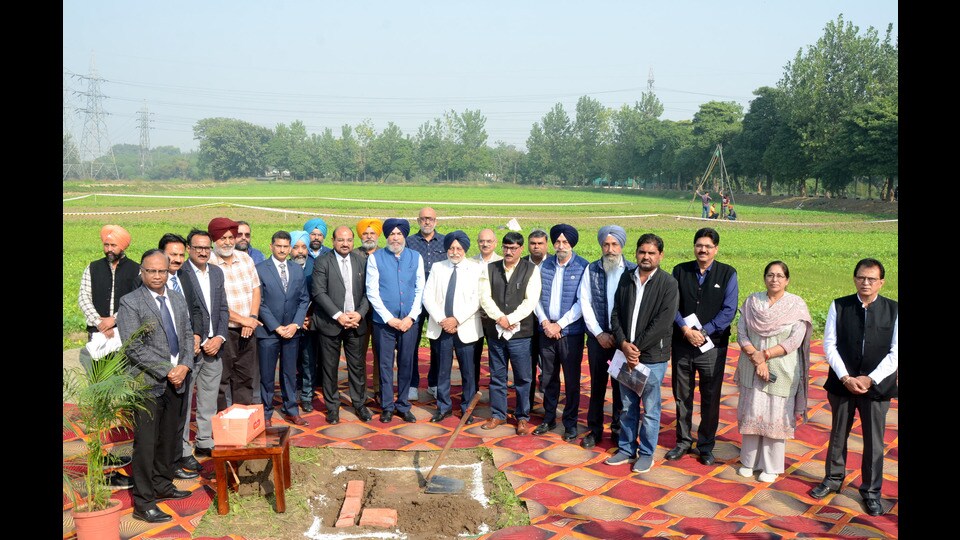
The meeting was chaired by director general, Indian Council of Agricultural Research (ICAR), ML Jat, and vice-chancellor, JPS Gill. This event was attended by farmers, researchers, extension experts, and representatives from various government and non-government agencies.
Director of extension education, RS Grewal, highlighted the problems of burning paddy straw in daily life, not only to the public but also to animals. Parvender Sheoran, director, ATARI Zone-I, ICAR, appreciated the farmers of the state for reducing the fire incidents. He said that there is a reduction of approximately 40 per cent in incidences of farm fires compared to last year, and overall, there is a reduction of 98 per cent in farm fires in Punjab since 2020.
Farmers who were following CRM practices for the last decade also raised some concerns regarding the implementation of CRM. Timely availability of implements, subsidy not uniform, frequent changes in machine design and cost, overpriced machinery, discouragement to ex-situ management and strengthening of local cooperative societies were some of the key issues.
Dr JPS Gill informed the stakeholders that in the university dairy farm, paddy straw is being used as feed in place of wheat straw for the last two-three years with good production results.
Foundation stone laid for international hostel
ML Jat also laid the foundation stone for a state-of-the-art International Hostel in the university campus on Friday. The proposed hostel will cater to the accommodation and academic needs of foreign students and scholars and strengthen the university’s global academic outreach and collaborative initiatives.
The ICAR will provide financial assistance for the construction of this new hostel. The two-storey building of the hostel will have 20 rooms for the accommodation of 40 guests, which will be provided with all modern facilities. A recreation lobby will also be constructed for the rejuvenation of the guests.
V-C JPS Gill highlighted the university’s commitment to providing world-class facilities to international students while fostering multicultural exchange and academic excellence. He emphasised that the new hostel will mark another milestone in varsity’s journey toward becoming a globally recognised institution in veterinary and animal sciences.


