
 E-Paper



Meticulous plan in place to boost voter turnout
Srinagar Lok Sabha seat sees record 39 nominations and 1.50 lakh new voters. Efforts to increase voter turnout include SVEEP plans and focus on youth and marginalized groups.


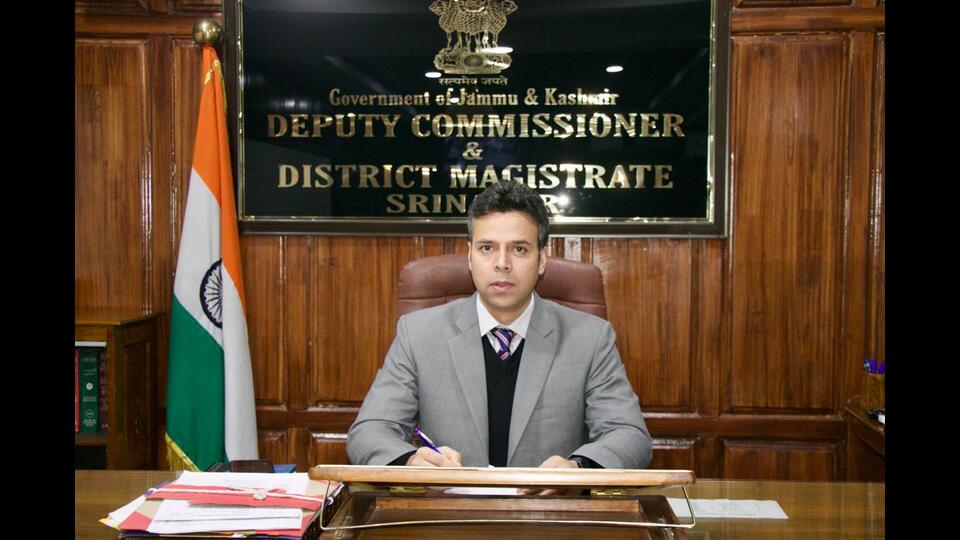
As Srinagar Lok Sabha seat will go for polls on Monday, Srinagar returning officer Dr Bilal Mohi-ud-Din in an interview with Mir Ehsan said record number of 39 nomination papers were filed and this time 1.50 lakh new voters have been added in the parliamentary seat after fresh delimitation. Election rallies, voter awareness campaigns have brought back democratic fervour to the Valley post the abrogation of the Article 370. Here are excerpts.
Srinagar Lok Sabha seat has witnessed a low voting percentage in past few decades. What efforts are you making to increase voter turnout?
Historically, we have witnessed lower voting percentages in the constituency, particularly in the city. In 2009 and 2014, a voter turnout of nearly 25% followed by a considerable drop, with a single-digit voter turnout percentage in the 2017 bye-election and about 14.43% in the 2019 general election, was witnessed. With a view to enhance the voting percentage we devised a special SVEEP plan meticulously drawn from previous electoral data. Inhibitive demographic and social pockets were identified and micro sub-plans were formulated to address the limiting factors. Our major focus has been youth, new voters, women and marginalised sections of the society.
Compared to previous years, Srinagar is witnessing calm and negligible militancy incidents. Do we still have sensitive and hypersensitive polling stations in the district?
It is a matter of great pride that we have had negligible incidents both in the city and the Valley. However, based on ECI’s parameters on vulnerability mapping, all the polling stations in the constituency are critical. Notwithstanding that, the situation on the ground is very calm and affirming. Law and order and security scenario has improved.
What’s the number of first-time voters in Srinagar, and how important do you think the younger people should vote?
First-time voters are not only restricted to young voters. After the delimitation, we have added nearly 1.5 lakh new voters. Out of these, almost 50,000 have just completed 18 years of age. Apart from that, we have also increased the Elector-Population ratio from 47% to 58% post delimitation which is a direct outcome of the SVEEP activities. In the past, there have been complaints about the clubbing of several polling booths and the heavy presence of forces around polling stations. There is no question of clubbing polling stations this time. We have 2,135 polling stations spread across 1,323 locations across the district.
Is the number of contesting candidates more in Srinagar this time as compared to the 2019 and 2014 elections?
We had 12 contesting candidates in the 2019 LS polls and 14 in the 2014 elections and nine in the 2017 by-polls. This time we have received a record 39 nominations which is the highest so far for this constituency. After withdrawals and rejections, we have 24 contesting candidates.
This time we have been witnessing big rallies of political parties even at the city centre Lal Chowk. Why are political parties showing more enthusiasm this time?
After the abrogation of Article 370, there has been a significant change in the governance and developmental scenario. Generally, law and order and security issues have improved. This led to the creation of safer spaces for all stakeholders including political parties and other candidates to express themselves in a free and fair atmosphere.
How many migrant pandits are registered as voters in Srinagar, it has been seen as very abysmal voting among the community?
In Srinagar district, we have more than 40,000 registered migrant electors. This year more than 25 polling stations set up in Jammu, Udhampur & Delhi have been exclusively earmarked for migrant electors to exercise their franchise. Additionally, postal ballot facility is also available.
How successful was the SVEEP campaign in Srinagar?
We had a very successful SVEEP campaign all across the city including the peripheries. In the last month, specific and targeted SVEEP activities were organised in almost all prominent public places and institutions, customised to appeal to the demographic/social group most likely associated with them. Youth, women and other marginalised social groups formed our target base to ensure an inclusive electorate. Social media influencers, young achievers, local artists enjoying considerable social capital were engaged to motivate the electorate. Major events including Mega Shikara rally at Dal Lake and Jashn-e-Jugalbandhi at Polo View were organised.
What is the government doing this time to get more and more employees to vote?
We have postal ballot and Election Duty Certificate (EDC) facility for the employees of essential services and those deployed on election duty. The employees on election duty in the same constituency can take advantage of the EDC facility and vote in the polling booth where they are deployed. Postal Voting Centres (PVC) on the 7th, 8th and 9th of May have been established across all the 5 districts of the parliamentary constituency to facilitate government employees to cast their vote through postal ballots.
What steps are being taken to address any logistical challenges or infrastructure limitations that may hinder voter turnout in some regions of the constituency, especially during rains?
We have ensured that Assured Minimum Facilities (AMF) are in place in all the polling stations. In this election we have more than 16 model polling stations, 8 Pink polling stations, 8 youth, 8 Green and 4 Unique polling stations across all assembly constituencies in the Srinagar. To make the process inclusive and accessible, the ECI has, for the first time in the history of the LS polls, extended its ‘vote-from-home’ facility to Persons with Disabilities (PwD) and senior citizens aged 85 and above.


