
 E-Paper



Ministry of Jal Shakti inspects newly established STP in Jamalpur
The delegation of ministry of Jal Shakti also inspected the 50 mld common effluent treatment plant (CETP) established for treating the waste of dyeing industry falling under Tajpur road dyeing industry cluster


A two-member delegation of Jal Shakti Ministry visited the city on Tuesday to inspect the progress of the ongoing works being undertaken under the ₹650 crore project to clean Buddha Nullah.
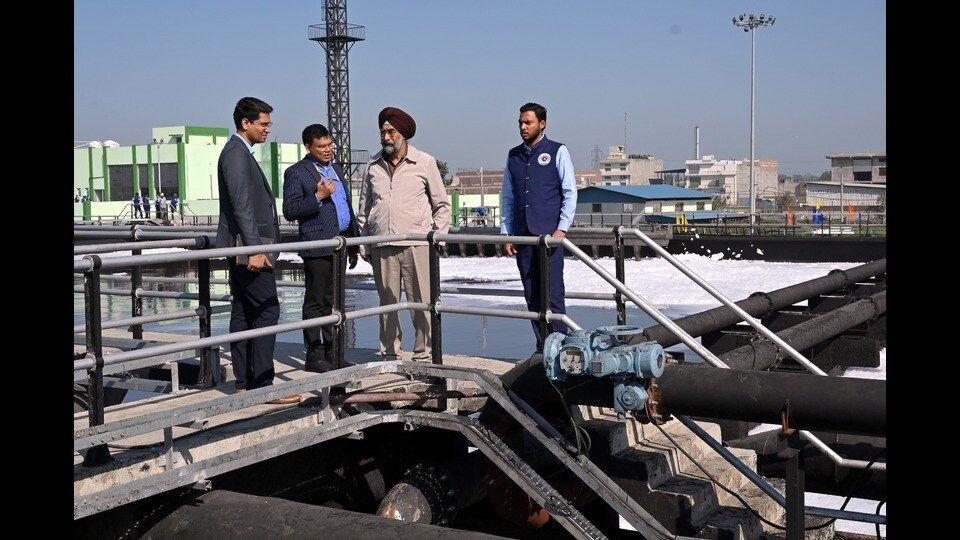
On a two day visit to the city, the delegation including department of water resources, river development and Ganga rejuvenation director N Ashok Babu and scientist SK Srivastava inspected the 225 mld sewer treatment plant (STP) in Jamalpur, which has been recently established under the project to clean the nullah and trial runs are going on at the said plant. They were accompanied by the officials of Punjab pollution control board (PPCB)
The delegation also inspected the 50 mld common effluent treatment plant (CETP) established for treating the waste of dyeing industry falling under Tajpur road dyeing industry cluster. The officials inspected the working of the plant.
As per the officials, jal shakti minister Gajendra Singh Shekhawat will be visiting the city to review the project soon.
Earlier in the day, the delegation also held a meeting with municipal corporation (MC) commissioner Shena Aggarwal and reviewed the progress of the project to clean Buddha Nullah.
MC additional commissioner Aaditya Dachalwal, officials of Punjab water supply and sewerage board (PWSSB), central pollution control board (CPCB), Punjab pollution control board (PPCB) among others were also present in the meeting.
The officials were directed to complete the project within the stipulated deadline. Besides this, the PPCB officials were also directed to regularly monitor the three CETPs established to treat the industrial waste of the dyeing industry in the city.


