E-Paper



Mohali:Five Kandi-area villages petition PM, Punjab CM, seek agricultural status for delisted land
The sarpanch representing these villages said the land allotment process began in 1972-73, but appeals and subsequent proceedings delayed its finalisation until 1983-84

 Prefer HTon Google


Residents of five Kandi-area villages have petitioned the Prime Minister, Punjab chief minister and chief justice of the Punjab and Haryana high court, seeking that land they say was delisted from the Punjab Land Preservation Act (PLPA) be recognised as agricultural land and released from the continuing restrictions imposed by the forest department.
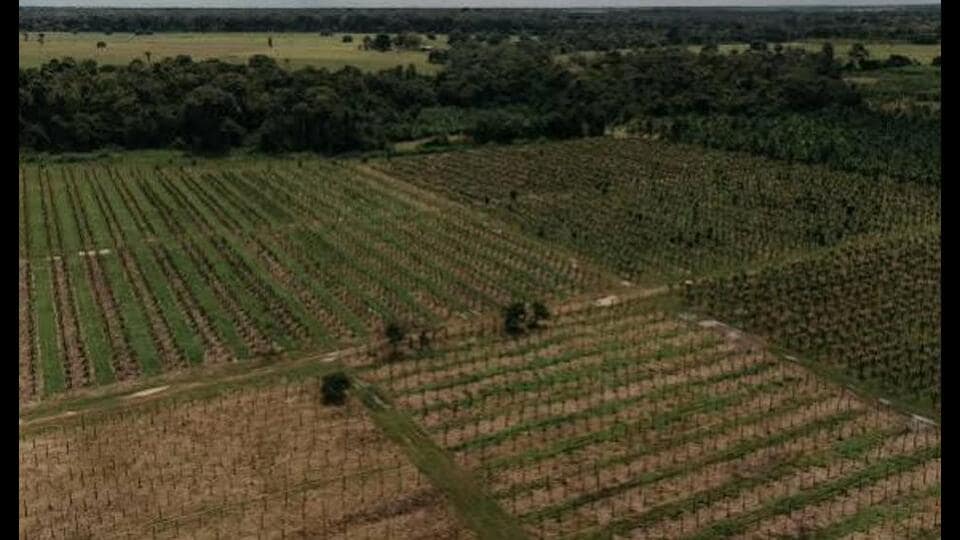
The petition was submitted by the panchayats of the Kandi belt, including Gurha, Kasauli, Jayanti Majri, Bhaghindi and Karaundewal. They say the dispute has left villagers caught between revenue records showing their agricultural rights and restrictions on the ground that, according to them, continue to be enforced in the name of forest protection.
Land allotment dates back to 1970s
The sarpanch representing these villages said the land allotment process began in 1972-73, but appeals and subsequent proceedings delayed its finalisation until 1983-84. The land was recorded in revenue documents (fards), under two forms: Abal Khewat, referring to the primary or first ownership account, and Khanakasht (Khana Kasht), referring to the cultivation or possession column.
Villagers contend that the land recorded under the cultivation column was allotted to them under the applicable rules and has been used for agriculture for decades. They said their families and earlier generations were cultivating parts of the Kandi belt even before Partition.
The Punjab government enacted the PLPA in 1980. According to the representation, cultivable parcels were subsequently delisted from the Act following court proceedings, subject to conditions. The villagers have now sought formal recognition of such delisted parcels as agricultural land.
Forest restrictions at centre of dispute
The villagers’ concern has intensified after directions relating to the demarcation of forest land in the Kandi area, following which they allege that the forest department has been treating land adjoining forest areas as falling under its control.
They also referred to minutes of a meeting chaired by the Punjab chief secretary on May 4, 2010, which, according to their representation, recorded that delisted land could be released and should not remain under forest department control.
At the same time, a forest department SOP dated September 14, 2026, concerning cases involving PLPA land, lays down several requirements before the diversion of such land can be considered. The document says the proposed diversion area—described as PLPA-delisted/closed land—should be owned by the user agency and requires the relevant delisting notification and khasra numbers to be submitted. It also requires approved maps showing the proposed built-up and utility areas, a complete building plan, details of sewage and waste-disposal arrangements, and a proper Punjab Pollution Control Board (PPCB) no-objection certificate.
Villagers say their available land is already limited by the mountainous terrain and construction restrictions further reduce the usable area.
They refer to restrictions under which construction is effectively limited toG+1 — ground floor plus one upper floor. Technically, G+1 is a floor/height configuration rather than Floor Area Ratio (FAR); FAR is the ratio of total covered floor area to plot area. Punjab’s building rules define FAR in those terms.
The villagers allege that land recorded under Khanakasht since 1983-84 cannot now be freely used even for temporary cattle sheds because of the Forest Department’s objections. They argue that this creates a practical dilemma: they have agricultural land in their revenue records but cannot make even basic improvements required to sustain their traditional livelihood.
Forest Department’s version
According to the Forest Department, Mohali, the habitation and cultivation areas in the Kandi belt were identified and delisted from Section 4 of the Punjab Land Preservation Act (PLPA) through notifications issued during 2010–11, following approval of the Centre under the Forest (Conservation) Act, 1980.
The department said the delisting was subject to certain conditions, including a restriction on commercial activity, and these conditions continue to apply.