
 E-Paper



Montek-led panel recommends rationalisation of power subsidy in Punjab
Backs 15th Finance Commission on power reforms, suggests paying state employees on a par with central staff, refrain from fresh police recruitment

 Prefer HTon Google


An expert panel headed by former deputy chairman of Planning Commission Montek Singh Ahluwalia has strongly backed power sector reforms, including rationalisation of subsidy, suggested by the 15th Finance Commission to improve the fiscal health of Punjab.
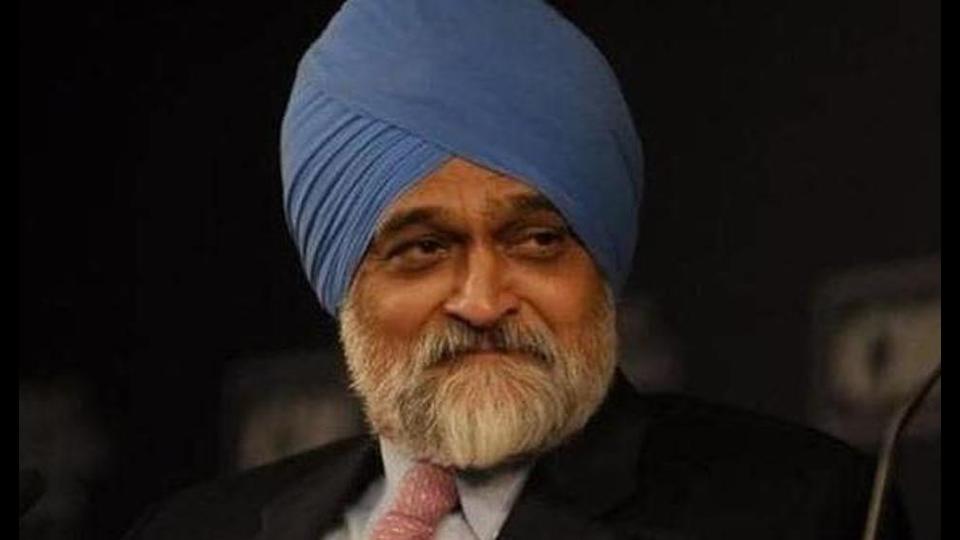
The expert group, in its final report on “Medium and Long Term Post-Covid Economic Strategy for Punjab” submitted recently, has recommended that the state government should undertake power sector reforms along the lines indicated by the Finance Commission (FC). “Political economy considerations are extremely important, but it is also necessary to recognise that unsustainable fiscal practices will harm future generations and cannot be continued indefinitely,” it said, while making the recommendation.
The Montek panel, which included leading experts on agriculture, economy and industry, said one way of reducing the burden of the power subsidy on the state budget might be to include the economic cost of power in the cost of production of agricultural products and raise the MSP accordingly. “If this is done, the subsidy would be paid for as part of the food subsidy,” it said. The expert group set up by the present Congress government in 2020 was to give its recommended by December, but the term was extended till June 30.
Subsidy bill 18% of revenue receipts
The expert group said the FC had drawn attention to the state’s total subsidy bill that is 18% of the total revenue receipts, the highest among the states in its class, and the overwhelming component of this subsidy is in the power sector. “The FC also pointed out that free power is leading to the second highest discharge of groundwater through irrigation (34.1 billion cubic metres in 2017) and the estimated groundwater availability for future use is negative,” it said, throwing its weight behind the FC’s recommendations.
In its report to the Union government in February 2021, the 15th Finance Commission led by retired bureaucrat NK Singh had suggested additional annual borrowing of 0.5% of the gross state domestic product (GSDP) to states based on the improvement in metered consumption that yields revenues, reduction in tariff subsidy as a per cent of revenue and increase in direct cash component of subsidy and reduction in aggregate technical & commercial (AT&C) losses. It had also strongly emphasised rationalisation of power subsidy to restore the water table and soil fertility.
The Montek-led group of experts had made a somewhat similar suggestion as part of the measures needed to transform the agriculture sector in its interim report given to the state government in July 2020. The recommendation led to uproar and the state government declared that power subsidy would continue. The panel, while stating that a large number of its recommendations made in the first report have been accepted, reiterated its earlier suggestion that Punjab State Power Corporation Limited (PSPCL) should shut down two thermal plans that produce power at a much higher cost than available alternatives available once these plants have completed their economic life span.
Suggestions on agriculture not included
The suggestions on agriculture sector have not been included by the expert group in its final report for want of feedback from the state government, recognising that processing of recommendations on agriculture may have to await the outcome of the ongoing farm protests. The agriculture sector has been credited for limiting the contraction of Punjab’s GSDP to 6.4% in financial year 2020-21 when the economy was hit by the pandemic. “This (contraction) is less than the national economy which is probably due to the fact that agricultural production, a much larger part of Punjab’s economy than for the country as a whole, was not much affected by the pandemic,” it reads.
The panel said the state’s GSDP could rebound by 7% in 2021-22, but this will only bring the economy back to where it was in 2019-20. “Restoring Punjab to its earlier pre-eminent position would call for acceleration of its GSDP growth from 6-plus per cent over the past several years to around 8% for the next two decades,” it said.
Preparing for 3rd Covid wave
The expert group, which also suggested steps to deal with the third Covid wave, said the main lessons of the past year are that decentralised planning, delivery and monitoring are needed at the district level with the district collector and the district health officer mobilising resources and coordinating operations.
Containment of transmission, timely detection, clinical care of infected persons and immunisation of the population have been identified as four areas for action. “The state government should identify areas with high vaccine hesitancy and launch a campaign to explain the safety and efficacy of vaccines,” it said.
Fast-tracking establishment of health and wellness centres in rural areas, setting up of functional lab and diagnostic labs at block level and increase in budget allocation by 20% annually for five years are its other suggestions for health sector.
Though the expert panel had made 130 suggestions in its first report for revitalising industry, several of them, including decentralisation of powers of PSIEC, one-time settlement offer for all pending dues, tagging each khasra to make the process of use of land for industrial purpose less tedious and incentives to private sector for setting up new industrial townships, have not been accepted by the state government.
A committee, Punjab Enterprise Promotion Panel (PEPP), under the chief secretary with officials and experts as members has been suggested for taking up the unresolved suggestions made by the expert group and recommending action to the state cabinet.
The panel again recommended that the state government should pay state employees, who have higher pay scales, on a par with the central staff, refrain from fresh recruitment in police, approach the Centre for increase in ceiling for professional tax, hike fees and royalties on minor minerals, regularise land encroachments to raise resources and monetisation of parcels of vacant land.


