
 E-Paper



Monthly power billing unfeasible, Chandigarh admn informs JERC
The response came after the Joint Electricity Regulatory Commission sought the progress report of the smart grid project in Chandigarh

 Prefer HTon Google


Nearly four years after the Joint Electricity Regulatory Commission’s first order to implement a monthly power billing for domestic and commercial consumers, the UT administration has reiterated before the commission that the system is unfeasible in Chandigarh.
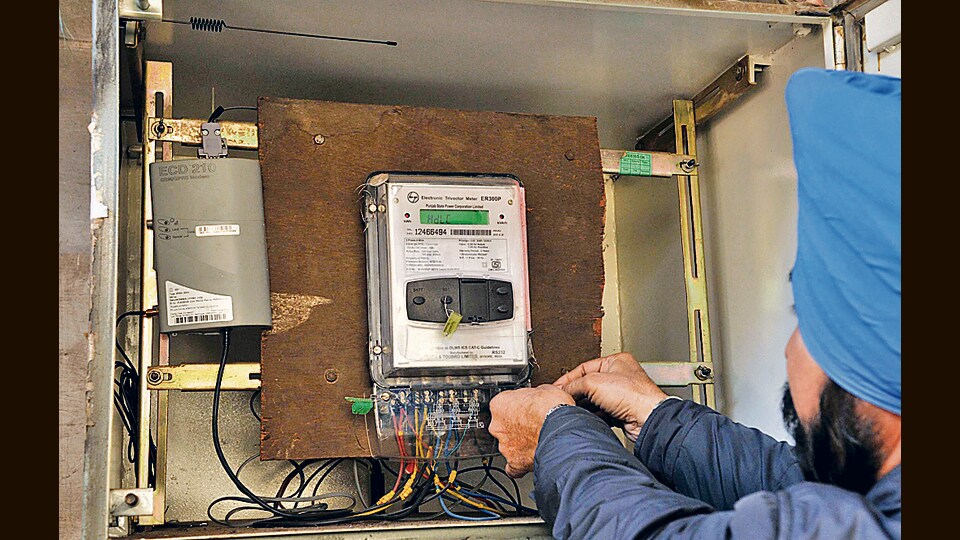
The response came after the commission sought the progress report of the smart grid project. The administration further informed the commission that the Union ministry of home affairs (MHA) has already dropped the smart grid project in the wake of the UT power department’s privatisation.
Under the Smart Grid project, the UT administration had planned to install smart electricity meters across the city by the end of 2022-23 fiscal as part of power sector reforms. Since 2019, as part of the pilot, UT had already spent ₹28 crore on installation of 24,000 smart power meters. The MHA had even approved ₹241 crore to take the project further, before scrapping in November 2022, while leaving it up to the private firm to continue the project or not.
A senior officer of the UT electricity department said monthly billing was not feasible due to inadequate infrastructure and staff: “At present, bills are issued every two months. Monthly billing is only possible once smart meters are installed in the city.”
There are nearly 2.38 lakh power consumers, including 2.04 lakh domestic and 28,521 non-domestic consumers, in the city.
The smart meters were aimed at eliminating tampering of electricity meters, besides keeping a track of load, voltage, outages, peak demand, power consumption and tripping of power lines, making the system beneficial for both the electricity department and consumers. In another benefit for residents, the smart meters would have allowed advance payment of bills, based on expected consumption.
Privatisation process on
The administration is in the advanced stages of the department’s privatisation.
It was on January 7 that the Centre had given its nod to the UT administration’s proposal, paving the way for the department’s transfer to private hands.
UT has selected Kolkata-based RP-Sanjiv Goenka (RPSG) Group for the takeover.
But the privatisation process has been entangled in legal battles since the UT Powermen Union approached the Punjab and Haryana high court against UT’s move, which also elicited criticism from Resident Welfare Associations and opposition parties amid fears of significant increase in tariff.
In March, the UT administration had undertaken before HC that till the time the matter of power privatisation is pending before the court, it will not issue the letter of intent (LoI), declaring preliminary commitment, to the private company.


