
 E-Paper



New sanitary landfill to cost Chandigarh MC ₹3.73 crore annually
The agenda will be tabled for approval at the MC General House meeting on April 28; the civic body plans to come up with three additional sanitary landfill sites at the Dadumajra dumping ground by 2036

 Prefer HTon Google


The Chandigarh municipal corporation will have to spend ₹3.73 crore annually on operating and maintaining phase 2 of the sanitary landfill site coming up at the Dadumajra dumping ground.
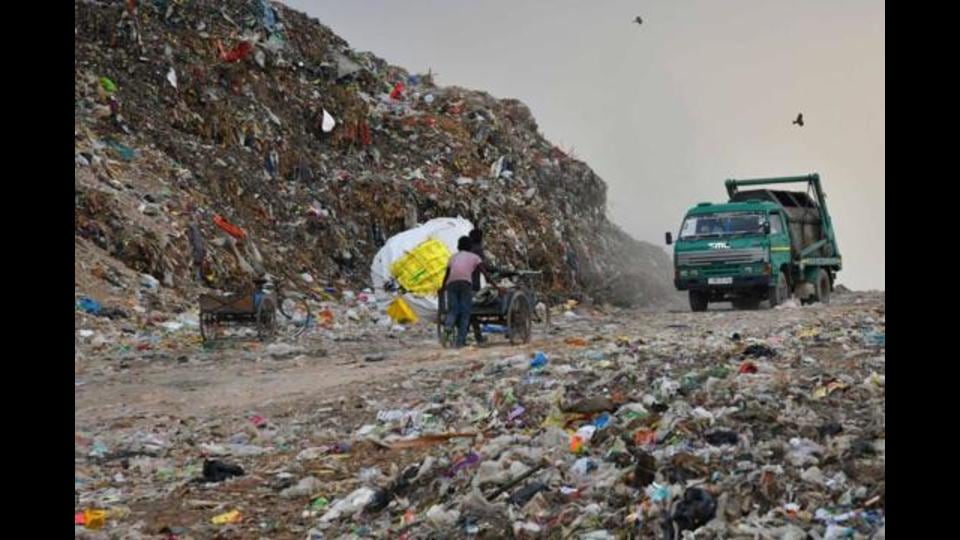
The civic body will bring up the agenda for approval at the MC general House meeting on April 28.
The MC plans to come up with three additional sanitary landfill sites at the Dadumajra dumping ground by 2036. It is currently operating Phase 1 of the SLF, which was set up in 2007 and commissioned in 2012. The site covers 10 acres and will reach, as planned, an average height of about 10 metre. Given the large quantity of waste arrival, this phase has almost run out of capacity.
The construction of the second phase of the SLF is currently being carried out at a cost of ₹17.85 crore and is expected to be completed by February 2, 2022.
A Gujarat-based company, Varun Constructions, was awarded the contract for setting up the new SLF site at Dadumajra for dumping of non-recyclable solid waste. by the Chandigarh Smart City Limited (CSCL).
The site, which lies next to the current dumping site in Dadumajra and the waste processing plant, will be spread over eight acres and developed over a year at a cost of around ₹12.40 crore.
The MC, through CSCL, has already begun the Mining of Legacy Waste and Recovery of Land Project at the dumping ground.
“The landfill is a crucial component of achieving total waste segregation in the city, in its entire cycle, from collection to processing and disposal. The site will be used specifically for dumping non-recyclable dry waste, which will neither be reused nor processed at the waste processing plant,” said a CSCL official.
Scientific development of the site will ensure that no damage is caused to the environment and people living nearby are not inconvenienced. “The site will be surrounded by a 4.5m tall and 10m deep boundary wall and waste dumped there will remain covered. The site design incorporates systems that will leave no scope for seepage of water into the dumped waste or the ground beneath and no foul smell will generated,” the official added.
The city’s urban and the rural areas generate about 450 metric tonne (MT) of municipal solid waste (MSW) per day, which is estimated to increase to 788 MT by 2036.


