Taking a lesson from irregularities in donations in Ram temple in Ayodhya, the Himachal Pradesh government has issued a comprehensive standard operating procedure (SOP) to strengthen security, transparency, and management systems at all state-managed temples.
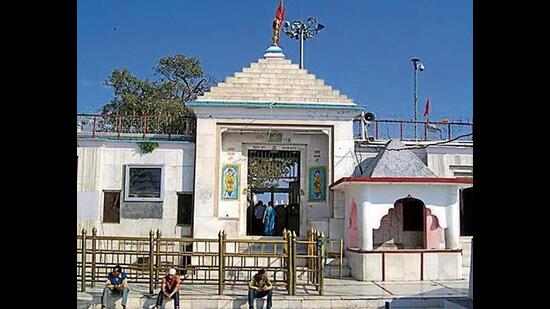
Under the new guidelines, all donation boxes must be tamper-proof, securely fixed and assigned unique identification numbers. They must operate under a dual-lock or multi-key system, with proper records maintained for every access.
The SOP mandates that donation boxes be opened only on pre-approved dates in the presence of an authorised committee comprising temple officials, representatives of the district administration, accountants, temple management members and independent witnesses. The entire counting process must be conducted under CCTV surveillance and videography to ensure complete transparency.
The government has also laid down strict financial protocols, directing that all cash offerings be deposited into designated temple bank accounts within one working day. Retention of large cash balances on temple premises has been prohibited unless prior written approval is obtained. Temple authorities have also been encouraged to promote digital donations through UPI, QR codes and online banking platforms.
The SOP further provides for quarterly physical verification of ornaments and valuables, along with annual audits by government-nominated agencies. Employees handling cash and valuables will be subject to police background verification, periodic rotation of duties and stringent access-control measures.
{{/usCountry}}The SOP further provides for quarterly physical verification of ornaments and valuables, along with annual audits by government-nominated agencies. Employees handling cash and valuables will be subject to police background verification, periodic rotation of duties and stringent access-control measures.
{{/usCountry}}To ensure effective implementation, the director of language, art & culture has been designated as the state nodal officer. All state-managed temples have been directed to submit compliance reports within 30 days detailing security arrangements, CCTV installations, audit status and measures taken to implement the SOP.
District magistrates have been instructed to facilitate adoption of similar security protocols in other temples under their jurisdiction. The government has warned that executive officers and temple management committees will be held accountable and may face legal as well as disciplinary action in cases of negligence or non-compliance with the prescribed guidelines.
SoP formulated as a preventive measure: Dy CM
Deputy chief minister Mukesh Agnihotri, who also holds the language, art and culture portfolio responsible for overseeing government-managed temples in the state, said, “The SoP have been formulated as a preventive measure to ensure that such incidents do not occur in Himachal Pradesh.”
“We have issued a comprehensive SOP for all government-managed temples in Himachal Pradesh. It contains a detailed roadmap, and the complete document can be obtained from our department for study. We have made the system foolproof. Although the theft occurred elsewhere, we have taken all precautionary measures here to ensure that such an incident is not repeated in Himachal Pradesh.” said Agnihotri.
Baba Balak Nath shrine imposes pocket-less dress code for counting staff
The trust managing the renowned Baba Balak Nath temple, Deotsidh, in the Hamirpur district of Himachal Pradesh has introduced a significant change to the procedure for counting temple offerings. A new dress code has been implemented for the staff responsible for this task.
Acting on the instructions of Hamirpur deputy commissioner and temple trust chairperson Gandharva Rathore, all employees involved in counting offerings at the temple will be required to wear pocketless clothing while on duty starting July 13. Cash received at the temple is counted according to a prescribed procedure under CCTV surveillance and in the presence of authorized staff and concerned officials.
Glass walls in Chintapurni temple
Amidst this, the system for counting offerings at the Mata Shri Chintpurni Temple Trust in Una district stands out as a positive example. Devotees offer around ₹32 crore annually at the temple. As a leading religious site in the state in terms of revenue, the temple employs modern technology and stringent security measures for the counting process. Four high-quality CCTV cameras have been installed in the counting hall, and a live feed from the room is displayed on a large LED screen within the temple complex.
To further enhance transparency, the walls of the counting hall are made of glass. The temple trust has also established rigorous security standards like no employee entering the counting room is permitted to carry a wallet, cash, or other personal belongings.