
 E-Paper



Only 5% vehicles bought in Chandigarh in past 3 years are electric
Despite multiple sops by the Chandigarh administration under its 2022 Electric Vehicle policy, large-scale adoption has yet to catch on

 Prefer HTon Google


Incentives ranging from ₹3,000 to ₹2 lakh, along with zero registration fees and no road tax — all sops under UT’s ambitious Electric Vehicle Policy, rolled out in 2022 — have failed to spark buyers’ interest.
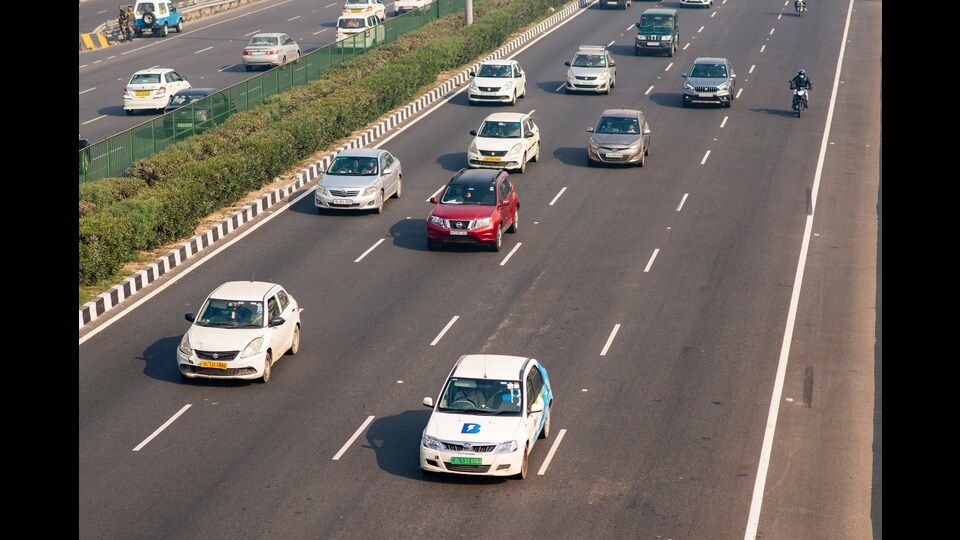
Three years since the policy’s launch, electric vehicles (EVs) make up just 5.2% of the nearly 1.60 lakh vehicles sold in Chandigarh.
According to official data, 1,52,047 fuel-based vehicles were sold during this period, including 78,809 four-wheelers and 73,229 two-wheelers. In contrast, just 7,915 EVs found takers, comprising 5,107 two-wheelers and 2,808 four-wheelers.
The UT administration had unveiled its five-year EV policy in September 2022, aiming to gradually stop registering fuel-based vehicles to discourage their use and reduce pollution. This was part of a larger plan to make Chandigarh a “Model EV City” by achieving one of the highest penetrations of zero-emission vehicles by 2027.
However, on November 23 last year, under pressure from various quarters, then UT administrator Banwarilal Purohit lifted the cap on registering non-electric vehicles, including two-wheelers, four-wheelers and commercial vehicles.
A senior officer of the UT administration said, “We are creating awareness among residents and are also in process to strengthen the public infrastructure. We are hopeful, we will achieve our aim in this financial year.”
On reasons behind poor EV adoption, Ram Kumar Garg, finance secretary of the Federation of Automobile Dealers’ Association, Chandigarh, explained, “The maintenance cost of EVs, particularly batteries, is quite expensive. Also, people do not have confidence in EVs. Further, the administration has failed to operationalise most of its public charging stations, raising buyers’ worries about where they will charge their vehicles.”
Under its EV policy, UT had decided to install 100 public charging stations in various parts of the city. But the Chandigarh Renewable Energy and Science and Technology Promotion Society (CREST), the nodal agency responsible for promoting and implementing the policy, has operationalised only 35 in three years.
A senior CREST officer assured more stations will be made available in the coming months.
Incentives stuck in slow gear
To promote eco-friendly vehicles, the administration is offering incentives ranging from ₹3,000 to ₹2 lakh for up to 42,000 vehicles of various categories, purchased between September 20, 2022, and September 19, 2027.
The incentives are applicable for EVs, including e-cycles, e-bikes, e-cars, e-autos, e-carts and e-goods carriers, purchased anywhere in the country, but only permanent residents of Chandigarh are eligible.
In May last year, the UT administration further exempted hybrid vehicles, along with electric vehicles, from paying road tax for the next five years.
Further, UT has waived registration fees and road tax for five years for EVs. In contrast, owners of conventional fuel-based vehicles are required to pay both
On August 1 this year, during the fourth review meeting of the EV policy, chaired by UT chief secretary Rajeev Verma, UT administration also decided to hike subsidies on electric two-wheelers and four-wheelers, with special focus on women buyers, who will be eligible to receive incentives up to ₹37,500.
For electric two-wheelers, the subsidy has been hiked from ₹5,000 to ₹10,000, while for electric bicycles, it has been raised from ₹4,000 to ₹6,000.
In further push to encourage EV adoption, UT also decided to increase the allocated subsidy slots for electric cars purchased for personal use from 2,000 to 3,500.
Earlier, in May this year, UT had announced discontinuation of the subsidy for electric cars after the allocated 2,000 slots ran out.


