Petrol pump dealers in Haryana have threatened to halt cashless transactions across the state unless the proposed ₹5 Merchant Discount Rate (MDR) on UPI payments exceeding ₹2,000 at fuel stations is withdrawn.
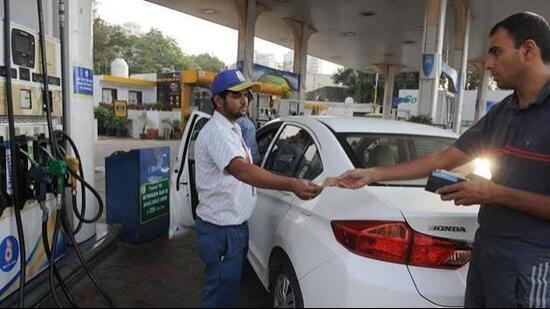
The All Haryana Petroleum Dealers Association (AHPDA), in a formal representation addressed to Union finance minister Nirmala Sitharaman and petroleum and natural gas minister Hardeep Singh Puri, demanded a complete exemption from the additional charge, warning that the move would heavily squeeze dealers already operating on razor-thin margins.
The association insisted that petroleum outlets must continue to be covered under the existing zero-MDR facility for digital payments, while also advocating for special financial protections for low-volume stations situated in rural regions and along highways.
Highlighting the scale of operations, the association noted that Haryana houses approximately 4,469 petrol pumps—of which nearly 2,547 (57%) are single-owner dealerships. Gurugram leads with 232 outlets, followed by Faridabad with 166 and Hisar with 146. Daily state fuel consumption is estimated at 1.2 crore to 1.5 crore litres of diesel and 50 lakh to 65 lakh litres of petrol, bringing total daily sales to roughly 1.7 crore to 2.1 crore litres.
Dealers handle daily digital payments worth ₹150 crore to ₹180 crore, with UPI transactions alone accounting for ₹90 crore to ₹120 crore across an estimated 10 lakh to 15 lakh daily transactions.
{{/usCountry}}Dealers handle daily digital payments worth ₹150 crore to ₹180 crore, with UPI transactions alone accounting for ₹90 crore to ₹120 crore across an estimated 10 lakh to 15 lakh daily transactions.
{{/usCountry}}Dealers said the transactions, particularly tank-full purchases by heavy commercial vehicles frequently exceed ₹2,000, and they explained that their current earnings stand at roughly ₹2 per litre for diesel and ₹3 per litre for petrol after accounting for operating expenses. A ₹5 deduction on a transaction just above ₹2,000 would therefore inflict a disproportionate blow on their net profitability.
Operating expenses such as mounting electricity bills, staff salaries, equipment maintenance, and internet connectivity already consume a major portion of earnings, hitting smaller outlets particularly hard.
Rajkumar Salemgarh, president of the association’s Hisar district unit, noted that dealer commissions have remained frozen since 2017 despite steep inflation in operational overheads.
“After meeting electricity, staff, maintenance and other expenses, very little net income remains. If a dealer has to bear around ₹15,000 a month in UPI-related deductions, it could reduce his net profit by 15–20%,” Salemgarh said.
AHPDA president Anil Kumar said while dealers fully support the government’s Digital India push, they cannot absorb added costs out of limited margins.
“Dealers are not against digital payments. But we cannot absorb an additional cost from an already limited margin. If the charge is imposed, customers may also prefer cash payments to avoid the additional burden, which could ultimately lead to an increase in cash transactions at petrol pumps,” Kumar said.
The association has urged immediate intervention from both central ministries to safeguard the fuel retail sector and ensure the continuation of zero-MDR provisions.