
 E-Paper



Paddy farmers in dilemma over seed selection amid last season’s losses
The out-turn ratio of paddy to rice is the percentage of rice yield that is extracted from paddy after milling. The Food Corporation of India (FCI) mandates an OTR of 67%, meaning that from every 100 kg of paddy, 67 kg of rice should be obtained.


Chandigarh
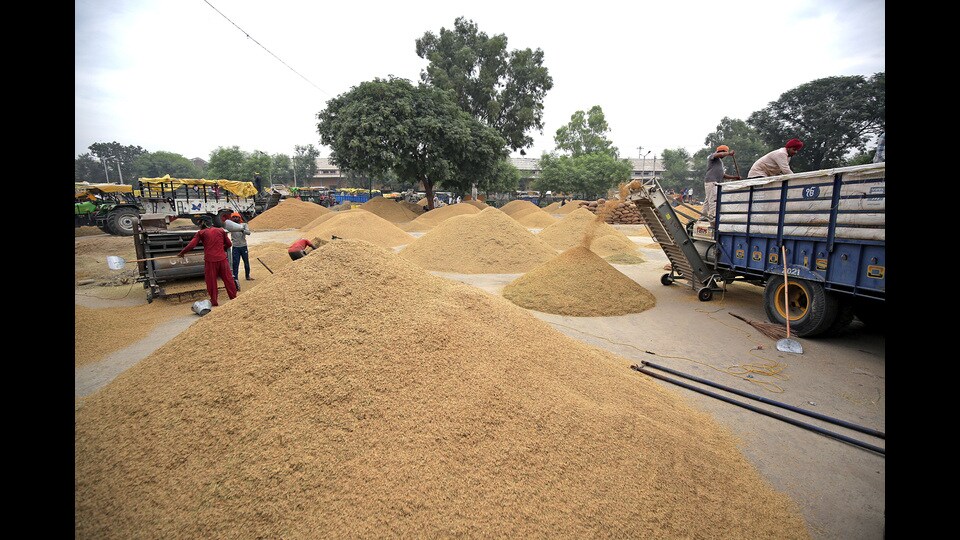
As farmers prepare to sow seeds for paddy nurseries, uncertainty looms over the choice of varieties. The previous paddy procurement season (October-November 2024) saw rice millers raising concerns over a lower-than-permissible out-turn ratio (OTR) falling below 67%, along with increased grain breakage.
The out-turn ratio of paddy to rice is the percentage of rice yield that is extracted from paddy after milling. The Food Corporation of India (FCI) mandates an OTR of 67%, meaning that from every 100 kg of paddy, 67 kg of rice should be obtained.
In the 2024 procurement season, Punjab’s agencies procured 177 lakh tonnes of paddy, expecting an OTR of 119 lakh tonnes of rice. However, millers reported yields as low as 62-63%, citing hybrid seed varieties as a key factor.
Harminder Singh, a farmer from Bhawanigarh in Patiala, voiced concerns over the lack of clarity on which variety to sow, fearing a repeat of last season’s losses. “Millers refused to process the paddy at the start of procurement, citing lower yields. This caused financial losses for farmers,” he said.
Similarly, Ravi Sher Singh from Muchhal in Amritsar district called for timely government intervention regarding recommended seed varieties and certified dealers. “Farmers start purchasing seeds by this time and paddy nurseries are set up in April-May,” he said.
The state government has mandated transplantation after June 20 to conserve groundwater.
Institutional response and support
An official from the Punjab agriculture department assured that corrective steps are being taken. Punjab Agricultural University (PAU), Ludhiana, is guiding farmers on suitable varieties at upcoming “kisan melas” from March 5.
Defending the short-duration PR126 variety, PAU vice-chancellor SS Gosal stated that it has been cultivated successfully for eight years as an alternative to the now-discontinued PUSA-44, a water-intensive variety. “Last season’s issue wasn’t due to yield but due to logistical problems — there was no space in state godowns for lifting the milled rice,” he clarified.
Rice millers seek ban on hybrid seeds
The Punjab Rice Millers Association has urged the government to ban hybrid paddy seeds, citing severe economic repercussions for farmers, millers, and traders. The association warned that hybrid varieties yield lower rice (62-63%) compared to the expected 67%, causing financial losses to millers. Increased grain breakage during milling lowers rice quality, making it unfit for FCI procurement, the association said.
Dealers are aggressively pushing hybrid seeds through ‘arhtiyas’ (commission agents), leading to unregulated sales and confusion among farmers. Association president Tarsem Saini stressed that many millers faced losses running into lakhs due to hybrid seed usage in the kharif 2024-25 season.
Awaiting IIT Roorkee report
Amid widespread complaints, the Punjab food and civil supplies department had sought intervention from the Union ministry of food and public distribution, which in turn sent a team from IIT Roorkee to draw samples and cross check the contention of lesser yield and higher breakage content as raised by millers. Three months have passed, but the report is still awaited, leaving stakeholders in limbo.


