The Shiromani Gurdwara Parbandhak Committee (SGPC) on Saturday installed portraits of Khalistani leader Gajinder Singh, who led the 1981 hijacking of Indian Airlines flight IC-423 from Srinagar to Lahore, Khalistan Commando Force (KCF) co-founder Gurdev Singh Debu and former Supreme Court judge justice Kuldeep Singh in the Central Sikh Museum within the Golden Temple complex in the presence of radical leaders.
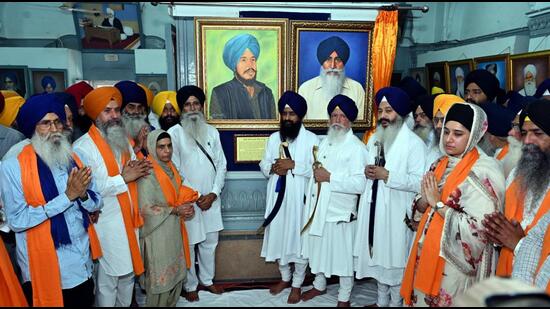
Following the ardas (prayer), the unveiling ceremony was jointly performed by Akal Takht acting jathedar Giani Kuldeep Singh Gargaj, Takht Sri Damdama Sahib jathedar Giani Tek Singh, SGPC president Harjinder Singh Dhami and Golden Temple granthi Giani Baljit Singh.
Dal Khalsa leaders, including Kanwarpal Singh and Paramjit Singh Mand, former militant leader Daljit Singh Bittu, professor Jagmohan Singh and former Damdami Taksal spokesperson Mohkam Singh were also present.
Gajinder, founder of Dal Khalsa, along with his four associates, hijacked the Indian aircraft in 1981 to protest the arrest of Jarnail Singh Bhindranwale.
A Pakistani court sentenced Gajinder and his co-conspirators to life imprisonment in September 1981. He served 14 years in a Lahore jail until his release in October 1994. After his release, he attempted to relocate to Germany in 1996 to start fresh. However, German authorities denied him entry and deported him back to Pakistan, where he spent the rest of his life living under state protection.
In 2002, the Indian ministry of home affairs placed Gajinder on its list of the 20 most-wanted terrorists and continuously demanded his extradition. For decades, Pakistan officially denied that he was residing on its soil. Gajinder died at the age of 73 in Lahore in July 2024, with his last rites performed at the cremation ground of Nankana Sahib.
{{/usCountry}}In 2002, the Indian ministry of home affairs placed Gajinder on its list of the 20 most-wanted terrorists and continuously demanded his extradition. For decades, Pakistan officially denied that he was residing on its soil. Gajinder died at the age of 73 in Lahore in July 2024, with his last rites performed at the cremation ground of Nankana Sahib.
{{/usCountry}}Gurdev Singh Debu, also known as “Debu”, was a prominent militant and area commander for the Doaba region within the Khalistan Commando Force (KCF). In 1984, he joined Manbir Singh Chaheru and other key militants to establish the KCF following the Indian Army’s Operation Blue Star. In July 1987, Debu died while in police custody.
Addressing the gathering on this occasion, Gargaj said the three personalities whose portraits were installed today made immense “sacrifices” for the Sikh community’s rights. He noted that justice Kuldeep Singh raised his voice for truth and justice, playing a major role in curbing atrocities against Sikh youth.
“Despite living a long life in exile, Gajinder Singh always maintained unwavering steadfastness toward Sikh principles and never wavered from his faith. Similarly, Gurdev Singh Debu endured state oppression and embraced martyrdom, carrying forward the peerless heritage of Sikh history,” he said.
SGPC president Harjinder Singh Dhami said through his judicial decisions, justice Kuldeep Singh played a crucial role concerning Punjab’s situation and human rights issues. “While serving as the chairman of the Delimitation Commission, he designated the names of Punjab assembly and parliamentary constituencies after places sanctified by the Gurus. Likewise, Gajinder Singh and Gurdev Singh Debu maintained their commitment to Sikh principles despite difficult circumstances. The lives of these personalities inspire us toward Sikh steadfastness, resilience and dedication to the community,” he added.
On this occasion, a message sent by Gajinder’s daughter Bikramjit Kaur, who lives abroad, was shared with the congregation. The family members of the three personalities were also felicitated.