
 E-Paper



Punjab: Flooded Harike poses threat to gharials, wildlife teams on alert
Harike Wetland, located at the confluence of the Sutlej and Beas rivers, is Punjab’s second-largest wetland and a vital biodiversity hotspot.

 Prefer HTon Google


Flooding in the Satluj and Beas has raised alarm among wildlife officials over the safety of the endangered gharial population in the ecologically sensitive Harike Wetland. Authorities fear that some gharials may have been swept into neighboring Pakistan due to the rising waters.
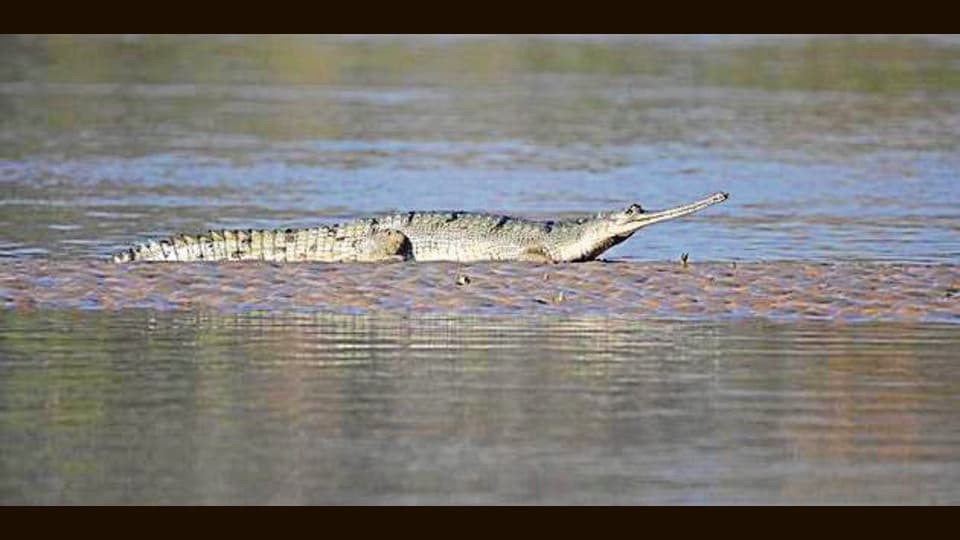
In 2023, too, flash floods in the wetland led to the displacement of several gharials downstream in the neighbouring country.
Harike Wetland, located at the confluence of the Sutlej and Beas rivers, is Punjab’s second-largest wetland and a vital biodiversity hotspot. It supports a range of endangered species, including gharials, Indus river dolphins, smooth-coated otters, and numerous migratory birds.
Dharminder Sharma, head of the department of forests and wildlife preservation, said the prolonged heavy inflows have caused significant disruption to the wetland’s flora and fauna. “While river dolphins remain largely unaffected as they inhabit deep upstream waters, gharials are at risk and rescue teams are actively monitoring the situation,” he said.
Since 1975, under the Government of India’s Project Crocodile, gharials have been bred and released into the Beas to boost their population.
Kamaljit Singh, block wildlife officer at Harike, said teams equipped with night vision glasses and binoculars are keeping a close watch but have not yet confirmed any gharial losses.
Gitanjali Kanwar, senior coordinator, aquatic biodiversity, World Wildlife Fund for Nature-India, who has been part of the gharial conservation project in Punjab, said that during a gharial audit conducted in April this year, there were 37 reptiles in Harike, and the massive flooding has raised serious concern about the wildlife.
“We have to wait to assess any loss till the census of gharial is done again in November. Unlike the previous terms, this time, floodwaters are staying for a longer duration and have damaged vegetation. But it is not likely to pose any threat to the food chain of the migratory birds during the forthcoming winter season. Floods lead to significant deposits of minerals that will help in replenishing the losses,” she added.


