
 E-Paper



Punjab pegs initial flood loss at nearly ₹13,500 crore
The estimates were placed before the central team of experts, which has been camping in Punjab for the past two days

 Prefer HTon Google


Punjab has pegged its initial loss due to floods at nearly ₹13,500 crore, with agriculture and rural infrastructure bearing the brunt of the devastation.
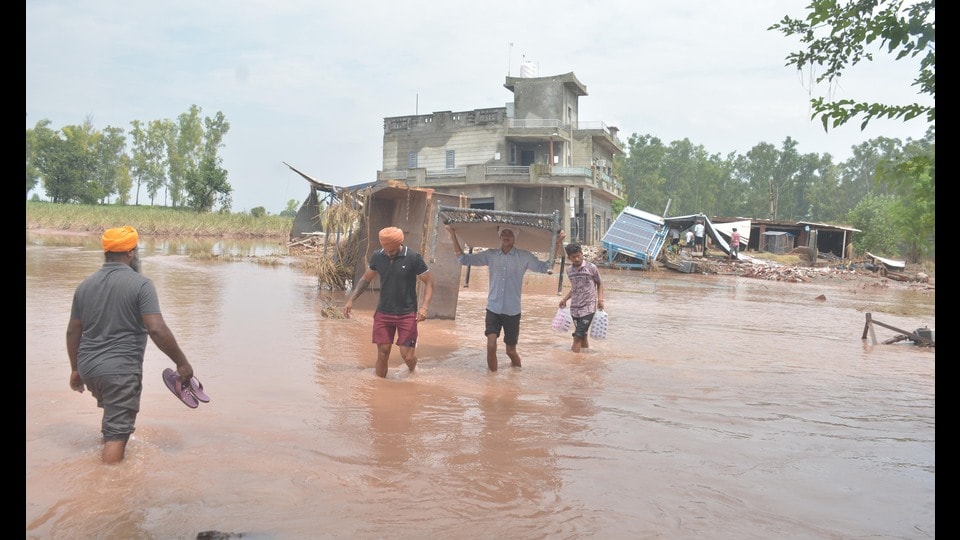
The estimates, including a plea for ₹1,900 crore as immediate compensation for devastated farmers, who have suffered complete loss of crops at the peak of the sowing season, were placed before the central team of experts, which has been camping in Punjab for the past two days.
After a two-day field visit in flood-affected areas, on Saturday, the team held detailed discussions with senior state government officials, led by the chief secretary, in Chandigarh to assess the scale of destruction.
According to the preliminary departmental estimates, the rural development and panchayati raj department has conveyed a loss of ₹5,400 crore, pointing to massive destruction of rural infrastructure, including link roads, culverts, water channels and drainage systems.
Officials said villages in Amritsar, Gurdaspur, Ferozepur, Pathankot and Kapurthala were the worst hit, with many local habitations left cut off and civic amenities completely washed away.
The public works department (PWD) has reported losses worth ₹1,990 crore.
As per PWD officials, the field reports indicate that over 1,200 rural roads have been completely damaged, disrupting connectivity across vast swathes of Punjab, while around 70 bridges require urgent repair or total reconstruction.
The Punjab Mandi Board has estimated damages of nearly ₹900 crore. Key rural mandis and market yards, besides approach roads maintained by the board, have suffered extensive damage, severely affecting procurement and transportation of farm produce.
“We need money immediately to restore our infrastructure as crops have to come in these yards for the procurement,” said a senior Mandi Board official.
Losses to the health infrastructure stand at nearly ₹780 crore, with the school education department reporting another ₹540 crore in damages.
Livestock, fisheries and farm infrastructure have also reported significant destruction, though detailed surveys are still being compiled.
State government officials have informed the central team that the consolidated demand reflects the scale of devastation across multiple sectors — from roads, bridges, mandis and rural infrastructure to agriculture and livelihoods.
The central team is expected to complete its field visits shortly and submit a comprehensive report to the Union government. The final relief package for Punjab will be decided based on the Centre’s assessment, said a senior government official.


