The Punjab Pollution Control Board (PPCB) has shut down a large-scale dyeing unit in the city with immediate effect and snapped its electricity connection after night surveillance detected it illegally discharging untreated effluent waste into sewer line of the municipal corporation.
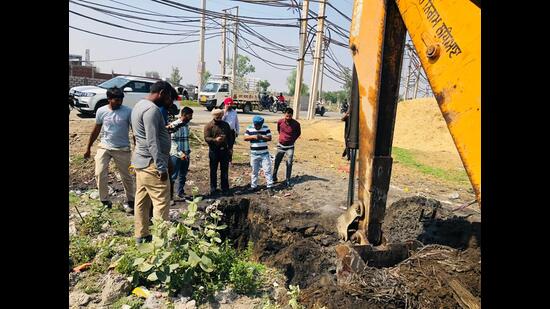
PPCB officials said the owners of the dyeing unit, Ramal Industries, had maintained a hidden underground pipe line from where part of its untreated effluent was being discharged into the MC sewer, bypassing the dedicated conveyance system.
“After the illegality came to light, the unauthorised outlet was dismantled immediately by the officers of the joint team. Taking cognisance of the serious violations, PPCB has issued directions for the closure of the violating unit and also directed PSPCL authorities for disconnection of electric supply available to the industry. Electric connection of industry and waste water outlet of the industry leading to CETP (Common Effluent Treatment Plant) conveyance system has also been disconnected to restrict its industrial operations,” Sandeep Behl, chief environmental engineer, PPCB, said.
Behl said that PPCB is carrying out night surveillance and visits during odd hours to nab the defaulters. Strict action against the units discharging untreated effluent or black smoke from their chimneys has been initiated, he said.
{{/usCountry}}Behl said that PPCB is carrying out night surveillance and visits during odd hours to nab the defaulters. Strict action against the units discharging untreated effluent or black smoke from their chimneys has been initiated, he said.
{{/usCountry}}What the law states
To reduce water pollution in Buddha Nullah and Sutlej River, the Punjab government’s department of science, technology and environment after considering all the aspects of the matter including various recommendations and decisions of the Punjab and Haryana high court, National Green Tribunal and other committees constituted for the purpose, had issued directions in 2019 under the Environment (Protection) Act, 1986 stating that these directions included that the city municipal corporation shall disconnect the connection to municipal sewerage of the dyeing industries of Ludhiana when CETPs conveyance system is established.
All the CETPs (15 MLD, 40 MLD and 50 MLD) proposed for dyeing industries of Ludhiana are established and commissioned. A dedicated effluent conveyance system was provided to carry out the effluents (both trade and domestic) from the member industrial units to the CETP for treatment. All the individual units are required to operate a single outlet leading to CETP and whole of their effluent is required to be discharged through this metered outlet.
PPCB had received complaints regarding merging of coloured effluent at the collection tanks of recently established 225 MLD, sewerage treatment plant (STP), Jamalpur, Tajpur Road. This colored effluent was supposedly being discharged from dyeing industry.
To identify the violators discharging industrial effluent into municipal sewer leading to STPs, a night surveillance was carried out by a joint team comprising officials of the board.