A Punjab-origin family that spent eight years building a life in Canada has returned to India after its refugee claim was rejected, ending a lengthy immigration battle that included a humanitarian application and a request for judicial review, according to media reports.
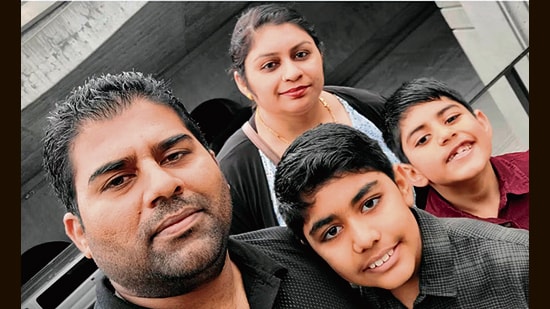
The Kumar family — Harish Kumar, his wife Sonika, and their two children Goulash and Japesh — moved to Canada from Goraya in Jalandhar in April 2018 and sought asylum. Kumar said he left India because he believed his life was at risk.
The family was ordered to leave Canada after their refugee claim was denied. They boarded a flight to India on September 7, 2026.
“I’m very sad,” Harish told CTV News before the departure, media reports said.
The removal has been particularly difficult for Kumar’s two sons, who spent most of their childhood in Quebec.
Also Read | US deported 414 Indian nationals in first three months of 2026: EAM Jaishankar tells Rajya Sabha
Fourteen-year-old Japesh Kumar was six when the family arrived in Canada. He told CTV News that he had grown up in Quebec and had friends there, while knowing little about life in India.
{{/usCountry}}Fourteen-year-old Japesh Kumar was six when the family arrived in Canada. He told CTV News that he had grown up in Quebec and had friends there, while knowing little about life in India.
{{/usCountry}}“I grew up here,” Japesh said. “I have friends here ... in India, I have nothing.”
His 12-year-old brother, Gouresh, also said he knew little about India and would effectively have to start over.
The family learned on August 4 that its asylum claim had been refused and that it would have to leave Canada on September 7. Harish told CTV News that his wife was detained by the Canada Border Services Agency (CBSA) the previous week.
The family also applied to remain in Canada on humanitarian and compassionate grounds, but that application was refused. It has since sought judicial review.
Also Read | Who is Jashandeep Singh? Indian national among 5 deported from US; here's what DHS said
Mostafa Henaway of the Immigrant Workers Centre, who has supported the family, questioned the decision to remove them after they had spent years living and working in Quebec.
Henaway highlighted Kumar’s work as a truck driver, saying he was considered an essential worker during the COVID-19 pandemic. He also pointed to the fact that both children have spent most of their lives in Quebec.
The case comes as removals have increased in Quebec. According to CBSA data cited by CTV News, slightly more than half of all removals across Canada during the first six months of 2026 took place in Quebec.
The family’s departure does not necessarily mark the end of every legal avenue available to them. They have asked the Federal Court to review their case.
Immigration, Refugees and Citizenship Canada referred questions from CTV News to the CBSA. The agency said deportation decisions are not taken lightly and that removal orders are acted upon only after legal avenues that can suspend a removal have been exhausted.
Also Read | US has deported over 4,800 Indians since 2025 as Trump admin steps up crackdown
The CBSA said people facing removal can, depending on their circumstances, pursue options including appeals before the Immigration and Refugee Board of Canada, applications for judicial review before the Federal Court and pre-removal risk assessments.
The agency also cited Section 48 of Canada’s Immigration and Refugee Protection Act, which requires CBSA to remove individuals who have an enforceable removal order “as soon as possible.”