
 E-Paper



Punjab’s war against drugs: Border villages of Amritsar battle easy drug availability
Drug overdose deaths in the border belt of the Majha region are rapidly rising. The reason: Easy availability of spurious heroin, particularly after the lockdown.

 Prefer HTon Google


Amritsar: Drug overdose deaths in the border belt of the Majha region are rapidly rising. The reason: Easy availability of spurious heroin, particularly after the lockdown. In Chatiwind village alone, 25 youngsters have died due drug overdose in the past 10 months, according to a social activist who is at the forefront of the war on drugs
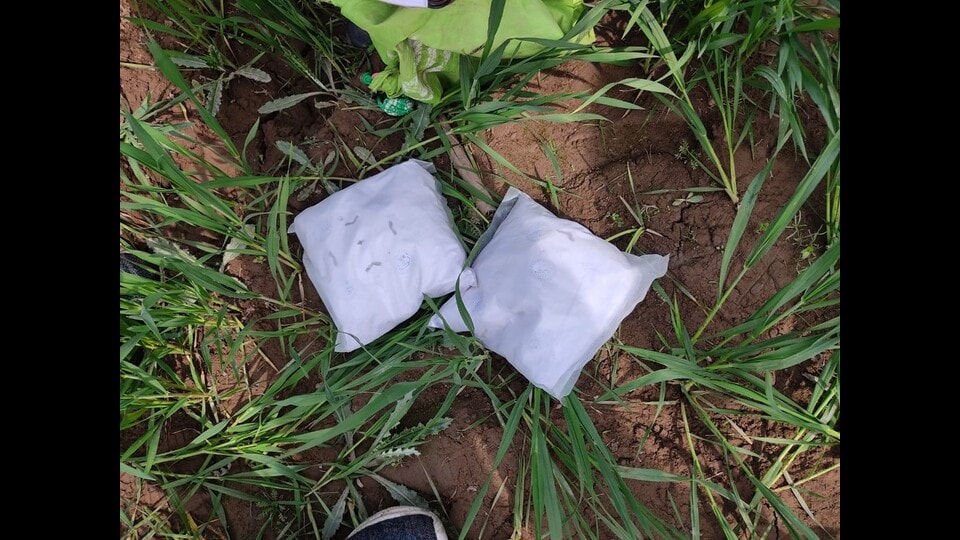
Paramjit Singh Bagha, a farmer leader from the village, admits that drugs are openly sold. “Smugglers sell adulterated heroin to make a fast buck. This has led to 50 deaths in six years, including 25 in 10 months. A family has lost all six male members to drugs. Addicts from neighbouring villages and Amritsar town come here to buy drugs.”
“It’s easier to procure drugs in our village than buy atta (wheat flour). In fact, this is the situation in all villages of this border district. Police are trying, but there is rampant smuggling,” says Kabal Singh, a resident of nearby Muhawa village and a local farmer.
After a two-day visit to border districts last month, Punjab governor Banwarilal Purohit had hit out at the Bhagwant Mann-led Aam Aadmi Party (AAP) government and said that drugs are available like grocery in the state. The admission of Chatiwind’s residents, spike in drug recoveries both in terms contraband of drones being shot down at the Pakistan border and seizures reported daily from the border district point to the government’s intent in cracking down but on the ground, the situation is overwhelming.
“The police are making efforts, but there is no stopping the smugglers,” says Bagha.
Deputy superintendent of police (DSP), headquarters, Gurmeet Singh, however, said, “We have not got any report of any death due to drug overdose at Chatiwind village in the past three months.” Asked about easy availability of drugs in the border villages, he evaded a direct reply and said, “We are working against drug smuggling.”
Attari deputy superintendent of police (DSP) Parvesh Chopra said, “We are arresting drug smugglers daily but need public cooperation. People should keep us informed about the activities of the smugglers.”
Injecting spurious heroin can be fatal: Doctor
Police have found that drug smugglers mix additives in the heroin to increase the quantity for petty gains. Doctors say the adulterated heroin can cause death when injected.
Dr Jaspreet Singh, the medical officer of the government-run drug de-addiction centre at Bhagupur village, says most drug overdose deaths happen due to intravenous administration of heroin, which is adulterated most of the times.
In January, five drug-overdose deaths were reported in Tarn Taran district alone, which is one of the worst-hit districts of Punjab. All victims were intravenous drug users.
“There are two main reasons for drug deaths. First is the availability of spurious heroin. In some cases, smugglers mix fentanyl, a highly potent synthetic opioid used as an analgesic. Together with other drugs, fentanyl is normally used for anaesthesia. The peddlers mix it with heroin to increase the quantity. Fentanyl is lethal even in small quantities. When this spurious heroin is injected, it can be fatal. Second, addicts under treatment suffer a relapse and start taking drugs again. When such patients take drugs in quantities that they used to taking before the treatment, it can be fatal,” said another doctor, requesting anonymity.
Spike in drug cost post-lockdown
Hardeep Singh (name changed), 31, of a village in Patti sub division of Tarn Taran district has been hooked to drugs for 12 years. His father, a farmer, owns 16 acres of agricultural land. “My friends introduced me to drugs in the first year of college. Initially, I would snort heroin that was available for ₹500 to ₹700 a gram. In five years, the cost of the drug has gone up from ₹2,000 to ₹4,000 a gram. I couldn’t afford it for snorting, so have ended up as an intravenous user,” he says.
Drug availability was difficult during the lockdown, he says, adding he had to depend on pills given at the government-run de-addiction centres. “As soon as the lockdown was lifted, drugs were easily available, trapping many like me again. It’s available anywhere and at any time in Tarn Taran and Amritsar districts,” says a jobless Hardeep.
Another 30-year-old tea-seller in Patti town says he got hooked to heroin a decade ago. “I started out by snorting on heroin but have taken to injecting it as it has become expensive. It’s easily available but costs ₹3,000 a gram,” he says.
Schoolchildren, women vulnerable
Easy availability and stigma have led to a disturbing trend of the vulnerable falling prey to drug abuse in the border districts.
On January 17, a 16-year-old Class 9 student of Alowal village in Khadoor Sahib sub division of Tarn Taran district died of drug overdose. He had allegedly injected heroin before he was found unconscious near a rail track.
Intelligence sources confirm the number of schoolchildren who are drug addicts has gone up.
Last September, a video surfaced on social media, showing a woman in drug-induced stupor in Amritsar. Though the city police got her admitted to a drug de-addiction centre and conducted raids to arrest smugglers, it only laid bare the extent of the problem.
“Many women, mostly sex workers, are getting trapped in drug abuse. In some cases, wives of addicts end up as victims. Many of them don’t make it to de-addiction centres fearing social stigma,” says a doctor at one such centre in Amritsar.
Don’t treat victims as criminals
The government doctor says, “In some countries, Naloxone injections are administered to save drug addicts from overdose. Naloxone is an opioid antagonist and is effective if given in time to a person who has fallen unconscious. The first responders, including police, doctors, private hospitals, ambulance staff and family members of drug users, should be given access to this injection so that they can administer it in an emergency. Awareness programmes should be organised to adopt a holistic approach towards addicts. They are the victims, but police and society treat them as criminals.”
Dr Jaspreet Singh, who has received two state awards for his fight against drugs, says free treatment is provided to addicts at all government facilities. “The number of outpatient opioid assisted treatment (OOAT) centres has been doubled. Free counselling, accommodation and food is provided at de-addiction and rehab centres. Patients have recovered and are provided self-employment training and helped with securing loans. It is an uphill task, but the support of society is needed,” he says.


