
 E-Paper



Random Forays | The eternal buzz of the Indian marketplace
The small-time vendor has learnt the ropes of modern payment methods and has even adopted UPI scanners and numbers, to ensure that no customer flits away from his or her stall. The competitive nature of marketplaces has not witnessed any amendment at all, and if anything, the scenario has become even more edgy.


Market places in urban India have largely metamorphosed themselves into glitzy malls or mini supermarkets these days. Yet, the traditional, earthy, rustic, weekly sabzi mandis and rehri markets continue to flourish, prosper and proliferate.
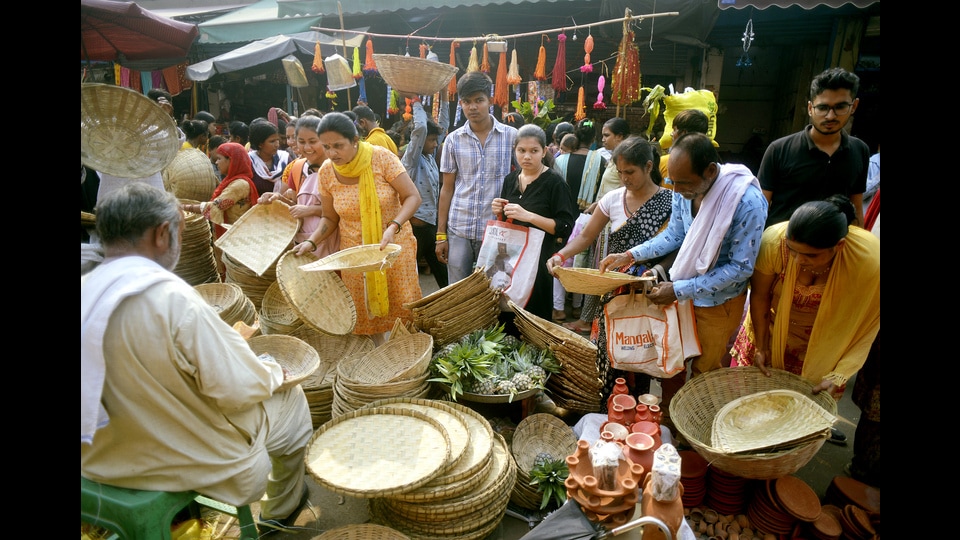
The small-time vendor has learnt the ropes of modern payment methods and has even adopted UPI scanners and numbers, to ensure that no customer flits away from his or her stall. The competitive nature of marketplaces has not witnessed any amendment at all, and if anything, the scenario has become even more edgy.
During recent visits to traditional cities like Ranchi, Varanasi and Pune, I experienced the sights, sounds, smells and tastes of traditional bazaars after many years. While walking around aimlessly one morning I found myself surrounded by several fruit vendors, vegetable sellers and hawkers of odd items. The sheer variety of wares, colours, odours and textures that presented itself before me and thousands of other visitors, was mind-boggling and utterly enthralling.
An elderly bespectacled lady, who appeared rather impoverished and perhaps from a tribal community, caught my eye. Her “shop” consisted of a small cloth and a makeshift covering. It was home, temporarily, to some gooseberries, peanuts, custard apples, and her.
A quick analysis of the situation indicated to me that her slightly better equipped and more business-savvy neighbours would make a killing, and leave her in the lurch. Not one customer seemed interested in her fare. Playing the role of a manna from heaven was not on my to-do list that morning, but I was delighted to buy some stuff from her and leave her with some encouraging words. Though she scarcely understood me, she smiled slightly and I felt somewhat aglow in the thought that I had bettered her lot, ever so slightly.
The hustle, bustle and unending buzz of traditional markets across India cannot be replicated by any seven-star mall. In evidence will be hawkers, gawkers, time-wasters, serious shoppers, entertainers, juice wallahs, earnest sellers, opportunists, cops and robbers too. There will be cacophony and chaos at times. There will be bored looking kids and spouses. Stray cattle, captive horses and doggies of all varieties might also be around. Haggling, jostling, arguing, chiding, smiling and even romancing, are some of the common activities that will be prevalent at such bazaars. An ardent writer will easily find much to savour, portray and describe.
Yet, the high flying mall culture has made a mark too. Modest malls will be found even in the smallest of towns. Upscale grand malls usually spring up in metropolises. The sheer flavour of human vibrancy that is palpable in an old-style market will, however, take time to develop in these humongous monsters. Except for the creamiest layer, all and sundry will frequent these malls, to splurge, to dine or to date. But without the India vibe, which this column mentioned previously, malls will remain antiseptic palaces which are detached from innate Indianness.
Americanism has been an essential component of such malls from the beginning. Aunties and uncles who’ve never tasted bagels before will nod in appreciation when their progeny offer them some. But something tells me that they would rather savour some kachauri chana down the road! Yes, the mega malls do make an attempt to offer every traditional Indian offering, but Shyam ji’s roadside kulchas will always take some beating!
Coexistence of the modern and traditional is always humankind’s key to evolution. Yes, old-timers like the postman, the telephone operator, the banker and the delivery boy have seen a sea change in their work modes, but tradition cannot be replaced entirely by modernity.
The economy depends a great deal on medium and small-sized businesses or MSMEs which often continue to thrive on age-old mores and modes of working. The smallest of shopkeepers or fruit sellers or gol gappa wallahs will hopefully not be shattered to smithereens by the gargantuan wave of technology-enabled commercialisation.
The common Indian, the man still on the street, even the Zomato delivery boy, must be allowed to dream and prosper in his or her own way. By allowing the smallest of businesses to thrive, India will be doing just that.


