
 E-Paper



Roundabout | Brave new girls of the 70s who redefined Indian cinema
On the passing away of Smita, Shabana admitted that while she did belittle Patil then and now but she considered her a great actor and the one who would compel Shabana to put in her best

 Prefer HTon Google


The 70s spelled many changes and gateways were opened to many new ideas and dreams for a better and more humane social order. Perhaps this was the decade that made the greatest difference to women who started rethinking their lives and roles in a largely patriarchal world and feminism not only took root but also started making waves. This was the time when equal rights advocates, like Gloria Steinhem, Kate Millet and Susan Miller, made their voices heard at the international level. It was a big leap from the old suffragette movement when women in Britain in the 20s with women demanding the right to vote in 20s to the declaration of the International Women’s Day on March 8 came from the United Nations in 1977. Declarations don’t spell change but it was the change that had organically come in the hearts and souls of women with education, employment and closer home the participation of women in the national freedom movement.
Now my readers may wonder why this women’s liberation babble when women’s day was a subject for the month of March and now we are well into April. Well some little thing always ignites ideas and memories and this time it was a declaration by a promising young actor Prateik Babbar officially dropped his patriarchal surname and chose to be known as Prateik Smita Patil, honouring his mother’s legacy, the mother he had never seen as she died in complications that arose while giving him birth. And one was back in one’s youth when new ideas were floating all around and when career had become the first choice of women marriage or no marriage and music of change was heard loud and clear with singing of Indian feminist Kamla Bhasin writing fresh lyrics to the tune of Surinder Kaur’s peppy Punjabi song: ‘Torh torh ke bandhanon ko dekho behane aati hain, Aayeingi gayeingi, yeh tao naya zamana layeingi’ (Breaking old shackles sisterhood come out, they will come, they will sing and herald in a new world). This was a tall order but the effort had begun.
The old order changeth
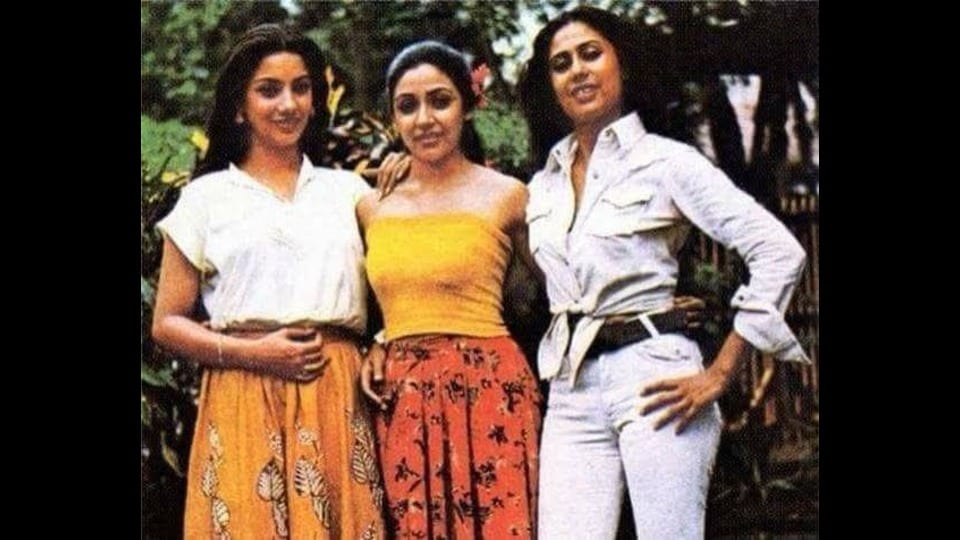
The women were not just singing, but acting out their dreams and aspirations on the cinema screen. This is the legacy not just of his mother Smita Patil, but a rare trio that Indian cinema, including Shabana Azmi and Deepti Naval. A flash of fresh feminine image was seen on the alternate cinema screen, with competent directors like Shyam Benegal, Mani Kaul, Rajinder Singh Bedi, Saeed Akhtar Mirza, Govind Nihalani and others who told the story of the new Indian woman and the trio has rightly described as ‘The brave new girls of the 70s who changed the blood of Indian cinema’. The glass screen had been broken and many more were to follow Indian cinema and the weepy, suffering image of the woman on screen by and large bid adieu. Benegal and his league portrayed women not as passive or decorative but as thinking persons who could well challenge patriarchal values.
The rivalry between Azmi and Patil was well known but it was an interesting twosome giving their best knowing each other’s talent well. On the passing away of Smita, Shabana however admitted that while she did belittle Patil then and now but she considered her a great actor and the one who would compel Shabana to put in her best. Interestingly, these three actors who left a deep mark in parallel cinema made their debut with none other than Benegal, with Azmi making a memorable entry with Benegal’s first feature film ‘Ankur’ in 1974 and winning the National Film Award award for it. In the next year 1975, Patil made her debut with Benegal’s Charandas Chor and went on to become one of the leading actors of the ‘New Wave’. Besides giving memorable performances in mainstream cinema and winning awards and accolades, she also appeared in several mainstream movies throughout her career. Her early death, when she was at the peak of her career, left her admirers stunned and it is indeed heartening that her son has given her the highest of all awards by following his mother’s legacy!
Naval, our dear Amritsar girl who trained in acting in the US, came on the screen in a small role in Benegal’s ‘Junoon’ in 1974, a memorable film in which she won the hearts of viewers in a short and poignant role as Benjamin Gillani’s bride and widow in the film inspired by India’s first war for Independence in 1857. The monsoon song ‘sawan ki aayi bahaar’ picturised on her went straight to the hearts of the viewers and this charm continues in parallel as well as mainstream cinema of this talented Chamko girl who gave memorable performances with Farooq Sheikh in an ad has received many international awards and honours. There was something intense about these rare actors of the swinging seventies.
nirudutt@gmail.com


