
 E-Paper



Shortage of DAP fertiliser delays wheat sowing in Punjab
Worries of Punjab farmers and agriculture department mounting as only 27% of the total area to go under wheat crop cultivated so far due to DAP fertiliser shortage


Wheat sowing in Punjab is way behind the schedule due to an acute shortage of diammonium phosphate (DAP) fertiliser as only 27% (9.5 lakh hectares) of the total area to go under the crop has been cultivated so far.
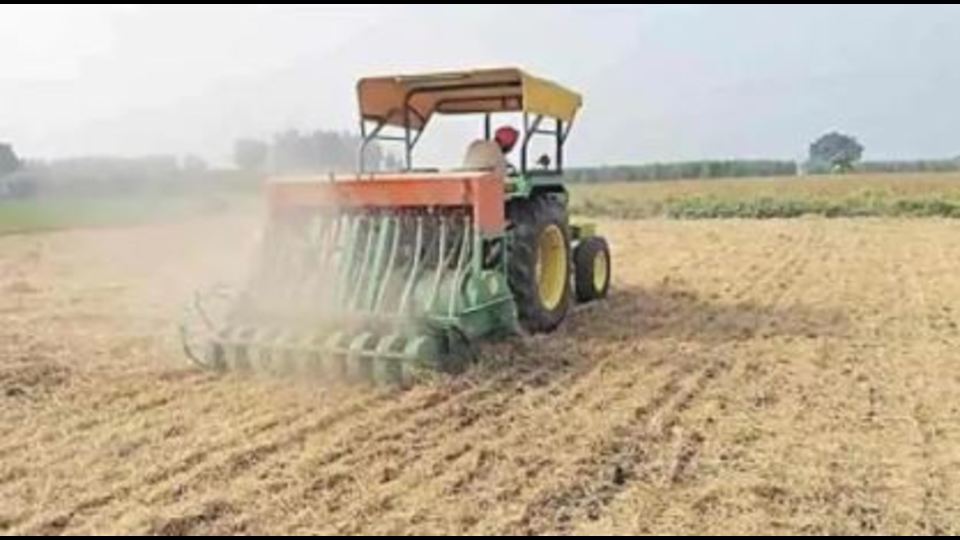
Worries of farmers as well as the state agriculture department are mounting since 60% of the total area was sown till the corresponding date during the previous rabi season last year.
The delay in sowing is highly likely to impact the crop yield adversely, say agriculture experts.
The state needs 5.5 lakh tonne DAP fertiliser this rabi season out of which 4.8 lakh tonne goes for wheat sowing as a key basal dose. But the farmers have received only 40% (1.96 lakh tonne) of the total requirement so far.
Late harvest of paddy due to rain at the maturing stage also pushed ahead the sowing of wheat. The shortage of fertiliser is adding to the farmers’ woes.
Of an allocation of 2.56 lakh tonne the state got for November, 45,000 tonne has been supplied to farmers.
Experts at Punjab Agricultural University (PAU) said a week’s delay translated into 2 quintal loss in yield as delayed sowing results in slow germination.
Punjab has an average per hectare yield of 5,000 kg. Loss of every quintal of yield means a loss of at least ₹2,000 as the minimum support price (MSP) on the produce for the current season has been fixed at ₹2,015 per quintal.
The experts said the best period for wheat sowing is up to November 25.
“There will still a shortage of 75,000 tonne of the fertiliser with no arrangement to fill the gap. We are not sure the entire allocation for this month will reach the state,” said a senior agriculture department official.
Nearly 50 rakes (goods trains) of DAP fertiliser lined up at the Mundra port in Gujarat are to be transported to Punjab (a rake carries average 3,000 tonne DAP), he added.
The DAP fertiliser from the US, Russia and China fulfills 70% of the country’s need while the rest of 30% is manufactured domestically. This year, the DAP production in China and two other countries was hit due to Covid-19, pushing the rates in the international market.
Alternate fertilisers
PAU soil scientist RK Gupta said for each hectare, 135 kg DAP is required to be mixed in the soil before sowing.
“There are alternatives such as single super phosphate (SSP) and nitrogen phosphorous and potassium (NPK),” said Gupta who suggested use of alternative fertilisers if the soil is deficient. “There are soils in Punjab where phosphorous content is sufficient. If more phosphorous is added it will lead of zinc shortage. So farmers are advised to act wisely and get the soil test done,” he said.
Punjab has a stock of 74,000 tonne NPK and 85,000 tonne SSP, agriculture minister Randeep Singh Nabha said.


