“Oh my God! But that is sacrilege,” I expostulated. “Seriously mom, how was I to know?” was my daughter’s embarrassed refrain.
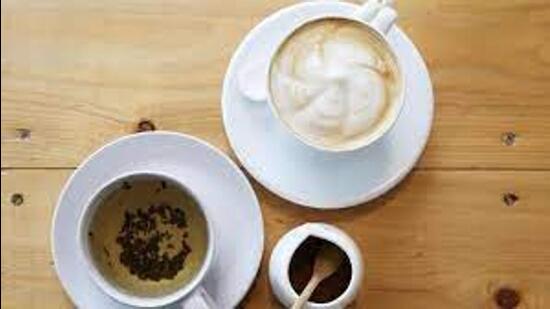
My daughter recently got married and set up house in Mumbai. Like most young, working girls of today her culinary skills can do with some improvement but being a true-blue Punjabi, her taste buds are extremely refined and discerning, sometimes to the point of exasperation. So, while she may not cook very well, she is the first to point out faults and inconsistencies in any preparation.
We were discussing how the tea in our house in Jalandhar tasted so well, according to her, and why she couldn’t get the same flavour in her Mumbai kitchen.
My outburst came when she revealed that she boiled fine, long leaf Darjeeling tea with cardamom, ginger, cinnamon and milk.
“You are destroying such fine teas by boiling them because that brings out the acid and bitterness. The addition of strong spices ends up dominating the actual flavour of the brew,” I told her.
Preparing tea and drinking it is a ritual, a ceremony that has its antecedents in China and Japan where hours are spent over cup after cup, served in a formal and traditional way.
For me, setting up a tray with a fine tray cloth, a kettle with a snug tea cosy, sugar bowl and lukewarm milk are all essential to brewing that perfect cup. But patience is of paramount importance.
Taking the 3Ts into consideration, one has to be careful and meticulous about the temperature, time and type of tea. There is no hurrying the steeping process, allowing the exquisite aroma of the delicious leaves to slowly release their colour and flavour, swirl lazily in the hot water while discharging whorls of fragrant molecules, resulting in an amber golden liquid resembling the shade of molasses. Then a dash of milk and there you have it, the perfect cuppa, but to be true it can take a lifetime to learn to make one.
{{/usCountry}}Taking the 3Ts into consideration, one has to be careful and meticulous about the temperature, time and type of tea. There is no hurrying the steeping process, allowing the exquisite aroma of the delicious leaves to slowly release their colour and flavour, swirl lazily in the hot water while discharging whorls of fragrant molecules, resulting in an amber golden liquid resembling the shade of molasses. Then a dash of milk and there you have it, the perfect cuppa, but to be true it can take a lifetime to learn to make one.
{{/usCountry}}The history of tea dates back to the 2nd century BC, where it was initially consumed as a restorative stimulant by Emperor Jing of the Han dynasty. Over centuries, its usage spread all over the world and today it may as well be the most commonly consumed beverage worldwide.
A soothing cup of tea comes immediately to mind in a multitude of circumstances.
As a pick-me-up when one is tired, as a prelude to a long session of gossip with friends, as a compulsory accompaniment to pakoras when guest come calling, as a cure for a sore throat or stomach ache, a night cap in the form of Kashmiri Kahwa or when I am twiddling my thumbs basking in the winter sun, a cup of tea gives me perfect company.
Anytime is tea time in India, with the markets flooded with a plethora of different varieties. Black, white, green teas, hibiscus and peppermint teas, Oolong, Lapsang Souchong, masala and cutting chai are all there to savour, but of course the best cup is the one you favour. pallavisingh358@gmail.com
The writer is a Jalandhar-based freelance contributor