
 E-Paper



Guest Column | The collapse of Mehfil building: Lessons in design and resilience
Built in the 1980s, the Mehfil building reflected a period of rapid urbanisation; unlike Chandigarh’s iconic modernist buildings, which prioritised longevity, structures from this era often faced pressures of cost and time, leading to compromises in quality


Renowned for its modernist architectural heritage, Chandigarh’s skyline represents urban harmony and forward-thinking design. But, the tragic collapse of a four-storey building, that for long was home to Mehfil hotel, serves as a poignant reminder of the delicacy of balance between functionality, aesthetics and structural integrity.
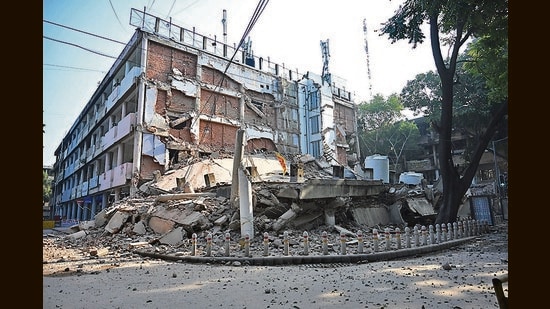
Built in the 1980s, the Mehfil building reflected a period of rapid urbanisation. Unlike Chandigarh’s iconic modernist buildings, which prioritised longevity, structures from this era often faced pressures of cost and time, leading to compromises in quality.
Mehfil’s fall underscores the impact of material degradation and insufficient maintenance. Reports indicate that foundational weaknesses and overloading contributed to the incident.
Concrete and steel, the backbone of most urban structures, degrade over time due to environmental factors such as moisture and temperature fluctuations. Neglected inspections exacerbate these vulnerabilities, leading to structural failure. The incident raises questions about adherence to safety standards and the frequency of audits for older buildings. India’s construction codes have evolved over the years, but many structures pre-date these standards, making proactive periodic evaluations crucial.
Urbanisation pressure and retrofitting challenges
As Chandigarh expands, the growing demand for commercial spaces in the city’s urban areas has led to the repurposing of old structures, giving rise to potential risks that can strain the structural integrity of these buildings. This is the urbanization pressure that the city’s structures can buckle under.
The Mehfil building had been taken up by a jewellery brand for setting up shop. Adapting the building for modern commercial use while keeping the structural strength necessitates retrofitting—strengthening existing structures to meet modern safety standards—as a viable solution. Techniques such as base isolation, seismic bracing and advanced reinforcement can significantly improve a building’s resilience. Nonetheless, retrofitting requires both investment and foresight, which are often not prioritised in favour of short-term gains.
Cultural and community impact
Mehfil was more than a building; it was a cultural landmark that hosted community gatherings, performances and celebrations. Its name, meaning “assembly” or “social gathering”, encapsulated its role as a hub of social and cultural life. The collapse represents not only a physical loss but also an emotional one, breaking a connection to the community’s shared memories.
This tragedy emphasises the need to balance redevelopment with preservation. Cultural landmarks hold intangible value that cannot be replaced by modern structures alone. When redevelopment is inevitable, efforts should focus on preserving the essence and spirit of the original space, whether through design continuity or integrating elements of the old into the new.
Engineering lessons and accountability
The Mehfil collapse highlights the vital role of engineering in ensuring building safety. Structural design must account for factors, such as load distribution, environmental stresses and material longevity. Engineers and architects must collaborate closely to anticipate and mitigate potential weaknesses.
Accountability is equally critical. Regulatory bodies must enforce rigorous inspections and ensure compliance with safety standards. Transparency in construction practices - from material sourcing to quality checks - is essential to prevent future tragedies. Public awareness also plays a role, communities should advocate for regular audits and maintenance of shared spaces.
Sustainability and future-proofing design
The challenges posed by climate change add another layer of complexity to urban design. Rising temperatures, heavier rainfall and shifting soil conditions demand adaptive strategies. Sustainable architecture prioritises not just environmental impact but also resilience in the face of changing conditions.
For example, using weather-resistant materials, incorporating passive cooling techniques, and designing for flexibility can extend a building’s lifespan. Additionally, urban planners must consider the broader context, ensuring that infrastructure elements like drainage systems and transportation networks support the resilience of individual buildings.
Towards a safer urban landscape
The Mehfil episode is a call to action for all stakeholders in urban development. Architects, engineers, policymakers and citizens must work together to ensure that safety and sustainability are at the forefront of design and maintenance practices. Regular audits, proactive retrofitting and adherence to evolving safety codes are essential steps in safeguarding our cities.
aashna.gakhar@gmail.com
(The writer is a Chandigarh-based freelance contributor)


