The salience of “words” in the diversity of human expression and their power to draw the “larger picture” by connecting the dots of seemingly disparate subjects remains a truism. Mohali-based birder and ecology thinker, Prof Gurpartap Singh, was deeply moved by pictures of wheat stubble burning. He penned down a poem in Punjabi and inscribed it on a “burning” image, as if an epitaph for a lonely pyre of an unclaimed, ravaged widow.
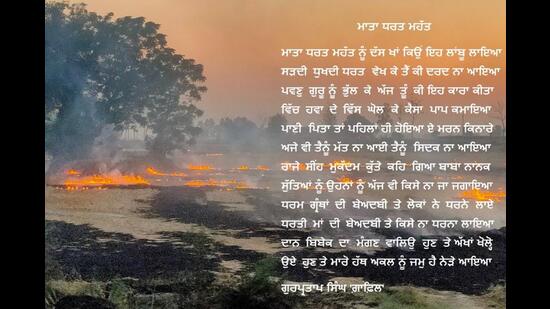
“It happens every year, but no one seems to care. The farmers, panchayats, government and people seem unconcerned. It seems as if this is something normal. This apparent apathy stirred me. The poem is themed after popular references from the Gurbani and Ardaas. I have invoked the spirit of Guru Nanak Dev by referring to his popular sayings. The stark difference in our approach to sacrilege of religious texts (which venerate the air, water and earth) and apathy to stubble burning has been touched upon,” Singh told this writer.
Singh kindly agreed to translate his poem for Wildbuzz readers: “Oh, why have you set the great mother earth afire? Didn’t you feel any pity, seeing the earth burning and smouldering, in a situation dire? Forgetting the spiritual guide, the air, what a blunder have you perpetrated, and, By poisoning the air, what a sin have you committed! The father-like water is already on the verge of death, And still you aren’t awakened and still not satisfied. Sayeth Baba Nanak, the rulers are lions and officials are dogs; even today, nobody woke them up from their slumber, sleeping like logs. People have been protesting, the disrespect to religious books. But none has opposed the disrespect to earth, howsoever bad it looks. O, the reverents beseeching God for wisdom, open your eyes now; Come to your senses, the Messenger of death is very near now.”
Bad luck for native turtles
{{/usCountry}}Bad luck for native turtles
{{/usCountry}}The aquarium trade is exerting a double blow on our wetlands. On the one hand, unwanted alien fishes are released into water bodies surreptitiously such as the Amazonian sailfin catfishes discovered in the Sukhna lake and very recently the North American Alligator gar fish from the Dal Lake, Srinagar! Another alien species, the Red-eared slider turtle, which is popular in the Indian pet trade, is regularly released into wetlands. These non-native species are proven threats to Indian turtles and fishes.
On the other hand, native turtles are poached from wetlands and sold to the aquarium trade. The most “popular” wild species for aquariums is the Indian Roofed turtle, which is otherwise accorded the highest immunity (at par with tigers) under Schedule I of the Wild Life (Protection) Amendment Act, 2022. This turtle is listed under the Punjab Biodiversity Act (PBA) as one of the State’s 13 “Notified Threatened Species” of fauna and flora, described as “on the verge of extinction” by the PBA and earmarked for special conservation actions.
Last week, veterinary student and bird photographer, Paramnoor S Antaal, wandered into the sumptuous environs of the Sharma Sweets & Fast Foods, Putlighar, Amritsar. His keen eyes, while roving over the aquarium fishes maintained in the sweets shop, observed two turtles also in the mix of goldfishes and mini-sharks.
Antaal brought the matter to the notice of the Forest department and the turtles were seized. However, DFO (Territorial), Amritsar, Rajesh Gulati, was cagey when asked by this writer as to whether legal action had been initiated against the aquarium owner and the poacher who had been robbing wetlands of wild turtles.
“Male turtles are more colourful and are about a third of a female’s size. Males are preferred for the illegal aquarium trade as they are easier to maintain. This turtle species is also easily sourced from the wilderness by poachers. Aquarium owners keep turtles for display purposes and sometimes for cultural / religious sentiments believing that turtles bring good luck,” Shailendra Singh, director, Turtle Survival Alliance, India, told this writer.
vjswild1@gmail.com