
 E-Paper



Rain fallout: Kalka-Shimla heritage track suffers worst damage in its history
Unesco-protected site, made operational in 1903, suffered damage during the rains in 1978, 2007 and 2017, but the quantum of destruction this time has been unprecedented.


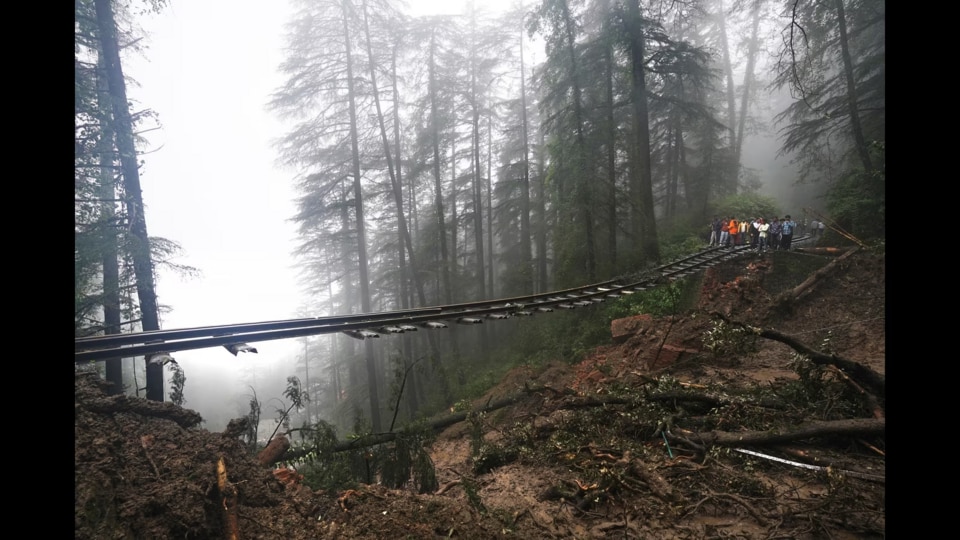
The three spells of heavy rain in Himachal Pradesh in July and August caused unprecedented damage to the Kalka-Shimla heritage rail track of Northern Railways with 214 incidents reported, including on the British-era arch bridge.
The 96.6-km narrow-gauge rail line, made operational by the British in 1903, is a UNESCO World Heritage section. The section has 102 tunnels, 886 bridges and 918 curves. Seven pairs of trains (up and down) cover 18 stations starting from Kalka station in Haryana to Shimla, the capital of Himachal Pradesh. The stretch is managed by the Ambala railway division.
The challenges in the preservation and maintenance of this line have been landslides, boulders and trees falling besides the old retaining wall giving way during the monsoon and forest fires in summer.
Services suspended since July 9 rains
This monsoon, there have been 214 incidents of damage to the track, but most of them have been attended to. Yet, rail operations remain suspended since July 9.
A railway official said the destruction that rains brought to the hills still feels like a nightmare and it is even more challenging to normalise the operations given the situation.
Another railway official, pleading anonymity, said the rail line was damaged during the rains in 1978, 2007 and 2017, but the quantum this time was unprecedented.
In August 2007, heavy downpour washed away a part of Koti station building and it took days to put the service back on track.
Divisional railway manager (DRM) Mandeep Singh Bhatia said that this is worst damage the track has sustained in its history and they are working on war-footing to start train operations in phases by the end of this month.
Highway widening hurdle: Rail officials
The railway officials have highlighted that the widening of the Kalka-Shimla highway, which runs parallel to most of the stretch, is proving to be a hurdle in track maintenance.
They say that many locations on the highway have unprotected cut slopes due to which flow of water from the roads heads to the track at locations in the absence of culverts, adding to the problem. This argument has, however, been rejected by the highway authorities.
The track suffered its first major damage from July 9 to 13. Shimla and Solan districts received 160mm and 273mm of rain, respectively, on July 9 and 10, which is about 20% of the annual rainfall for both.
A total of 137 incidents, including 15 critical ones between Kalka and Solan, were reported during those days amid the commemoration of the 15th anniversary of the track’s being declared a Unesco-protected site on July 8.
Thirty affected locations between the 60km Solan and Shimla stretch were cleared on priority and a single pair of trains was started for local passengers on July 15 on the stretch. The repair of five critical locations is pending between Kalka and Solan.
British-era bridge washed away, repair in progress
The second major spell of rain from August 13-14 left 38 new locations affected. Officials said that 23 of these locations have been restored and 15, including seven very critical ones, are under repair.
The damage included the Kandaghat station and the five-span arch bridge (one span being 3.66metres) collapsed completely between Jutogh and Summer Hill stations near the state capital.
This was a major blow for the railways when a cloudburst washed away a whole British-era bridge and left a part of the track hanging in the air.
The restoration began near the arch bridge after the National Disaster Response Force (NDRF) ended its rescue at the damaged temple site of Summer Hill, Naveen Jha, senior divisional commercial manager, Ambala railway division, said.
During the spell of rain from August 23-24, the line suffered damage at 32 sites when temporary restoration works were washed away. A diesel locomotive shed at Shimla station was also damaged because of a landslide.
Jha said as the dry spell has approached, the level of restoration will be increased and the risk of damage to temporary or new works would be less.
DRM Bhatia said ₹25 crore is being spent on strengthening bridges, retaining walls, grouting of tunnels and other long-term restoration activities.
“For the arch bridge, the casting for the central piers has been initiared as the material for the civil work and temporary pier have reached Summer Hill station. Girders are being prepared at the bridge workshop in Jalandhar. A target to restore rail traffic between Kalka and Kothi has been set for September 10. We are looking to resume operations between Kothi and Solan after 10 days and Solan and Shimla by this month-end,” he added.


