As temperatures rise and natural water sources dwindle, thirsty garden birds can be observed hovering around water taps turned ever so tightly. Photographers have captured these poignant avian moments emanating from a dry, scorching heat.
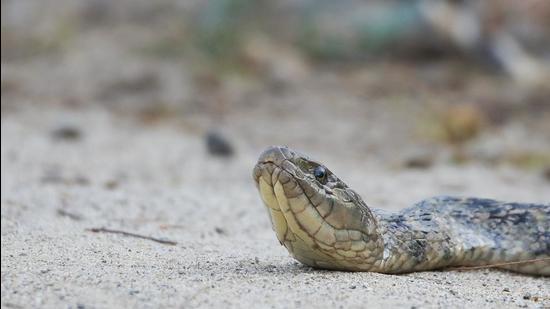
Perhaps, the most disturbing photograph that mirrored the vivid and expressive emotions displayed by parched birds emerged from the Perch Check Dam in the Shivalik foothills behind the Postgraduate Institute of Medical Education & Research (PGIMER). The visual was of a checkered keelback (Asiatic water snake) suffering from dehydration and prey scarcity due to its aquatic habitat being virtually annihilated overnight.
Unlike an evolving drought situation that entails water resources drying out slowly, warning wild species and allowing them a chance to adapt and migrate, the dam emptied out in 48 hours after a mechanical failure in the sluice gates. The keelback species shelters within rocks and niche spaces besides the dam’s water and preys on frogs and fish by swimming out. Like other wild species dying in the empty dam, keelbacks were accustomed to a perennial source of water for 27 years, ever since the dam’s inception.
The keelback had left the dry dam’s immediate vicinity in a fruitless search for water and prey and was photographed by Amardeep Singh, a bird photographer and chassis design section head at Maruti Suzuki India’s plant in Gurgaon. “I was taken aback by the snake’s behaviour. It did not move away or put up an aggressive posture when we got close to it. The tongue was not flickering. It slowly raised its head once and then lowered it to conserve energy. It was displaying an inert and listless disposition due to the catastrophic loss of its water habitat,” Singh told this writer.
{{/usCountry}}The keelback had left the dry dam’s immediate vicinity in a fruitless search for water and prey and was photographed by Amardeep Singh, a bird photographer and chassis design section head at Maruti Suzuki India’s plant in Gurgaon. “I was taken aback by the snake’s behaviour. It did not move away or put up an aggressive posture when we got close to it. The tongue was not flickering. It slowly raised its head once and then lowered it to conserve energy. It was displaying an inert and listless disposition due to the catastrophic loss of its water habitat,” Singh told this writer.
{{/usCountry}}Pyaas ke phool
India’s diverse traditions exalt the creed of compassion for creatures in distress, especially during water shortages. There are anecdotal remembrances from pre-Partition Punjab of black bucks entering villages in droughts and villagers provisioning water and shikaris putting away their weapons under the sway of the community’s empathetic reach out. The Bishnois excel in community ‘sewa’ of wild creatures and their women rise to the occasion by breast feeding orphaned fawns. Indian art forms, especially miniature paintings, have revelled in ethereal feminine beauty indulging in a divine-like compassion for creatures, such as cranes, swans, does and black bucks.
One of the simplest ways to provide a seamless continuity to such traditions is to put out a bowl of water in gardens or balconies. But please ensure that the placement is in the open and away from hiding places that a feral cat can use to ambush birds habituated to the assured water. It will allow birds to bathe and enhance feather maintenance. Dampening feathers loosens dirt and facilitates preening. Bees, insects and butterflies also avail of water bowls.
Watching birds bathe and quench their thirst is certain to provide householders with unlimited happiness, a very proximate connect to nature and render their children more rounded and empathetic personalities.