
 E-Paper



Wildbuzz | Chandigarh Club’s singer
Commonly known as the ‘jal murghi’, common names in the vernacular are based on the sounds emitted by this lightweight puff of feathers; lizzies are far less prone to wanton violence against each other in the competition for food and territory


While entering the Chandigarh Club, enigmatic sounds emerge from the enclave of a fountain amid green foliage. The sounds are of a bird, which is heard much more than seen and almost never really known. The calls go something like this: a monotonous metallic krr-kwaak-kwaak or kook...kook...kook...and a myriad variations. Members cannot miss hearing these vocalisations that increase in intensity as the rainy season sets in and even extend into the night for uninterrupted spells of 15 minutes. The “invisible” avian is the white-breasted waterhen, a common but secretive bird, which tends to be overlooked because it maintains strict radio silence during dry seasons.
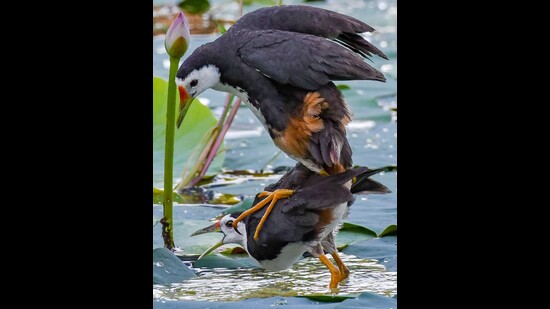
Commonly known as the ‘jal murghi’, common names in the vernacular are based on the sounds emitted by this lightweight puff of feathers. For example: Ruak-ruak in Malay, Korawakka in Sinhala. Dawak in Hindi and Kuraki in Sindh. The naturalist EH Aitken very artfully described the waterhen’s breeding season call: “It began with loud harsh roars which might have been elicited from a bear by roasting it slowly over a large fire, then suddenly changed to a clear note repeated like the coo of a dove”.
If observed in the open while it is not disturbed, the waterhen, as Salim Ali described her, appears thus, “The stumpy tail is constantly jerked up as the bird saunters about, flashing chestnut coverts underneath”. However, if alarmed, the waterhen will flee with the bearing of a fair damsel caught in the open with her skirts down, snatching them up in an embarrassed tizzy, and thence making for the nearest bush with her head down in a 100 m sprint worthy of Olympian determination!
Waterhens are seen at the Sukhna lake and even around hedges of city parks . They can take up temporary residence in a bungalow garden, as one did in ours a few years back, stamping her stay with greenish excreta all over the verandah and tiles in a secretive glee.
Rights over mites
Insects and lizzies are critters, which give us the jitters. But lizards are non-venomous and biological pest control agents par excellence, balancing the numbers of mosquitoes, moths, ants and cockroaches in our homes with due diligence. Only fault? They ain’t good looking! Also, no one seems interested in the fact that lizzies cause less human deaths than the proverbial peashooter! But they terrify ignorant, intolerant householders the way an unrelenting cobra wrapped around fair ankles may.
Lizzies are far less prone to wanton violence against each other in the competition for food and territory. A lesson for today’s youth, mindlessly mired in the gun culture songs of late Moose Wala and Co, and blowing out brains at the drop of the hat or inflicting violence at will on the weaker sex in vain displays of toxic masculinity. As the rains raised humidity last week, a wall in our backyard went swarming with insects and ‘bizee lizzie’.
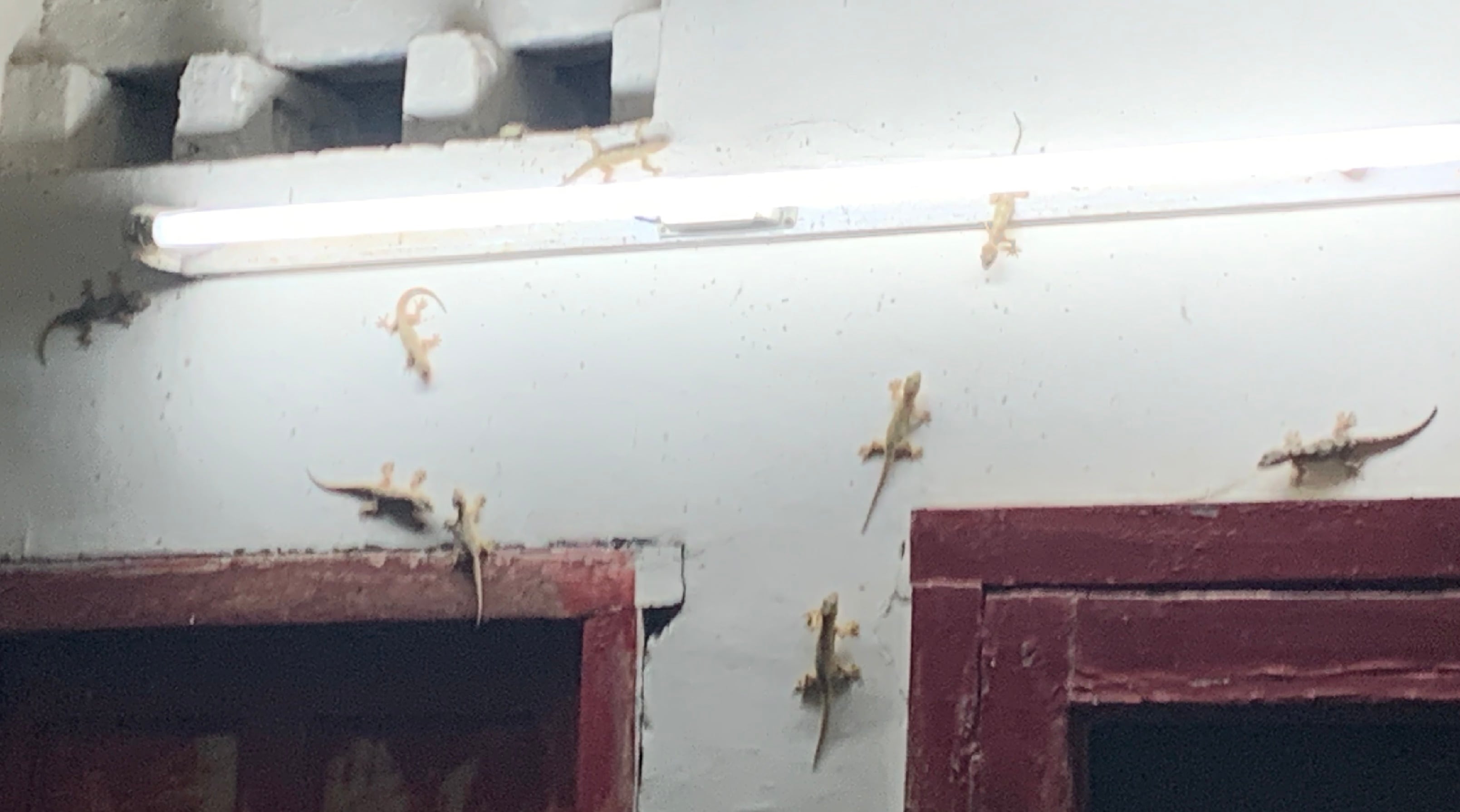
A lurking lizard contingent of some strength --- nine --- went snapping insects within a few square feet of the wall. A tube light at the arena’s centre acted as a light lure for unsuspecting prey. The competition saw fights over insects. However, it was more of a flurry rather than ‘fists and fury’ leaving none of the nine hunters harmed. The weaker lizzie would disengage without much ado and let the stronger one gobble the disputed insect.
The sparring constituted a stark underlining of Nature’s dictum: might is right in the light of the night. Though, perhaps, not as glamorous as a deferential leopard scurrying up a tree when a tiger’s shadow disrupts the moonbeams lazing upon the forest floor.
vjswild1@gmail.com


