
 E-Paper



Wildbuzz | In waters of snows, war of the fish
In our lofty Himalayan rivers tumbling from the eternal snows and glaciers, a native species, the snow trout, is struggling to ward off a monster introduced in the British era, the brown trout

 Prefer HTon Google


‘Discarding the colonial past’ has found favour in contemporary controversies over eternal flames and war memorials. Yet, in our lofty Himalayan rivers tumbling from the eternal snows and glaciers, a native species, the snow trout (ST), is struggling to ward off a monster introduced in the British era, the brown trout (BT). Ever since the rivers were dammed for hydro-power, the exotic, invasive native shipped from Europe, the BT, has grown in numbers and savaged the ST by predating on its young ones.
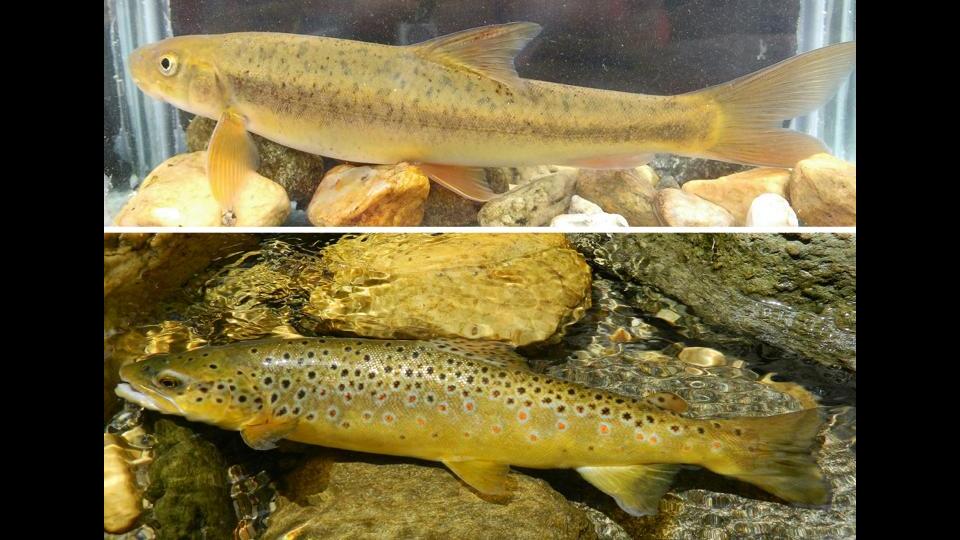
“This has forced ST to ‘live fast and die young’, so as to raise more soldiers for this war with BT. We found that ST is investing so much energy into raising egg numbers, that, post egg-laying, majority of adult ST die. Never, ever, has ST shown such a maturity-mortality trade-off. ST are taking slow poison by opting for this survival strategy,” Aashna Sharma, an intrepid field researcher and an alumnus of Panjab University, told this writer.
Research carried out by Sharma and her colleagues from the Wildlife Institute of India, Dehradun, revealed a pathway of hope for the proverbial return of the natives. That is, if we do not dam our rivers because altered, homogenous ecology favours invasive species. That is where hyper-nationalist governments, keen to ameliorate the colonial imprint, must not stop at vote-fetching, eyeball-grabbing war memorial makeovers.
“Our research established that following a flash flood in the Asiganga tributary upstream of Uttarkashi, the BT were completely wiped out while ST survived. This is because the native fish sensed the impending flash floods and found safe havens. Since the Asiganga has not been dammed, the unaltered flow and flash floods selectively weeded out the progeny of British colonialism,” said Sharma.
On wings of desire
Some great literary figures share a common trait: a deep interest in birds and their use as complex metaphors and illustrative analogies in their plots.
If Shakespeare was peerless when weaving the imagery of falconry into his plays, the 19th century writer of Wuthering Heights, Emily Bronte, used the cuckoo’s brood parasitism as the central analogy of her classic, with the lapwing and the Hedge sparrow also intervening in the guise of apt comparisons to illuminate human predicaments.
In her novel, the central characters, Heathcliff and Catherine, are compared to cuckoo chicks who as interlopers displace the rightful progeny from their pride of place in two families of landed gentry. The novel situates a bizarre moment of ornithology when a frenzied Catherine tears open with her teeth her fluffy pillow and precisely identifies species of birds from its stuffing of diverse feathers: turkey, wild duck, pigeon, moorcock, lapwing! She goes on to examine if a lapwing’s feather was red, it meant the bird had been shot.
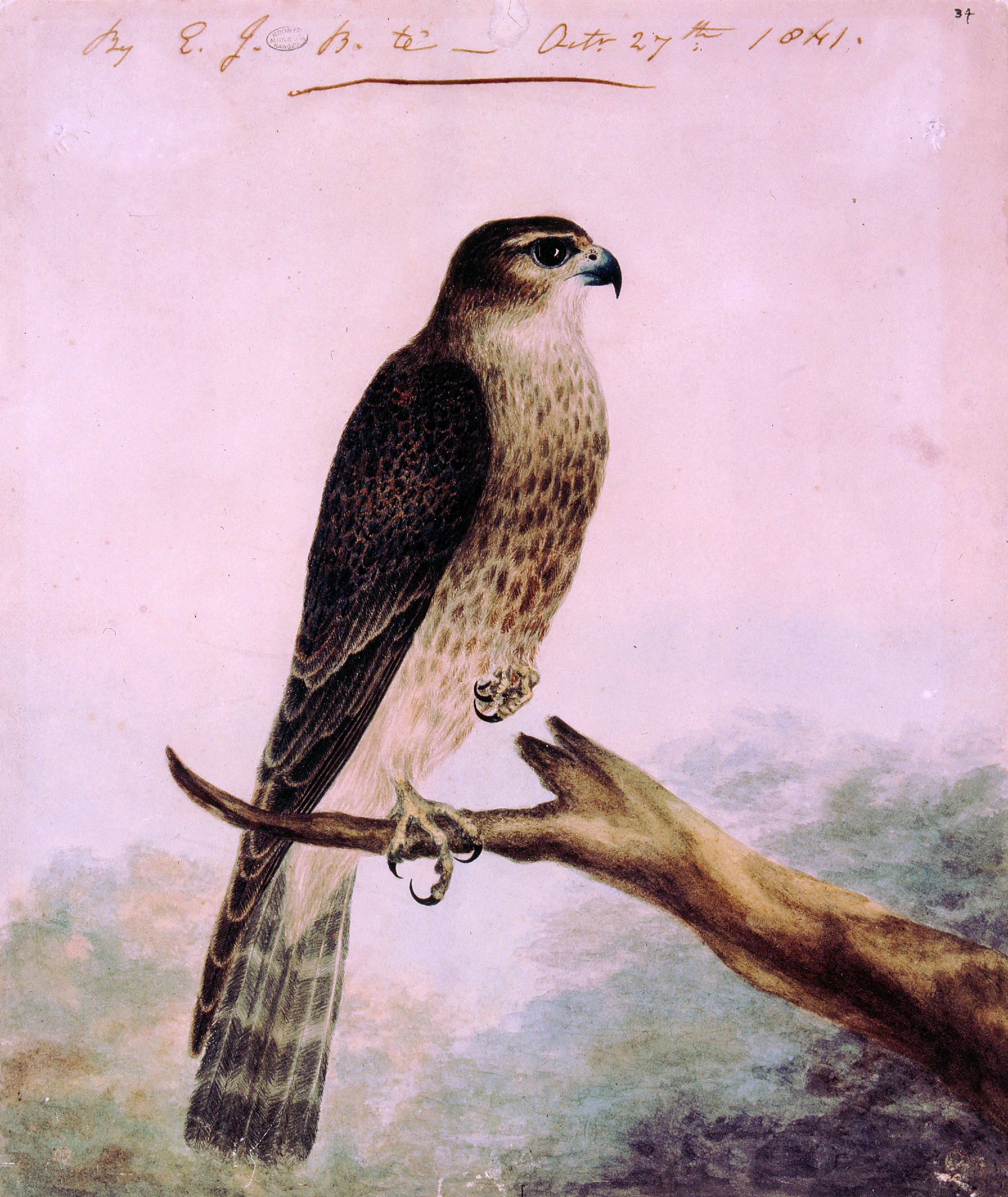
What is lesser known is Bronte’s startling, life-evoking painting of a Merlin, a smaller species of falcon. In medieval England, a Peregrine / Gyrfalcon was considered worthy of possession by the high nobility while a Merlin was reckoned as ‘a falcon for a lady’. Mary, Queen of Scots and Catherine the Great were eminent female falconers to fly Merlins.
The subject of Bronte’s finely-executed watercolour painting of 1841 was an injured Merlin rescued by her from the moors. She named the Merlin, ‘Nero’, presumably after the tyrannical emperor.
Bronte’s multi-creative sensibilities also sparked poetic effervescence and she was a passionate pianist revelling in the repertoire of George F Handel, J Haydn, WA Mozart and LV Beethoven. Unlike falconers who are paranoid about losing their captive bird, Bronte was empathetic to freedom’s soar,which was so innate to her captive Merlin. Her soul kindled these kind, thoughtful verses: “Ah could my hand unlock its chain, How gladly would I watch it soar, And ne’er regret and ne’er complain, To see its shining eyes no more”.
vjswild1@gmail.com


