
 E-Paper



Worse than unemployment is the loss of hope
When the youth feel that the system does not work for them, is when young people take to the streets in protest

 Prefer HTon Google


On a trip to Paris last week, I found myself in the middle of the ongoing student protests in Bastille Square. Amid the tear gas and loud chants calling for improvements in schools and protesting police violence, there was a palpable frustration among the protestors that space for job opportunities and upward mobility is shrinking. Meanwhile, widespread youth protests in India have focused on unreliable and corrupt examinations and now, the violation of voter rights. Is there a common underlying dynamic across these two movements and in other parts of the world where the youth are increasingly disenchanted with governments? Or does Leo Tolstoy’s opening line from his 1877 novel Anna Karenina — “Happy families are all alike; every unhappy family is unhappy in its own way” — also translate to young people across countries?
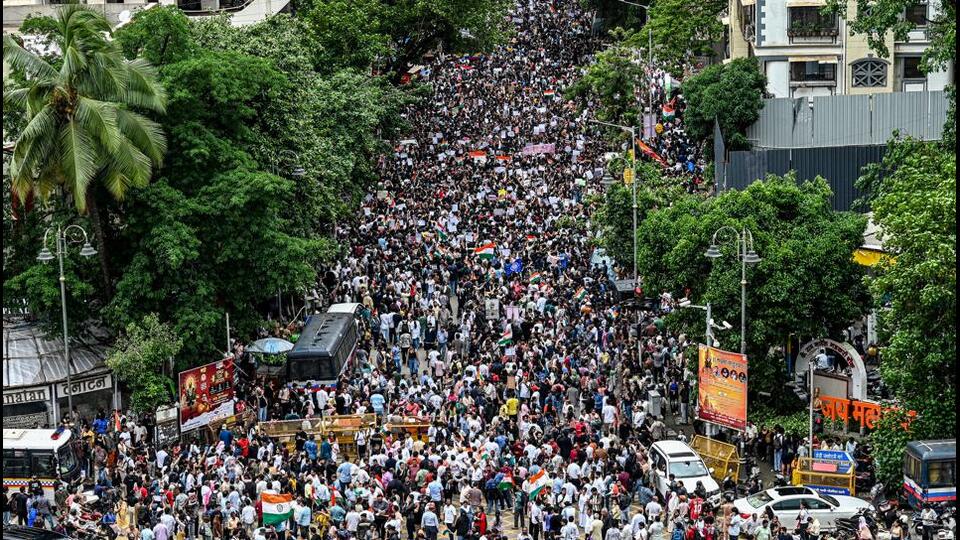
A first instinct is to look at youth unemployment rates, with the argument being that the unemployed have both more to protest about and more time to protest. Although youth unemployment is high in India — the State of Working India 2026 report from Azim Premji University found nearly 40% of graduates up to age 25 and about 20% of those aged 25 to 29 unemployed, these are not high by historical standards in India.
Globally, the evidence tying youth unemployment and protests is mixed. A large study covering 40 developing countries from 1991 to 2009 found that political violence is correlated with youth unemployment, along with slow growth and inequality, which tend to drive unemployment. It is hard to disentangle whether it is youth unemployment that drives protests or the determinants of that unemployment, such as slow growth and inequality, that are the real reasons. A survey of 10,000 young people in five Arab mediterranean countries found that the unemployed were no more likely than the employed to endorse political violence or to join demonstrations, including during the Arab Spring.
There is also no consistent picture in individual countries. South Africa’s unemployment rate for 15-to-24-year-olds was 60.9% in early 2026, higher than in many countries of the recent Gen Z wave. Although it has seen riots and endless local service-delivery protests, there has been no uprising against the state. In contrast, Nepal’s government fell with youth unemployment near 20%, and the uprising in Morocco was at an unemployment level of 22%, although these are official estimates and real numbers may have been higher.
An explanation that is better grounded in evidence is that protests are fueled by a mismatch between access to education and job opportunities. The Arab countries most shaken in 2011 had a rapid expansion of schooling alongside weak labour markets. On the eve of the uprisings, roughly 30% of Tunisian university graduates were unemployed, and in Egypt nearly all of the unemployed young people had at least a secondary-level education. Another study found that people with more schooling whose incomes fall short of what their backgrounds would predict were more likely to protest. Education raises expectations and lowers the cost of organising at the same time. When the payoff does not come, the youth spill out to protest. This is consistent with the situation in India, where between 2004–05 and 2023, India added roughly 5 million graduates a year, but only about 2.8 million found employment each year.
Some uprisings attributed to joblessness are better explained by prices. For example, Nigeria’s #EndBadGovernance protests in 2024 came after fuel subsidies were removed and food inflation passed 30%, while there is no evidence that the country’s official youth unemployment rate was increasing. The survey from North Africa that I brought up earlier found that those in informal or part-time work, and those unhappy with the jobs they had, protested at close to twice that rate – something to ponder in a country where so many young people are in the gig economy, which combines high stress with low wages.
In many countries, mass, youth-led, anti-government protests begin when there are many educated youth who are excluded from employment, and a perceived unfair allocation of opportunity. The effect is concentrated where institutions do not respond to grievances. Grievance alone is still not enough. A Cambridge study of 30 European countries during the Great Recession found that protest peaked where economic hardship and distrust of the political system rose together. Either one alone produced far less effect on the streets. Similarly, a study based on surveys from 28 countries between 2006 and 2012 found that long-term economic disadvantage tends to discourage people from participating in protests, but a worsening of prospects, by contrast, does encourage political action.
Contrary to what one might think, the youth in India are not opposed to the government as a matter of principle, since many of them spend much of their time trying to get into that very system by writing various government employment exams. In early 2024, more than 4.8 million applicants sat for Uttar Pradesh’s police constable exam for over 60,000 posts. That exam was subsequently cancelled because of a question paper leak. Ironically, many of the aspirants would have liked to have the jobs of the policemen and policewomen conducting the lathi charges against protestors.
A study from Tamil Nadu by the researcher Kunal Mangal found that when the state froze 86% of vacancies between 2001 and 2006, graduates did not give up and turned to private jobs. They waited longer, and a decade later these graduates who were affected by the freeze still earned less and had delayed marriage and starting families. In the long term, these heavy, unproductive investments in preparing for exams — and there are similar examples from other parts of the country — create severe socio-economic costs for the many candidates who do not get selected. An ethnography of educated young men in Meerut published in a book, Timepass describes the same waiting — a life spent killing time between exams and applications, and odd jobs. But, people will wait only if they believe the system is fair and that if they wait long enough, they too will get their turn. That belief has now been seriously tested.
What’s the takeaway for India? The lesson is not that unemployment doesn’t matter, but that the critical driver of youth unrest is the gap between what education promises and what it delivers. A private sector that pays graduates something close to a government salary would shorten the queue more than any number of extra exam centers. But, that seems unlikely when artificial intelligence is taking existing jobs, and private sector investment is leaving the country.
Leaked exam papers shake young people’s confidence that the wait for employment is fair or worthwhile. At such times, when they feel that the system does not work for them, the perception that their vote has been taken away amplifies their belief that they have little to gain from supporting a system that does little for them, and adds fuel to the fire. And that is when young people take to the streets in protest – when they feel that they have nothing left to lose.
Ramanan Laxminarayan is president, One Health Trust, and author of the book, Bacteria to Buddha: How Cooperation Shaped Consciousness — and Makes Us Human. The views expressed are personal
(This is a Hindustan Times digital exclusive)


