
 E-Paper



Wildbuzz | Maharani of the malba
The bird turned out to be a fascinating rarity, a Rufous-tailed Rock thrush; this species passes through India in autumn from summer breeding grounds in the northern latitudes

 Prefer HTon Google


Not too many birders prefer to explore obscure, rough and off-road habitats. Most settle for havens close to roads and relish “served plates” like Chakki Mod in Solan district. Pushkar Bali is a birder who has made a name for himself by plunging off the birding map and coming up with new records and undetermined habitats. A pharmacist by profession, he does not hesitate to file complaints against powerful interests assaulting biodiversity.
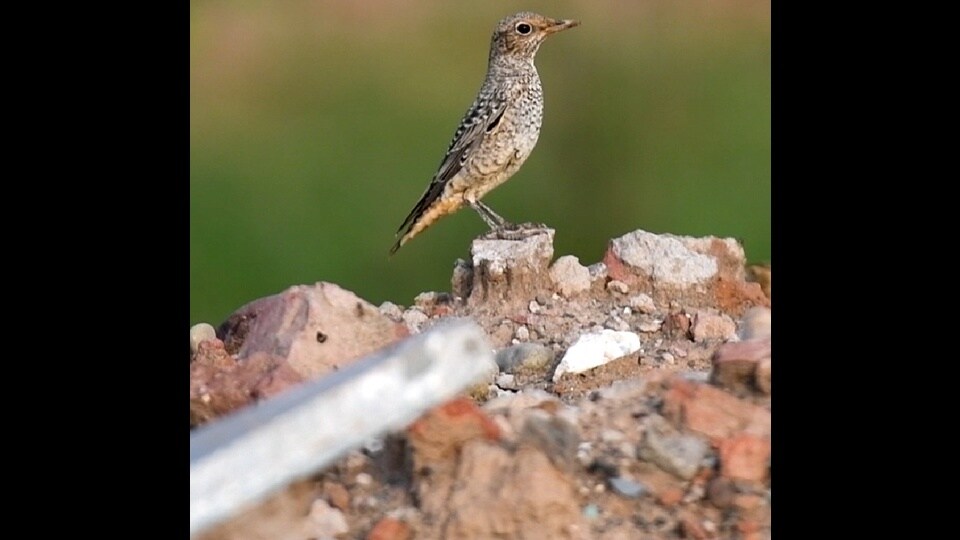
On September 28, Bali went looking for a sensation (Golden-fronted leafbird) in the Saketri scrublands adjacent to Sukhna Lake. The scrublands are under threat of annihilation from urbanisation. Bali glimpsed there a slim bird with a regal, upright posture on a mound of ‘malba’.
The bird turned out to be a fascinating rarity, a Rufous-tailed Rock thrush. This species passes through India in autumn from summer breeding grounds in the northern latitudes. It then embarks over the blue sprawls to winter in sub-Saharan Africa.
Bali’s find triggered a wave of birders to Saketri seeking a ‘thrush pretty pic’. Some rushed from Kaithal and Jammu! But for Bali, the latest feather in his birding hat was not simply a post of untempered exultation on social media. “It pains me to see pristine habitats shrinking in the name of development,” Bali told this writer.
“As Saketri was new to me, and in keeping with my habit of exploring unfamiliar spots, I had wandered beyond the usual birding stops. The leafbird did not grant me an audience, but instead, I stumbled upon something far rarer: the thrush. Ironically, it was not perched on a natural rocky outcrop, but on construction debris including washed cement from mixer trucks. It was a poignant reminder of how our winged guests are being forced to adapt to human-wrenched landscapes. The arrival of such a rare passage migrant is a cause for celebration but it also serves as a grim reminder: unless we conserve habitats around us, these gifts of nature may vanish from our region’s skies,” he augured.
Monkey terror at the Sukhna
The Indian bullfrog is a pugnacious predator, recorded as even gobbling a Russell’s viper. But in nature, there is oft a higher killer, or bigger bully/terroriser.
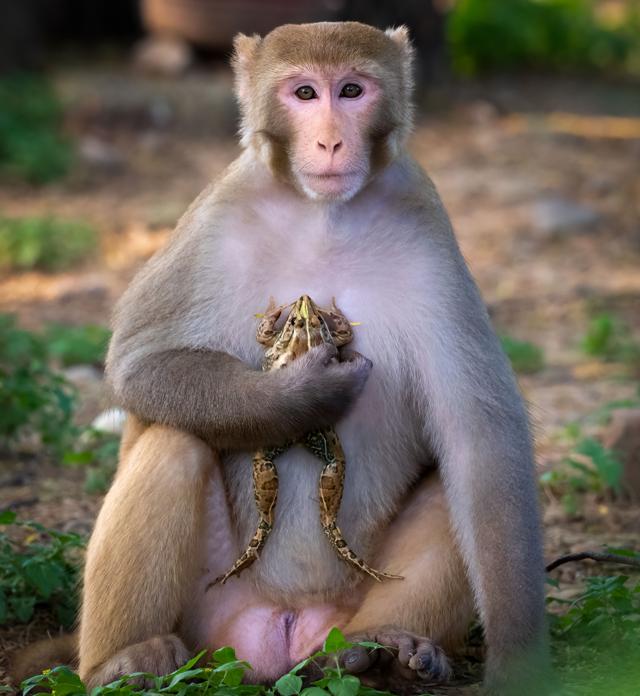
At the Sukhna lake’s regulator-end, award-winning wildlife photographer Anuj Jain witnessed a spectacle. Four monkeys were toying around with a bullfrog. The bullfrog was caught hard by the right hind leg, flipped over and yanked by one monkey. Another tried to bite the bullfrog but left it that possibly because it did not like the taste, or whatever. Otherwise, monkeys have been recorded preying on bird eggs, caterpillars, termites, ants, butterflies etc.
Jain would like us to believe the incident had a happy ending: the primates returning the bullfrog to its home after monkeying around with the traumatised amphibian! Certainly, the regulator-end monkeys are over-fed by people. They are, if anything, idle and well-fed enough to mate at more than the monkey rate and free to entertain novel impulses in their vacant hours.
Jain told this writer: “I saw one monkey put the frog in his mouth to bite — only to release it moments later and playfully catch it. The monkey kept releasing and catching it. The bullfrog was calling out in distress. What struck me was that in between the torturous play, the monkey held the bullfrog with surprising gentleness — almost the way one would hold a baby (though it is doubtful the bullfrog felt a mother’s tenderness in the monkey hug). After five minutes, the monkeys took the frog under the bridge. When they reappeared moments later, the bullfrog was gone. I assumed they left it, unharmed. That said, the lines are blurred between curiosity, play, predation and danger in the animal world.”
vjswild2@gmail.com


