Serpents can dwell right under the human nose and go unnoticed till virtually, forever. Or, they were noticed, but by those who could not care less about their zoological significance. So is the case with the very rare Forsten’s cat snake, which was not known to exist in the Tricity till March 2021. In that month, a specimen was rescued from a hen coop on the Morni road ahead of Nada Saheb having gobbled an egg. Within a few weeks, another specimen was retrieved from a colony near Kaushalya dam. Last week, the third specimen was rescued from a tree in the jungle of Panchkula’s Sector 21 adjacent to Ghaggar river. All three specimens were rescued by the Haryana Forest department.
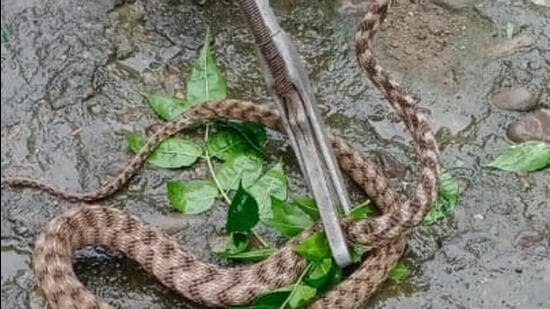
Prior to the advent of snake-rescue teams, people would either hound the snake or kill it. The body would be dumped and no one bothered about its identity or biodiversity value. But with snake-rescue teams in vogue and just a cellphone call away, people abstain from ‘bludgeon & dump’. Rescued specimens enter the public domain via social media and come to the notice of zoologists keen to ascertain species diversity in the absence of comprehensive herpetology surveys.
The Forsten’s is the largest of the cat snakes found in India and is “mildly venomous” to humans. So, in addition to the highly-venomous Common krait, Spectacled cobra and Russell’s viper, the Tricity region harbours the mildly-venomous Forsten’s and Black-headed Royal snake. The Forsten’s dwells in tree hollows and is agile on trees, preying on rodents, birds, snakes, bats and lizards.
Marmots and us idiots
{{/usCountry}}Marmots and us idiots
{{/usCountry}}Tourism’s surge into Ladakh has brought in its advent undesirable activities, such as besieging burrows of Himalayan and Long-tailed marmots for selfies and feeding them unhealthy foods laced with preservatives. Just as at the Sukhna lake, where visitors disregard multi-lingual warning boards against feeding migratory birds and fishes with atta balls, popcorn, channa-masala etc, tourists to Ladakh are least bothered about the severe harm they inflict on marmots via their mindless self-indulgences.
Essentially, when summer seeps into the cold desert in June, marmots get engaged full time with gulping down local grasses, roots, berries etc to boost body fats. “During our two-year field research on the rodent diversity of Ladakh, we trapped marmots and measured their weight. In June, they were about 4-5 kg but by September, they had grown to about 8-9 kg. The accumulation of body fat is essential for the hibernation success of marmots once the long winter commences. However, when tourists feed marmots with chips, biscuits, packaged foods etc, marmots get distracted from the principal task of ingesting and absorbing vegetation and their body weight does not increase much. The consequence is that they suffer risk to their lives during winter,” Dr. Vipin Chaudhary, an expert on rodents from the ICAR --- Central Arid Research Institute, Jodhpur, told this writer.
At Tangtse near Pangong lake (made famous by the film, Three Idiots), locals revealed to Dr. Chaudhary’s research team that an estimated 100-150 marmots had died there because of tourist feeding. This had compelled locals to put up display boards advising tourists not to feed / harass marmots. “Marmots have been included under Schedule II of the Wildlife (Protection) Act, 1972. That implies they are a protected species and unauthorised citizens are barred from intervening in their natural lives,” added Dr. Chaudhary.
As a concerned blogger, Nishand Venugopal, put it pithily: “Don’t treat us like a household pet, If we get sick we can’t visit a vet”.
vjswild1@gmail.com