Delhi’s deputy chief minister Manish Sisodia on Wednesday said the relaxation of the certain restrictions in Delhi will depend on the “sources of the virus” and locality specific Covid-19 data, hours after the Union government issued detailed guidelines that allowed certain commercial activities to resume from April 20 in areas that are not disease hot spots.
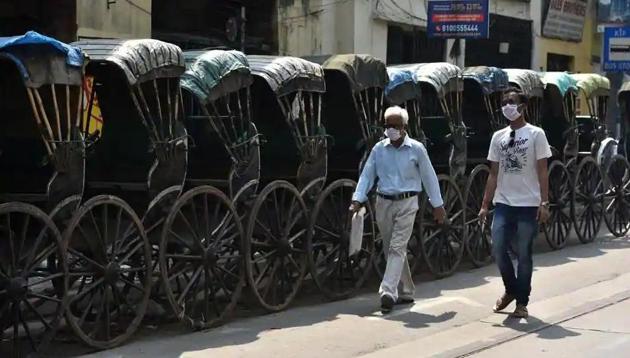
The 21-day national lockdown to contain the spread of the pathogen, imposed on March 25 by Prime Minister Narendra Modi, was on Tuesday extended till May 3.
“We are keeping an eye on the sources of the virus in Delhi. It (the resumption of permitted commercial activities) will depend on the data of the next few days,” Sisodia told HT.
Delhi had 17 Covid-19 cases on Wednesday and two deaths related to the virus. The state administration has designated 56 “containment zones” in the city where the curbs are stricter, and which are unlikely to get any relaxations as long as they retain that status.
Taking the guidelines issued by the Union ministry of home affairs (MHA) as a reference document, several senior officials in the Delhi government said on condition of anonymity that “conditional relaxations” could be provided “in a phased manner” from April 20 to IT companies, industrial estates such as the ones in Narela and Bawana, construction activities in projects which accommodate labour in the work sites, and self-employed service providers such as plumbers and electricians.
“We will come out with detailed order for Delhi before April 20 in compliance with the MHA orders,” Delhi chief secretary Vijay Dev said.
{{/usCountry}}“We will come out with detailed order for Delhi before April 20 in compliance with the MHA orders,” Delhi chief secretary Vijay Dev said.
{{/usCountry}}On Wednesday, Dev held a review meeting in which he asked all the 11 district magistrates (DMs) to submit reports on their respective areas based on which a further decision could be taken. During the meeting, the chief secretary is learnt to have emphasised on point 21 of the Union home ministry’s guidelines, which said: “Additional activities permitted in these guidelines shall be implemented in a phased manner, after making all arrangements necessary for strict implementation of the guidelines. This will come into force with effect from 20th April 2020.”
The “additional activities”, said one of the DMs who was part of the meeting, appear to be commercial activities in the industrial areas where the employer provides accommodation for the employees while maintaining social distancing and safety standards; manufacturing units of information technology hardware; packaging materials; and the production and supply of goods that demand continuous processing.
“The period beyond April 20 can also witness relaxation of staggered timings in grocery shops and a stretch in the functional hours for shops dealing with essentials goods and services in the localities, provided social distancing norms are maintained and the transmission of the virus is under control in those localities,” said a government official who did not wish to be identified.
What are the staggered timing rules?
As per the Union government’s guidelines, hospitals, clinics, veterinary hospitals, and pharmacies will continue to functioning. On Wednesday, the Delhi government also tied up with a mobile application through which residents can consult doctors for free from their homes.
“We are glad to collaborate with the CallDoc application to bring a 24x7 online medical consultation facility for free to the people of Delhi. This will save them the trouble of physical travel for regular OPD visits. More than 100 qualified medical professionals are part of the initiative,” said Delhi’s health minister Satyendar Jain.
Schools, colleges and coaching centres will remain closed and institutes will depend exclusively on online teaching programmes.
Agricultural markets will operate but from the new locations where several of them have been moved in the past week, and they have to follow staggered timings. “Relaxations with regard to staggering timings in the mandis can be difficult keeping in view the footfall they witness on a daily basis,” said a district official.
There will be no public transport till May 3, including metro rail, taxis, auto-rickshaws, and e-rickshaws.
But goods transport will remain operational and some highway eateries will be allowed to function after April 20 for the convenience of truckers .
Jugal Kishore, head of community medicines department in Safdarjung Hospital said: “Phased relaxation is a good strategy to ensure that people get used to the norms of social distancing and normalcy that follow the lockdown. Wuhan (in China) had experimented with this model and, so far, it has apparently worked well. Also, it is crucial for people to remember what they have learnt in the first phase of the lockdown and implement such discipline after the lockdown is lifted. That would contribute in containing a possible outbreak.”