
 E-Paper



Cooperative ‘organic’ farming: 10 Sangrur women show the way
The women worked as labourers before they were trained in organic farming last year; this was to be a turning point in their lives.


Over the past seven months or so, a market emerges periodically by the side of a 1.5 acre field at the Lehra-Sangrur road, on the outskirts of Lehra town. An enthusiastic group of 10 women, all from Changali Wala village near Lehra, around 55km from Sangrur town, sell organically-grown vegetable to passersby. Their rate is 10% higher than the rate of normal produce, but they have reported brisk sales, with Lehra residents and commuters their main customers.
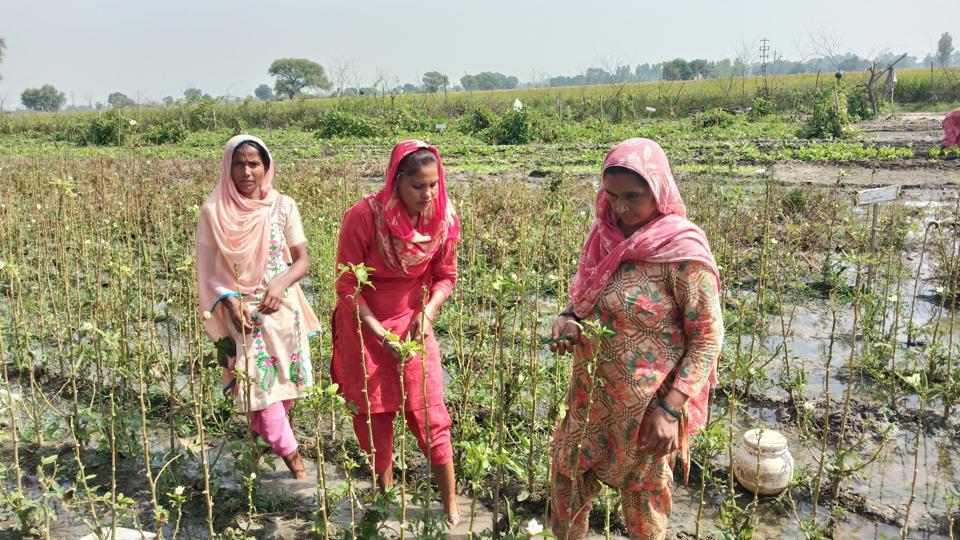
The women worked as labourers before they were trained in organic farming last year; this was to be a turning point in their lives. Now, their range of products include bottle gourd, ladies’ fingers, Saag and Palak etc. Of the 10 women, only two, Baljit Kaur and Harbans Kaur, are literate, having studied till Class 5. Their agriculture plan is intelligently designed, though, with proper division of work and daily collection of sales.
“The land was taken on an annual rent of ₹55,000. We paid this money from our pockets. This we have already earned. Of the 1.5 acre, half a acre is under paddy. We never used chemical on it. Now, we are planning to cultivate more crops on more land, next season,” Baljit told HT, adding that they sold bottle gourd at ₹40 a kg, ladyfinger at ₹50/kg and ‘Saag’ at ₹50/kg.
“We are cultivating vegetables naturally without any chemical spray. The business is making profit and the monthly collection, on average is about ₹20,000, with the expenditure at around ₹5,000,” said Harbans Kaur.
A Lehra resident Shaminder Singh said, “We are concerned about our health. Organic vegetables help us avoid diseases. I do not buy organic products daily, but am trying to develop the habit.”
Lehra agriculture officer Inderjit Singh Bhatti said women started organic vegetable farming in the area about seven months ago. He added that their crop can be certified as organic only after they have cultivated it for three years, as otherwise pesticide residues continue to be reported in lab tests. “It is new initiative and the women are working on cooperative farming concept,” Bhatti added.


