E-Paper



‘Rehablitate 229 Van Gujjar families from Rajaji Tiger Reserve’: Uttarakhand HC
The two-judge bench of the Uttarakhand high court summoned district magistrates of 7 districts - US Nagar, Nainital, Dehradun, Haridwar, Tehri, Pauri and Uttarkashi - to the court on January 12 to discuss claims of Van Gujjars under the Forest Rights Act.

 Prefer HTon Google


DEHRADUN: The Uttarakhand high court on Wednesday directed the state government to rehabilitate 229 families of Van Gujjars, or nomadic pastoralists, from Rajaji Tiger Reserve within one year and present a detailed report on its plans in this regard within two months. These 229 families were earlier left out of a rehabilitation plan because they were considered ineligible by the government.
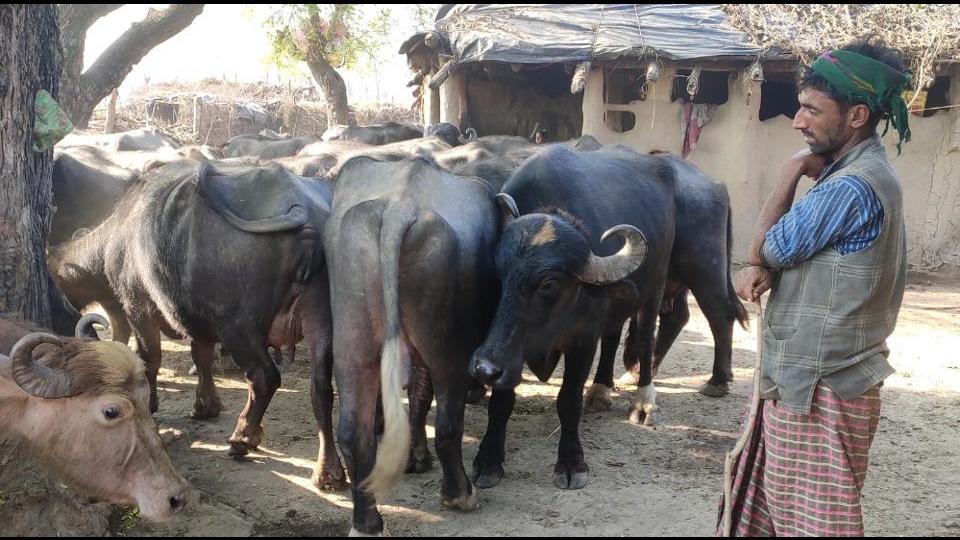
The division bench of chief justice RS Chauhan and justice NS Dhanik also ordered district magistrates of seven districts - US Nagar, Nainital, Dehradun, Haridwar, Tehri, Pauri and Uttarkashi - to be present in the court on January 12 to discuss claims of Van Gujjars under the Forest Rights Act (FRA).
The high court was hearing a public interest litigation (PIL) filed by Delhi-based NGO Think Act Rise Foundation through its secretary Arjun Kasana in 2019 to highlight the plight of the Van Gujjars. The court earlier clubbed other petitions related to Van Gujjars in this PIL.
The court also directed the state government to arrange for food and healthcare for the animals reared by Van Gujjars still living in the tiger reserve.
Kasana, who appeared in person, said the PIL seeks that the administration should declare Van Gujjars as beneficiaries under FRA, converting forest land occupied by them as revenue villages, providing land rights to them under FRA and quashing petty cases registered against them.
Kasana said the state government in its report to the court earlier said 1,393 families from Rajaji Tiger Reserve have been rehabilitated while 229 families were illegible for rehabilitation. “These 1,393 Van Gujjar families have been rehabilitated in Haridwar district”, he said.
Kasana said there are around 10,000 Van Gujjars living in the state who are facing different problems..
“The high court was not happy with the report of the state government and as such, it issued summons to district magistrates of seven districts to remain present in the court on Wednesday. They were all present virtually except Dehradun which was represented by chief development officer”, he said.
On March 17, 2021, the Uttarakhand high court directed the state government to re-constitute the committee set up earlier on its orders. “Until and unless a holistic approach is taken by including the competent persons/authorities within the committee, the constitution of the committee would merely be a mirage and merely an eyewash,” the high court noted in its March order
The high court first ordered the state government to set up the committee on August 17, 2020 to come up with necessary steps needed to be taken for the rehabilitation and upliftment, and the rights, which can be given to the Van Gujjars under FRA. The state government on October 1, 2020 constituted the committee with chief forest conservator, wildlife as its chairman, but the court was not satisfied with the committee.
Kasana said in accordance with the March 2021 directions, the state government reconstituted the committee in June this year, with the mandate to look into the issues of Van Gujjars in the light of various laws and their rights and give its recommendations to the state government and submit a copy to the court as well.