E-Paper



Dhami ends VIP darshan. Bureaucrats, ministers can’t jump the queue at Char Dham
Uttarakhand chief minister Pushkar Singh Dhami said instructions have been issued to scrap the practice of VIP darshans at Char Dham. “We have made it the same for everyone,” he said

 Prefer HTon Google


DEHRADUN: Uttarakhand chief minister Pushkar Singh Dhami on Friday ordered the administration to abolish a long-standing practice of making special arrangements for the well-connected and the influential at the four Char Dham shrines.
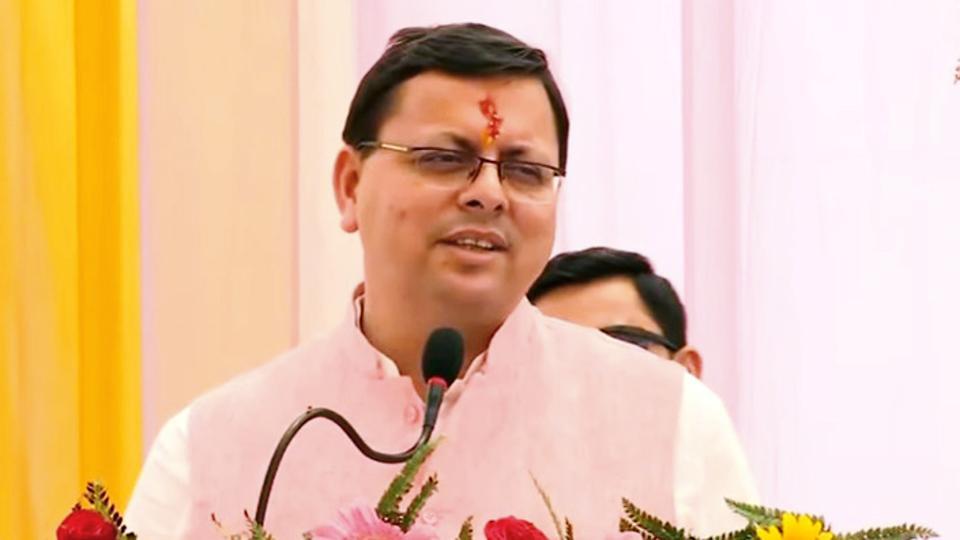
“We are abolishing the system of VIP Darshan at Char Dhams. There will be no separate categories or VIP system for having darshans at Char Dham anymore. We have made it the same for everyone,” Dhami told reporters on Friday, a reference to the practice that includes facilitating some pilgrims to jump the long queues at the shrines.
Dhami said police and administration officials have been instructed to conduct the yatra in a systematic manner and according to the rules so that pilgrims are not inconvenienced.
Ajendra Ajay, president of Badrinath Kedarnath Temple Committee, welcomed Dhami’s decision. “This is a very good decision of the chief minister Pushkar Singh Dhami. God is the same for everyone and no one should get special treatment to have darshan in the house of the God”, he said
Ajendra Ajay explained that in the VIP darshan system, the temple authorities were sent details of visits by ministers, bureaucrats or others and required to ensure that they did not have to wait in the queue like others for darshan. “Information about their visiting schedule is shared with the Char Dham temple management and according to the protocol, they can have VIP Darshan”
The instructions to scrap VIP darshan were issued after a review of the arrangements for the pilgrimage to the four Himalayan pilgrimage sites, Yamunotri, Gangotri, Kedarnath and Badrinath, which are collectively called the Char Dham and are one of the most revered religious sites in the Hindu tradition.
Nearly 3,00,000 pilgrims have already made the Char Dham pilgrimage since May 3 when the portals of Gangotri and Yamunotri shrines were opened. The portals of Badrinath and Kedarnath shrines were opened on May 6 and May 8 respectively. The four shrines remain shut for around six months every year, opening in summers (April or May) and closing with the onset of winter (October or November).
Over a million people have registered for the pilgrimage this year, up from the 4,40,000 pilgrims in 2021 and 3,10,000 in 2020 who came to the shrines. The four shrines received over 3.2 million pilgrims in 2019 before the Covid-19 pandemic and the consequent restrictions came into force.
The chief minister said that “the Char Dham yatra is our challenge, and the government is making every effort to streamline it”. “In the last two years, the yatra couldn’t happen properly due to Covid, so this time the number of pilgrims visiting the yatra has increased manifold”.
This year, Dhami also deputed two cabinet ministers Dhan Singh Rawat and Subodh Uniyal to oversee the yatra arrangements at Kedarnath and Badrinath, respectively.
Dhami also told the authorities to take adequate precautions in view of the death of some people during the pilgrimage but stressed that the deaths were on account of the health condition of the individuals, not due to chaos.