...
...
Next Story

A complainant can’t force accused to undergo narco test, says Delhi HC

The Delhi high court has held that a complainant has no indefeasible right to compel an unwilling accused to undergo a narco-analysis test, observing that consent is a personal and non-derogable safeguard available to the person subjected to such a test

Published on: Sep 23, 2026, 07:39:00 IST
Advertisement

The Delhi high court has held that a complainant has no indefeasible right to compel an unwilling accused to undergo a narco-analysis test, observing that consent is a personal and non-derogable safeguard available to the person subjected to such a test.
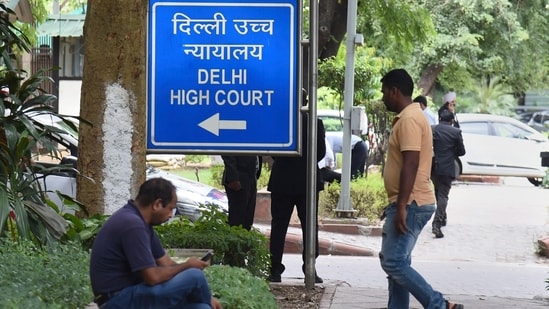
The court held that consent cannot be bypassed or given on an accused’s behalf, particularly over their express objection and at the instance of a third party.

Justice Purushaindra Kumar Kaurav, in a verdict delivered on September 17, dismissed a petition filed by a man challenging orders rejecting his plea to conduct narco-analysis tests on the accused in connection with the alleged murder of his daughter.

The court held that consent cannot be bypassed or given on an accused’s behalf, particularly over their express objection and at the instance of a third party.

“If, therefore, even an accused person cannot claim an indefeasible right to undergo the test on an application moved by himself, it necessarily follows, a fortiori, that no such right, indefeasible or otherwise, can be said to inhere in a complainant seeking to compel an unwilling accused to undergo the very same test. The consent contemplated in Selvi (supra) is a personal and nonderogable safeguard available to the subject of the test. It is not a threshold that can be crossed on the accused’s behalf, over his express objection, at the instance of a third party,” the court said.

Dissatisfied with the progress of the investigation, the man moved an application before the trial court seeking directions to conduct narco-analysis tests on all four accused arrested in connection with the case.

Two of the accused recorded statements before the trial court refusing to undergo the test. The trial court dismissed the application on January 8, proceeding on the footing that all three surviving accused had refused to undergo the test.

The high court, however, noted that while the trial court’s order expressly recorded the refusal of only two accused, its operative finding proceeded on the basis that all three surviving accused had refused.

The man subsequently approached the sessions court, which dismissed his revision petition on March 23 and upheld the trial court’s order. The sessions court held that an application seeking a narco-analysis test ought to have been moved by the investigating officer, who is primarily responsible for conducting the investigation, rather than by the complainant.

It further noted that compulsory administration of scientific techniques, including narco-analysis and polygraph tests, violates an accused’s fundamental right against self-incrimination under Article 20(3) of the Constitution, amounts to a violation of substantive due process, and constitutes an unwarranted intrusion into personal liberty.

In his petition before the high court, the man, through his lawyer Shivsahay, contended that the sessions court had failed to consider the peculiar facts and circumstances of the case.

He argued that the alleged murder took place inside a room, making the possibility of eyewitnesses virtually non-existent, and that scientific investigative techniques, including narco-analysis, should therefore be employed to uncover the truth. He further contended that, given the gravity of the offence, the accused persons’ consent to undergo such tests was irrelevant.

The Delhi Police, represented by additional public prosecutor Naresh Kumar Chahar, submitted that the petition was an abuse of process and that the trial court had followed due process.

The state argued that the application was not maintainable as it had been moved by the complainant rather than the investigating officer and that the accused persons could not be compelled to undergo the test after refusing consent.

The high court rejected the petitioner’s contention, relying on the Supreme Court’s rulings that involuntary administration of narco-analysis and similar tests violates the protection against self-incrimination and substantive due process.

The court also acknowledged the victim’s right to a fair trial and investigation, but held that this could not override the constitutional protections available to an accused.

Consequently, the high court found no “illegality, perversity or jurisdictional error” in the sessions court’s March 23 order affirming the trial court’s January 8 order, and declined to interfere with the concurrent findings.

The court, however, noted that a charge-sheet had since been filed and said the court concerned could examine all aspects of the matter. It added that the petitioner could, if he wished, seek further investigation or monitoring of the investigation.

 
Catch every big hit, every wicket with Crickit, a one stop destination for Live Scores, Match Stats, Infographics & much more. Explore now!

Stay updated with all top Cities including, Bengaluru, Delhi, Mumbai and more across India. Stay informed on the latest happenings in World News along with Delhi Election 2025 and Delhi Election Result 2025 Live, New Delhi Election Result Live, Kalkaji Election Result Live at Hindustan Times.
Catch every big hit, every wicket with Crickit, a one stop destination for Live Scores, Match Stats, Infographics & much more. Explore now!

Stay updated with all top Cities including, Bengaluru, Delhi, Mumbai and more across India. Stay informed on the latest happenings in World News along with Delhi Election 2025 and Delhi Election Result 2025 Live, New Delhi Election Result Live, Kalkaji Election Result Live at Hindustan Times.
SHARE THIS ARTICLE ON
Notifications

Get breaking alerts directly from the newsroom

Notifications are on!You'll be notified when news breaks