A study by the Central Pollution Control Board (CPCB) has established that accumulated sludge on the Yamuna riverbed and polluted water from drains upstream are contributing to frequent spikes in ammonia levels in the river, which often lead to disruption in Delhi’s water supply.
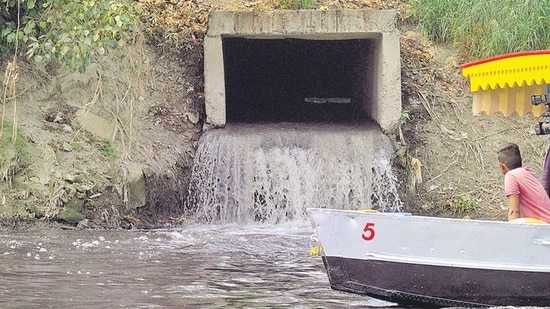
In a final report submitted to the Upper Yamuna River Board (UYRB), the CPCB has noted that the water holding pondage area, from which the Wazirabad and Chandrawal water treatment plants (WTPs) draw raw water, could be generating ammonia because of accumulating sludge.
Additionally, nitrogen-rich wastewater from drains in Haryana entering Yamuna has been identified as among the key factors why even the relatively cleaner stretch of the Yamuna between Palla and Wazirabad in Delhi has seen a deterioration in the water quality.
Dredging not enough to clean silt, sludge
In the report, CPCB further said the pollution watchdog cautioned that dredging — the process of removing silt and sludge by underwater excavation — of the reservoir alone would not resolve the problem. It said the situation would improve only when nitrogen levels in water discharged into the Yamuna through drains are brought within acceptable limits.
{{/usCountry}}In the report, CPCB further said the pollution watchdog cautioned that dredging — the process of removing silt and sludge by underwater excavation — of the reservoir alone would not resolve the problem. It said the situation would improve only when nitrogen levels in water discharged into the Yamuna through drains are brought within acceptable limits.
{{/usCountry}}“CPCB said that due to this, one-time de-sludging of the pond will not be effective, as the sludge carried by water containing high levels of nitrogen will again get deposited in the pond and will restore the problem,” said a government official.
CPCB has said that the situation will improve only when nitrogen levels in water coming from drains are brought within acceptable limits. HT has seen the report.
On August 12, HT had reported that the UYRB had asked the CBCB to undertake a comprehensive study of the disruption in the city’s water supply due to a spike in ammonia levels, particularly the sludge factor.
Disruptions to Delhi's water supply
The raw water from Yamuna feeds the treatment plants in Wazirabad and Chandrawal, which supply water to the central, north and Old Delhi areas. A rise in ammonia levels, which are indicative of high industrial pollutant levels, leads to disruption in the water supply.
Periodic spikes in ammonia levels have been a long-standing point of dispute between Delhi and Haryana. The Delhi Jal Board (DJB) argues that the industrial pollutants, such as dyes, chlorides and ammonia-based chemicals, flow from the Panipat industrial drain.
DJB also regularly cites the intermixing of industrial waste in Sonipat, where two canals carrying freshwater and industrial water run parallel to each other, separated by a sand wall of a few inches.
Also Read I Yamuna ferry service to be launched ahead of Chhath: Delhi CM Rekha Gupta
In its submission to the UYRB, Haryana informed the CPCB that multiple steps are being taken to reduce pollution loads in drains ending up in Yamuna, including construction of a sewage treatment plant. “The programme is being strictly monitored by the Union home ministry,” Haryana said in its submission.
Wazirabad pondage, a primary holding area formed by the Wazirabad barrage, spans approximately 250,000 square metres and has a depth of about 8.20 feet (2.5 metres).
Stay updated with all top Cities including, Bengaluru, Delhi, Mumbai and more across India. Stay informed on the latest happenings in World News along with Delhi Election 2025 and Delhi Election Result 2025 Live, New Delhi Election Result Live, Kalkaji Election Result Live at Hindustan Times.
Stay updated with all top Cities including, Bengaluru, Delhi, Mumbai and more across India. Stay informed on the latest happenings in World News along with Delhi Election 2025 and Delhi Election Result 2025 Live, New Delhi Election Result Live, Kalkaji Election Result Live at Hindustan Times.