Delhi recorded 197 days this year when the AQI was 200 or lower – the highest count of such days from 2016 -- bettered only by last year (227 days), when air quality was at its cleanest due to long spells under a lockdown. However, Delhi also recorded 24 “severe” air days so far this year, same as 2019 and only one less than 2016 (25), which was the worst year in terms of winter pollution, Central Pollution Control Board data shows.
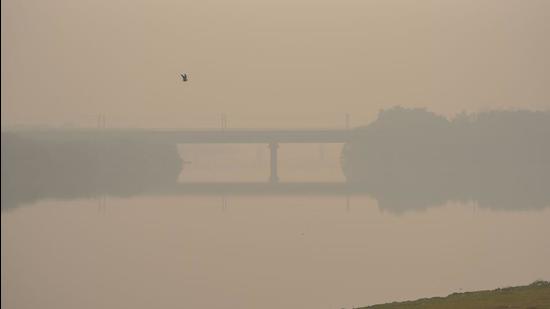
The trend indicates that while the city may have got some measure of control on its air quality in the non-winter months, the Capital is still unable to control smog build-up that plunges it into a public health emergency between November and January.
Till December 27 this year, Delhi witnessed a combined 164 days of poor, very poor and severe air, which, while being higher than 2020 (139), was lower -- and following a consistent trend -- when compared with 2019 (183 days), 2018 (205 days), 2017 (212 days) and 2016 (245 days).
However, Delhi recorded five prominent spells of “severe” air pollution this year. The first was between January 14 and 16 when three consecutive days of severe air led to the AQI touching 460 on January 15. Three spells were then recorded in November, the first occurred from November 5 till November 7, with the AQI peaking at 461; then from November 11 to November 13 with the AQI peaking at 471; and a four-day long spell from November 25 till November 28. The fifth prominent spell, and also the longest occurred in December this week, with six consecutive days of severe air recorded between December 21 and December 26.
While six severe days were recorded in January, 11 were recorded in November, and 7 have been recorded so far in December.
{{/usCountry}}While six severe days were recorded in January, 11 were recorded in November, and 7 have been recorded so far in December.
{{/usCountry}}An AQI between 0 and 50 is “good”, between 51 and 100 is “satisfactory”, between 101 and 200 is “moderate”, between 201 and 300 is “poor”, between 301 and 400 is “very poor” and over 400 is “severe”, according to the per CPCB index.
Delhi recorded its cleanest air day – the only day of “good” air this year, on October 18, with rain bringing down the AQI to 46. The total number of good, satisfactory and moderate air days doubled since 2016 (108), with 197 such days recorded so far this year, the highest after last year, which was impacted by lockdowns due to Covid-19.
Anumita Roychowdhury, executive director, research and advocacy says the long-term trend is good, with the total number of good, satisfactory and moderate air days increasing in Delhi. However, in winter, the smog build-up continues to remain prominent with prolonged spells being recorded in NCR. “What we are seeing is that air is becoming cleaner throughout the year, but we are still unable to control the smog build-up that happens from November onwards. While this is happening across all of northern India, it is lasting longer in NCR,” says Roychowdhury, attributing this year’s spell of 11 severe days in November to a late start in the stubble burning season, along with a delayed monsoon.
“Stubble burning which generally picks up pace from October 15 was pushed to a narrow window in early November as the withdrawal of the monsoon was quite delayed. This has made November more severe. However, December’s intense spell shows background emissions are high even without Diwali and stubble burning,” she said.
This year, October was the cleanest in the last seven years, with an average AQI of just 173. In comparison, November was the worst November in the last seven years, with an average AQI of 376 for the month.
Santosh Harish, Fellow at the Centre for Policy Research (CPR) says sustained efforts to switch to cleaner fuels and to eliminate or reduce certain sources of pollution are clearly showing up in the long-term trend, but even they are not enough to control winter’s pollution spikes. “While it is encouraging, data clearly shows we are unable to get rid of the winter smog. We have been unable to make any progress in terms of stubble burning in the region and it still feels we are reinventing the wheel in sectors such as vehicular pollution, construction and burning of waste,” says Harish.
Stay updated with all top Cities including, Bengaluru, Delhi, Mumbai and more across India. Stay informed on the latest happenings in World News along with Delhi Election 2025 and Delhi Election Result 2025 Live, New Delhi Election Result Live, Kalkaji Election Result Live at Hindustan Times.
Stay updated with all top Cities including, Bengaluru, Delhi, Mumbai and more across India. Stay informed on the latest happenings in World News along with Delhi Election 2025 and Delhi Election Result 2025 Live, New Delhi Election Result Live, Kalkaji Election Result Live at Hindustan Times.