With the Capital’s air quality index (AQI) inching towards the “severe” level since the start of this week, the Commission for Air Quality Management (CAQM) on Friday invoked curbs under Stage 3 of the Graded Response Action Plan (Grap) in Delhi-NCR ahead of expected further deterioration due to firecracker bursting.
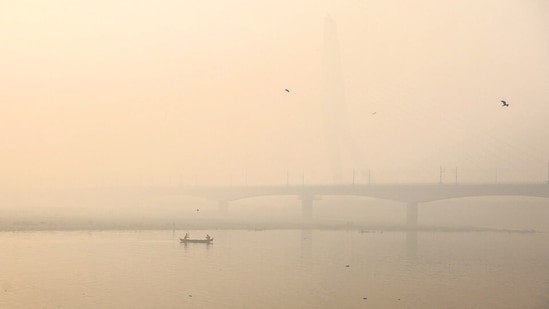
Delhi’s AQI was 382 on Friday, in the “very poor” zone, according to the 24-hour average released by the Central Pollution Control Board (CPCB) in its daily 4pm bulletin. It was only 18 points fewer than the threshold of “severe” AQI, and worse off than the AQI of 369 recorded the day before.
The CAQM said it took the decision to implement Stage 3 curbs after reviewing the pollution and forecasts provided by the India Meteorological Department (IMD) and the Indian Institute of Tropical Meteorology.“ All actions as envisaged under Stage-3 of the extant Grap be implemented with immediate effect,” the commission said.
The commission has directed agencies across the NCR, including pollution control boards of NCR states and the Delhi Pollution Control Committee (DPCC), to ensure strict implementation of the restrictions.
{{/usCountry}}The commission has directed agencies across the NCR, including pollution control boards of NCR states and the Delhi Pollution Control Committee (DPCC), to ensure strict implementation of the restrictions.
{{/usCountry}}To be sure, Stage 3 of Grap is usually enforced when the AQI crosses 401, when it is classified as “severe”. However, several individual monitoring stations have already crossed the threshold, as per CPCB data. Of 58 operational air quality monitoring stations, 27 recorded “severe” AQI.
Experts welcomed the move
Sunil Dahiya, founder and lead analyst at think-tank Envirocatalysts, said that while he agrees with the decision— particularly with Diwali approaching—emergency measures alone would not address the Capital’s persistent pollution problem. “Bringing in Grap Stage 3 early is the right call... but it also shows how quickly we slide into crisis every winter. Some stations are already in the 470s. Grap is an emergency brake; it can buy a few days, but it can’t fix a problem caused by year-round emissions from vehicles, industry, power plants, waste burning and crop residue,” he said.
Also Read I Delhi's air continues to worsen as AQI nears 400-mark
Under Stage 3, the CAQM has urged residents to walk or cycle for short distances, use cleaner modes of transport, combine short journeys and avoid unnecessary trips. People have also been advised to avoid coal and wood for heating and to postpone private gatherings that could increase traffic and outdoor exposure. House owners have been asked to provide electric heaters to security personnel and other staff to prevent open burning. The commission has also advised people to follow hybrid mode for primary school classes and work from home.
According to the Air Quality Early Warning System for Delhi, the air quality is likely to remain in the “severe” category from November 7 to 9.
Frequently Asked Questions
Why did the CAQM invoke Stage 3 Grap curbs in Delhi-NCR?
What was Delhi’s AQI on Friday?
What actions have residents been advised to take under Stage 3?
How long was the air quality expected to remain in the “severe” category?
Stay updated with all top Cities including, Bengaluru, Delhi, Mumbai and more across India. Stay informed on the latest happenings in World News along with Delhi Election 2025 and Delhi Election Result 2025 Live, New Delhi Election Result Live, Kalkaji Election Result Live at Hindustan Times.
Stay updated with all top Cities including, Bengaluru, Delhi, Mumbai and more across India. Stay informed on the latest happenings in World News along with Delhi Election 2025 and Delhi Election Result 2025 Live, New Delhi Election Result Live, Kalkaji Election Result Live at Hindustan Times.