
 E-Paper



Delhi airport records lowest carbon emissions: Study
Delhi airport is followed by the Kuala Lumpur airport (5.83 million tonnes), Tokyo’s Haneda Airport (6.53 million tonnes) and Dallas’s Fort Worth airport (7 million tonnes)

 Prefer HTon Google


Delhi airport records the lowest carbon dioxide (CO2) emission among airports handling over 60 million passengers per year across the world, a study has found.
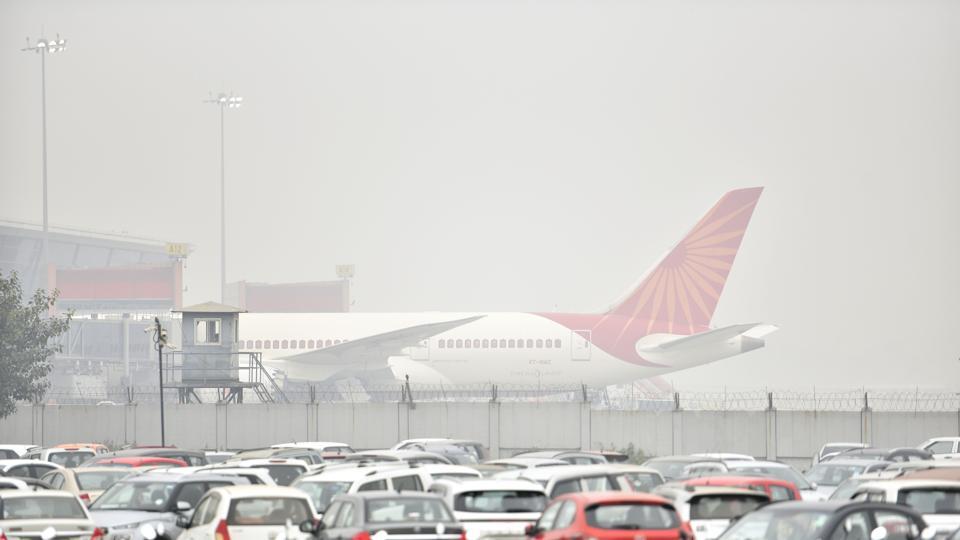
The study by ‘Airport Tracker’, a new online tool by non-profit organisations International Council on Clean Transportation, Overseas Development Institute, and Transport & Environment, showed that Delhi airport releases 5.53 million tonnes of CO2 annually, which is nearly half of the emissions at Singapore’s Changi airport, South Korea’s Incheon Airport, and the Frankfurt and Hong Kong airports, each of which produce over 10 million tonnes of CO2 per annum.
Delhi airport is followed by the Kuala Lumpur airport (5.83 million tonnes), Tokyo’s Haneda Airport (6.53 million tonnes) and Dallas’s Fort Worth airport (7 million tonnes).
The study analysed CO2 emissions by aircraft and passenger-related movements at 1,300 largest global airports that account for over 99% of the global airline traffic.
The airport operator, Delhi International Airport Limited (DIAL), said the airport has adopted the globally recognised Airport Council International’s (ACI) Airport Carbon Accreditation framework which helps airports to manage their greenhouse gases effectively.
Among the measures taken to reduce CO2 emissions include the use of renewable energy through its 7.84 MW solar plant on the airside, usage of green building concepts, using low emission technologies and electric vehicles, among other. More recently, the airport has adopted a green taxiing device – the Taxibot -- which allows aircraft to be taken for taxiing without switching on the plane.
As part of its expansion, Terminal-1 of the airport, which is being redeveloped, is also being built as per LEED green building standards -- a green rating system -- which includes efficient lighting systems and a double glassed façade.
It is also developing an elevated Eastern Cross Taxiway (ECT), which will connect runway 29/11 to Terminal 1 for aircraft movement through a much shorter route, thereby reducing 55,000 tonnes of CO2 annually.
DIAL had recently announced that the airport has set a target of achieving ‘net zero carbon emission’ by 2030.



