
 E-Paper



Delhi Jal Board: No supply crisis, operations above capacity
Delhi government had warned of a water crisis on Wednesday, attributing this to the finance secretary for stopping the release of a tranche of funds to DJB

 Prefer HTon Google


A day after the Delhi government warned about an imminent water crisis due to Delhi Jal Board (DJB) funds being stopped, DJB officials on Wednesday said that the water supply in the city was normal and there was no shortage.
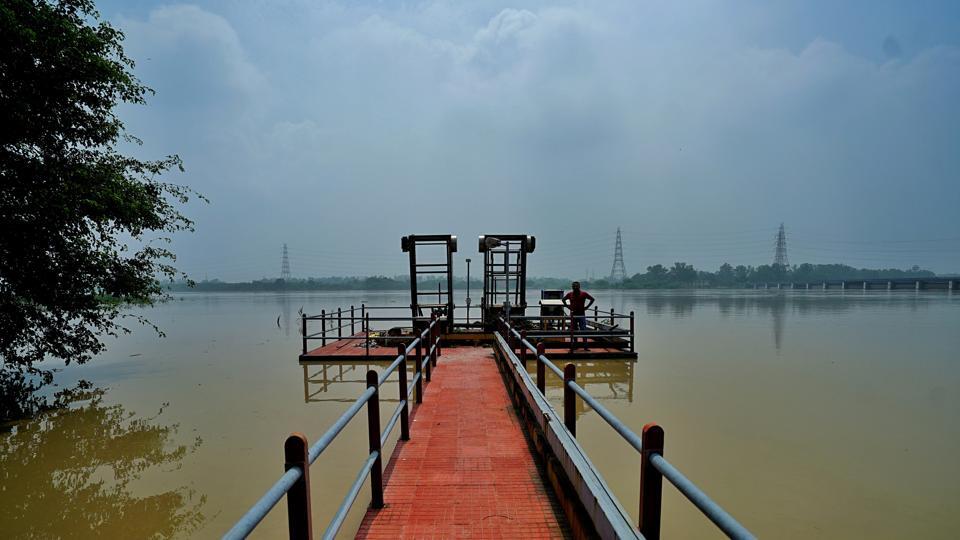
A Delhi Jal Board (DJB) official said that the water utility has supplied 1003.6 million gallons per day (MGD) of water between Tuesday and Wednesday which is above the normal capacity of the water treatment plants, adding that citizens should not be worried about a supply failure in the near future.
“The supply is above normal levels. The production from groundwater sources such as tube wells and ranney wells is around 135 MGD. DJB plants have supplied 868.66 MGD against the normal capacity of 821 MGD,” a senior DJB official said, requesting anonymity.
Delhi government had warned of a looming water crisis in the Capital on Wednesday, attributing this to finance secretary Ashish Verma for stopping the release of a tranche of funds to DJB. However, Verma said it was wrong to claim that water supply or sewage treatment would stop in the city.
Delhi water and finance minister Atishi had blamed Verma for stopping the second installment of the grant-in-aid and loans to the water utility and demanded his suspension. She also wrote to LG VK Saxena asking for his intervention, claiming that the national capital might plunge into a “man-made” water and sanitation crisis in the coming days. Verma said the government only provides loans and grants only for new works and funds for these projects are to be released based on progress on the ground.
DJB operates nine water treatment plants (WTP) at Chandrawal, Wazirabad, Haiderpur, Nangloi, Okhla, Dwarka, Bawana, Bhagirathi and Sonia Vihar which cumulatively supply around 998 MGD water to 20 million residents through a water supply network comprising of 14,355km long pipelines and 107 primary underground reservoirs (UGRs).
According to a DJB report, the Bawana plant supplied 20.08 MGD water against the capacity of 20 MGD, Bhagirathi pumped 114.43 MGD against 110 MGD, Chandrawal pumped 99.96 MGD against 94 MGD, Dwarka supplied 52.06 MGD against 50 MGD. The report added that the largest facility run by the Haiderpur plant supplied 242.68 MGD against a capacity of 216 MGD. The Nangloi plant supplied 44.85 MGD against 40 MGD capacity, Sonia Vihar was at 143.96 MGD against 140 MGD and the Wazirabad facility was at 134.9 MGD against the normal capacity of 131 MGD.
A second DJB official said that the raw water supplies through the Yamuna, Munak canal, DSB canal and Upper Ganga canal were also normal. “We normally face shortage in summer and during ammonia spike events due to high industrial pollution. Currently, the water supply parameters are normal,” the official said.
According to the physico-chemical analysis report of water samples in the 13 units of the WTPs, a copy of which HT has seen, the water parameters including pH, turbidity, chloride, TDS, and ammonia, among others, were normal too.
A third DJB official told HT that the more advanced plants of DJB are automated so they need minimal staffing but older plants like Chandrawal require manpower. “People are needed in labs, security and other services. The operational expenses are needed for consumables but the core operations are run by DJB staff,” the official said. He added that the permanent DJB employees have been paid their salaries but the contractors are facing delays which might impact the peripheral services.
A Delhi government spokesperson did not respond to queries seeking comments.


