E-Paper



DJB raises embankments at its three plants along Yamuna in Delhi
Water minister Saurabh Bharadwaj said enough preparations were made to ensure that the three plants continue to operate, even if Yamuna swells

 Prefer HTon Google


With the Yamuna breaching its evacuation level of 206m on Sunday, the Delhi Jal Board started raising embankments and walls around critical equipment at three of its major water treatment plants most vulnerable to inundation — Okhla, Wazirabad and Chandrawal.
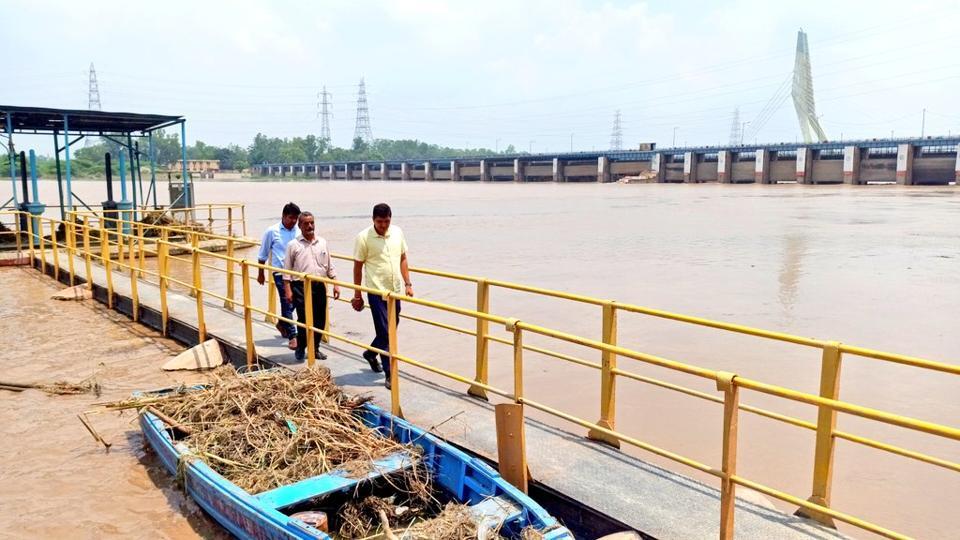
Water minister Saurabh Bharadwaj said the water utility has made enough preparations to ensure that the three plants continue to operate, even if Yamuna swells to an “impractical and improbable water level” of 209m.
Earlier this month, operations at the three plants had to be suspected after they were inundated following the water level of the Yamuna rising to 208.66m on July 13. This move led a drop of around a quarter of Delhi’s daily water supply of 998 million gallons a day (mgd), impacting 20 assembly constituencies in north, central, and west Delhi.
Inspecting flood preparations on Sunday, Bharadwaj said, “DJB teams have carried out a survey of all the vulnerable points from where water can enter these facilities, and reinforcement has been carried out through embankments and raising the walls. Last time, the floodwater had entered the pump rooms when the Yamuna levels crossed the 208-m level and three water treatment plants were shut down but this time we have started preparations in advance.”
The minister added that residents of low-lying areas along the Yamuna should continue to stay at relief camps. “The government has made arrangements for water, food, medicine in these relief centres. We have once again started munadi (public announcements) in the flood-prone vulnerable areas. If people have returned to such areas, they should come back to the relief camps,” he said.