New Delhi
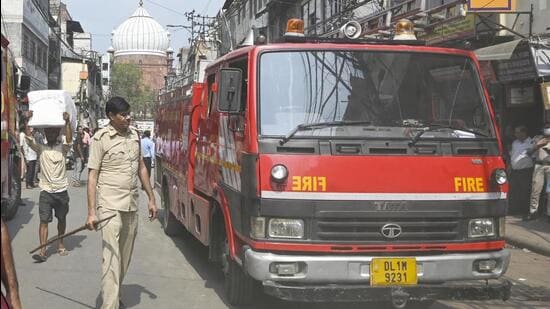
Delhi will get its first underground radiation-shielded chemical, biological, radiological and nuclear (CBRN) command centre, under a five-year road map prepared by the Delhi Fire Service (DFS).
Officials aware of the matter said that the command centre will be a part of the new DFS headquarters, which would come up at the site of its current headquarters, in Connaught Place. To be sure, the building was declared dangerous by the Public Works Department (PWD) years ago.
A senior fire department official, who did not wish to be named, said, “It’s a part of the five-year plan. We are yet to move out of this building. This command centre will be built in the basement of the new building.”
Chief Fire Officer AK Malik said that the CBRN facility is a part of the five-year plan under the broader 25-year roadmap that has been submitted to the home department. The facility will coordinate operations with the three disaster response centres at Nehru Place, Laxmi Nagar and Rohini.
“The fire department is always among the first responders during major disasters. A dedicated CBRN command centre will significantly improve preparedness for high-risk incidents by enhancing coordination between agencies and ensuring faster operational response,” Malik said.
The DFS plans to nearly triple its station network, expand its workforce almost tenfold, and deploy AI-assisted dispatch systems, drones and predictive analytics under the 25-year overhaul.
{{/usCountry}}The DFS plans to nearly triple its station network, expand its workforce almost tenfold, and deploy AI-assisted dispatch systems, drones and predictive analytics under the 25-year overhaul.
{{/usCountry}}The 23-page official roadmap, reviewed by HT, notes that, with the city’s emergency incident calls nearly doubling over the last two decades, emergency response infrastructure has failed to keep pace with rapid urbanisation. The primary objective, therefore, is to sharply reduce emergency response time, at least from 12-15 minutes to under 7 minutes in congested areas by around 2030.
Towards this, it proposes increasing fire stations from the current 71 to 120 by 2032, 136 by 2036, 156 by 2041 and 196 by 2051.
Stay updated with all top Cities including, Bengaluru, Delhi, Mumbai and more across India. Stay informed on the latest happenings in World News along with Delhi Election 2025 and Delhi Election Result 2025 Live, New Delhi Election Result Live, Kalkaji Election Result Live at Hindustan Times.
Stay updated with all top Cities including, Bengaluru, Delhi, Mumbai and more across India. Stay informed on the latest happenings in World News along with Delhi Election 2025 and Delhi Election Result 2025 Live, New Delhi Election Result Live, Kalkaji Election Result Live at Hindustan Times.