Air pollution-related restrictions on construction and demolition activities in the National Capital Region (NCR) and the ban on entry of diesel and petrol trucks into Delhi were lifted by the Commission for Air Quality Management (CAQM) on Monday, citing an improvement in air quality and a good wind speed forecast by the India Meteorological Department (IMD).
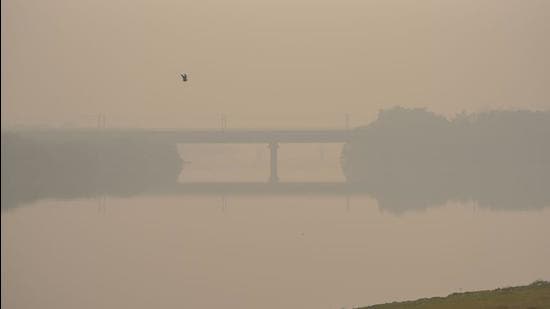
However, the next day, Delhi’s air quality index (AQI) plunged into the “severe” category for the first time since December 2, and since then, it has remained “severe” with Delhi on Thursday logging the third consecutive day when the AQI was over 400.
According to the Central Pollution Control Board (CPCB) data, Delhi’s 24-hour average AQI on Thursday was recorded at 423, up from Wednesday’s 407, and the highest since December 2 when the city logged an AQI of 429. IMD said on Thursday that the situation may not improve till Sunday, when light rain is likely to help improve air quality.
Weather and environment experts have said that a mix of factors may have led to the worsening of air quality, including lower-than-expected wind speed and a poor assessment of the impact of lifting restrictions.
Tanushree Ganguly, Programme Lead at the Council on Energy, Environment and Water (CEEW) said a minor improvement in air quality was seen between December 17 and 19, but the PM2.5 and PM10 concentrations began to increase from December 20, the day the restrictions were lifted.
{{/usCountry}}Tanushree Ganguly, Programme Lead at the Council on Energy, Environment and Water (CEEW) said a minor improvement in air quality was seen between December 17 and 19, but the PM2.5 and PM10 concentrations began to increase from December 20, the day the restrictions were lifted.
{{/usCountry}}“The average PM2.5 levels have been in the ‘very poor’ to ‘severe’ category since December 20. CEEW’s analysis of meteorological parameters suggests that the ventilation index has been on the lower side since December 20, preventing the dispersion of pollutants,” said Ganguly.
“Proactive directions by the CAQM on using air quality and meteorology forecasts are indeed steps in the right direction, but there is a need to calibrate actions on the ground as per the source contributions forecasted by the models. Dust and waste burning continue to dominate locally. Therefore, resuming activities at large construction sites might not be ideal unless authorities ensure stringent implementation of dust suppression measures,” she added.
Despite three consecutive “severe” days, no restrictions were reimposed by CAQM on Thursday, however an official, on condition of anonymity, said that situation was being “closely monitored”.
Anumita Roychowdhury, executive director, research and advocacy at the Centre for Science and Environment (CSE), said forecasts should serve as the basis of removing or imposing restrictions, and it was now important to factor in the impact of each section in air pollution. “Severe air pollution happens when pollutants get trapped locally because of a combination of factors, which includes the lifting of restrictions and meteorological conditions. We need our forecasts to be even more reliable and guide action in the future,” she said.
Gufran Beig, project director and founder at the System for Air Quality and Weather Forecasting And Research (Safar), a central forecasting body, said the “mixing height” has been a key factor in the last three days, dropping down to 500 to 700 metres. Mixing height is an invisible boundary layer, which if low, can trap pollutants close to the surface. A mixing height of 1-1.5 kms is considered enough to allow dispersal of pollutants.
“Even with good wind speed, if mixing height is low, it can still trap pollutants and with temperatures remaining extremely low, the air has become heavier and made it difficult for pollutants to disperse,” said Beig, adding that air quality was unlikely to improve significantly, until light rain is recorded around December 27.
Delhi recorded a minimum temperature of 5.5 degrees Celsius on Thursday – two degrees below normal, while the maximum was 23.1 degrees, two notches above normal.
IMD scientist RK Jenamani said CAQM considered the forecast of good wind speed, which proved right, but other factors may have played a role in pollution spike.
“Wind speed has been good, and while it dropped slightly to 8-10 km/hr on Wednesday, it stayed between 10-14 km/hr on Thursday. We have not seen calm winds during this period,” Jenamani said.
“A drizzle may be recorded on the night of December 26, with parts of Delhi receiving light showers the next day too. In the higher reaches, there will be snowfall,” he said.
Stay updated with all top Cities including, Bengaluru, Delhi, Mumbai and more across India. Stay informed on the latest happenings in World News along with Delhi Election 2025 and Delhi Election Result 2025 Live, New Delhi Election Result Live, Kalkaji Election Result Live at Hindustan Times.
Stay updated with all top Cities including, Bengaluru, Delhi, Mumbai and more across India. Stay informed on the latest happenings in World News along with Delhi Election 2025 and Delhi Election Result 2025 Live, New Delhi Election Result Live, Kalkaji Election Result Live at Hindustan Times.