
 E-Paper



Delhi’s bulk waste generators ignore norms, fined ₹85 lakh
The civic body is now focusing on penalising those that generate more than 100kg of municipal waste per day.


Despite multiple warnings and public notices issued by the Municipal Corporation of Delhi (MCD) over the last year, bulk waste generators (BWGs) in the city are still not complying with waste processing norms.
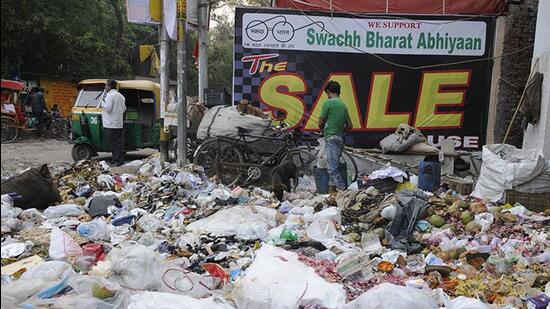
In an attempt to reduce fresh waste from BWGs from being dumped on landfill sites, the civic body is now focusing on penalising those that generate more than 100kg of municipal waste per day.
A senior municipal corporation official said that so far only 3,749 BWGs have registered with the MCD and the civic body has issued more than 32,000 challans, worth more than ₹85 lakh, over non-compliance of waste rules to violators.
“Bulk Waste Generators are entities such as commercial establishments, RWAs, hotels, banquet halls, hospitals, residential societies and institutions that generate more than 100 kilograms of waste per day. The real count of the bulk waste generators in the city is much, much higher and if BWGs start composting and on site processing it can reduce a load on the saturated landfill sites,” official said.
According to the Solid Waste Management rules, such bulk waste generators are responsible for segregating waste at the source, processing wet waste in-situ, and handing over only dry waste. At a time when the city is struggling with dumping of fresh municipal waste on its oversaturated landfill sites, the compliance by the larger producers of waste remains abysmally low.
There are 12 zones under the MCD. Of the 3,749 registered bulk waste generators (BWGs), the highest number, 1,023, are in the South zone, followed by 522 in Central, 439 in Najafgarh, 406 in West, 309 in Keshavpuram, 284 in Shahdara South, 230 in Rohini, 205 in Sadar Paharganj, 188 in Karol Bagh, 59 in Civil Lines, 55 in Narela, and 29 in Shahdara North.
The action taken report by MCD states that 32,095 challans have been issued against the violators between April and July this year, amounting to ₹85,36,539. MCD data shows 3,542 challans worth ₹6.9 lakh were issued in April, 13,121 challans worth ₹31.19 lakh in May, 7,941 challans worth ₹26.28 lakh in June, and 7,491 challans in ₹20.97 lakh in July.
In November last year, the civic body launched a dedicated portal for the registration and monitoring of waste processing by such bulk generators. On February 17 this year, it reiterated that it was mandatory for the BWGs in the city to register with the civic body and ensure waste disposal as per the Solid Waste Management (SWM) rules and reduce the burden on landfill sites.
Earlier in May, HT reported how less than 50% of the even identified bulk waste generators (1,372 out of 3,073 units) have started decentralised on-site composting despite several warnings issued by the MCD and directives by the Supreme Court.
This included 1,886 Resident Welfare Associations; 377 hotels, resorts and eating houses; 234 malls/cinema halls and large commercial establishments; 154 Banquet halls; 97 educational institutes; and 185 under the ‘other’ category, such religious places, clubs and offices.
Stay updated with all top Cities including, Bengaluru, Delhi, Mumbai and more across India. Stay informed on the latest happenings in World News along with Delhi Election 2025 and Delhi Election Result 2025 Live, New Delhi Election Result Live, Kalkaji Election Result Live at Hindustan Times.


