
 E-Paper



Ecostani: BJP hopes Congress will cut into AAP’s core support groups in Delhi
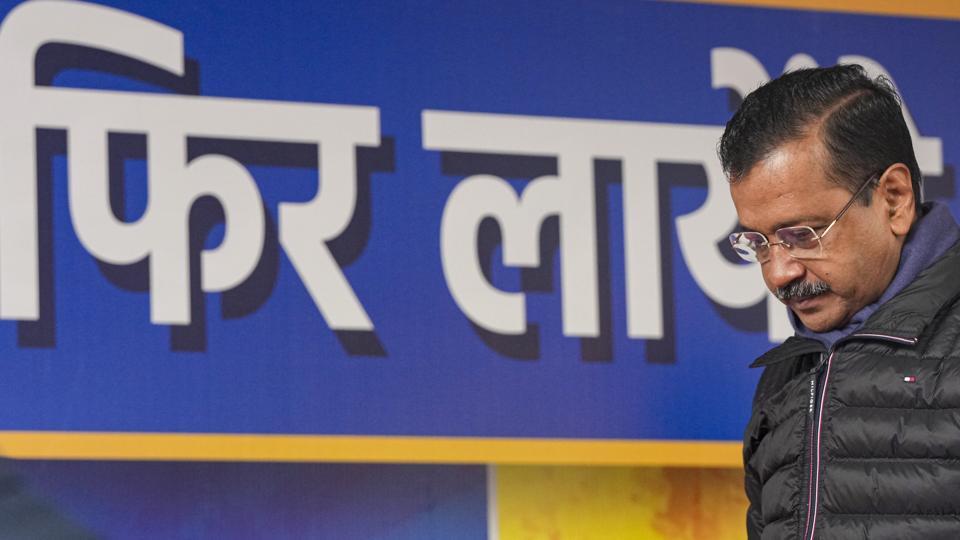
Since he resigned as CM in September, Arvind Kejriwal has tried to reboot AAP and has visited almost all 70 assembly constituencies, as he did in 2015.

 Prefer HTon Google


Ironical as it may sound, the opposition Bharatiya Janata Party (BJP) needs the support of its arch rival, the Congress, to edge out incumbent Arvind Kejriwal’s Aam Aadmi Party (AAP) from power in the upcoming Delhi assembly poll.
In Delhi, the BJP holds sway among 32% to 36% of the votes, which it can claim as its vote-bank. Its campaign can help the party to get another two to three percent votes as it happened in the 2020 assembly polls when the party got 38% of the votes polled, a six-percentage point jump as compared to previous assembly election.
The BJP has never fallen below 30% in Delhi assembly polls for three decades, which indicates a robust vote base. But, so far, it has lacked the all-critical edge to cross the 42% to 45% vote-share mark to form the government here. And, the reason is its poor performance among voters living in slums, unauthorised colonies and lower middle-class localities where the BJP is perceived as a party of upper castes and richer trader and business communities.
According to a Municipal Corporation of Delhi (MCD) note filed in the Supreme Court in 2012, around 49% of the Delhi’s population lives in slums and unauthorised colonies, which makes these Delhi residents a large and critical chunk of voters in the city. Importantly, in the decade since the MCD report, Delhi’s population in slums has increased much more than in regular colonies.
The voters in these impoverished colonies had earlier backed the Congress and are now seen as firmly behind AAP, the primary reason why power has eluded the BJP in the city of its birth since 1988. In Delhi, they vote as a class, and not as a caste, like they do when they go back to their native places in Uttar Pradesh, Bihar, Odisha and West Bengal, a vital difference in India’s predominant caste politics.
The top brass of the BJP has realised this for some time and has made efforts to woo them. The nomination of Manoj Tiwari, a popular Bhojpuri singer and actor, as Delhi BJP president was one such attempt to woo votes from UP and Bihar but it failed as he was considered an outsider.
The BJP-led central government has promised to provide permanent homes to those living in Delhi slums and on Saturday, home minister, Amit Shah, held a meeting with heads of slums in Jawaharlal Nehru Stadium in a bid to woo them. The party has held events in slums and unauthorised colonies, promising the residents 300 units of free power, more development and sanitation while trying to expose Arvind Kejriwal, who has carried a large number of developmental works in these colonies. However, the BJP lacks a strong leader representing people living in these clusters.
According to BJP party leaders, the party gets 10-15% votes from slums and aims to increase it to 25% in the February 5 elections. “This will bring us closer to winning Delhi,” a leader said, admitting, however, that getting a quarter of slum votes, where voting is high as compared to regularised colonies, would not be easy.
The BJP’s hopes the Congress, which was in power in Delhi between 1998 and 2013, would help it to replace AAP. In 2020, the Congress vote share had shrunk to less than five percent as its vote bank in slums and among Muslims shifted to AAP. The BJP estimates that this time the Congress party will increase its vote share to double digits or more on account of Muslims voting for the party in larger numbers as compared to 2020.
“If the Congress vote share increases to 15% or more, AAP will face defeat and we will be in a position to form the government,” a senior Delhi BJP leader said. He pointed at the 2013 assembly polls when the BJP cornered 33% vote share and bagged 31 of the 70 assembly seats, becoming the biggest party. The Congress with one fourth of the votes got eight seats and AAP with about 30% vote share, got 20 seats. Subsequently, the AAP and the Congress party came together to form the government for about a year.
The AAP too has understood this poll calculation and has therefore reached out for the support of INDIA bloc parties to ensure that the Congress party gets isolated in the national capital and its votes are not divided; the Congress party has so far done nothing to counter this narrative. So far, the Trinamool Congress, the Samajwadi Party, Shiv Sena (UBT) and National Conference has announced its support for AAP in Delhi, which also raises question over the future of INDIA bloc. This, of course, could be an electoral strategy and after the Delhi election the INDIA bloc parties could come together once again to contest the October-November 2025 Bihar polls as one entity.
As of now, it appears that the AAP’s vote bank is largely intact in slums and unauthorised colonies even though the party may lose some of its votes among the middle class because of poor infrastructure development in regular colonies in the past five years. Many in slums and unauthorised colonies believe in Kejriwal’s narrative that the BJP-led Central government did not allow him to work by registering cases against him, his ministers and MLAs in the past five years.
The charge of corruption has not stuck with Kejriwal as much as BJP would have liked. Since he resigned as chief minister of Delhi in September 2024, Kejriwal has tried to reboot the party and has visited almost all 70 assembly constituencies as he did in 2015. However, Kejriwal realises that 2025 assembly poll is the toughest electoral battle for him and the loss could mean the end of the road for his party.


Stay updated with all top Cities including, Bengaluru, Delhi, Mumbai and more across India. Stay informed on the latest happenings in World News along with Delhi Election 2025 and Delhi Election Result 2025 Live, New Delhi Election Result Live, Kalkaji Election Result Live at Hindustan Times.


