
 E-Paper



New Delhi wakes up to an air quality of ‘very poor’ category on Diwali morning
Residents of New Delhi woke up on Diwali morning to an air quality of “very poor” category, recording an air quality index (AQI) of 334 at 7am on Thursday. On Wednesday, the average AQI was slightly better at 314, also in the “very poor” category

 Prefer HTon Google


Residents of New Delhi woke up on Diwali morning to an air quality of “very poor” category, recording an air quality index (AQI) of 334 at 7am on Thursday, according to Central Pollution Control Board (CPCB) data.
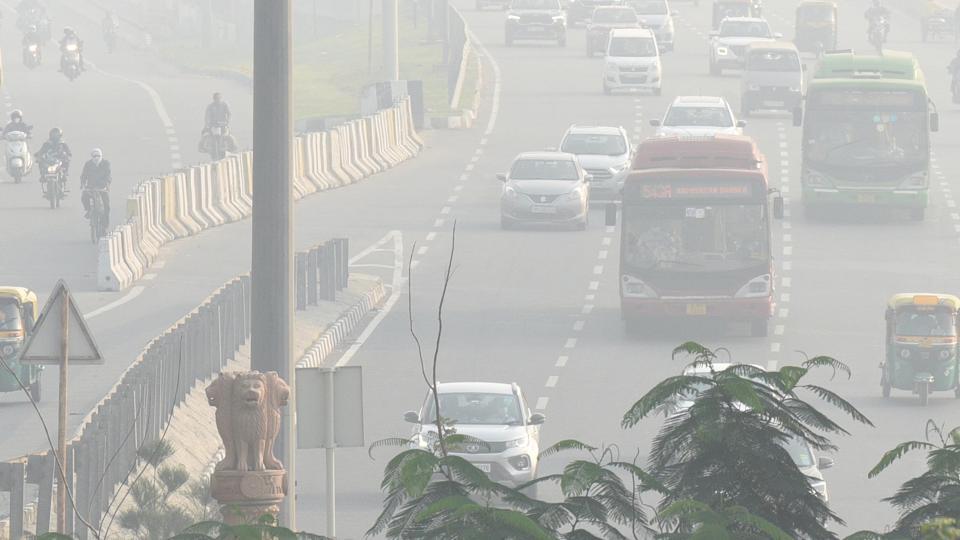
On Wednesday, the average AQI was only slightly better at 314, also in the “very poor” category.
The Capital city’s AQI is expected to cross 350 and be at the higher end of the “very poor” category later on Thursday, agencies forecast.
While the bursting of firecrackers will not be a major contributing factor to the worsening air quality, since it is expected to be under control, stubble burning is likely to have an impact as it could pick up from Thursday.
Also Read: 51% cut in stubble burning incidents this season
Its contribution to the AQI is expected to range from 20-40 until Saturday.
An increase in wind speed may give New Delhi welcome relief from Friday night onwards, with winds of 20-30 km/hr likely on Saturday and Sunday, the Indian Meteorological Department (IMD) said.
CPCB data shows New Delhi recorded its most polluted Diwali on October 31, 2016 when the AQI had touched 431, which falls in the “severe” category.
Last year on Diwali, despite a blanket ban on firecrackers, an AQI of 414 - “severe” – was recorded, making it the second most polluted Diwali in six years.
However, Diwali was marked much later last year, on November 14, by when the impact of stubble burning was at its peak.


