
 E-Paper



Scroll up: Academics are giving pop culture the PhD treatment on Insta

 Prefer HTon Google


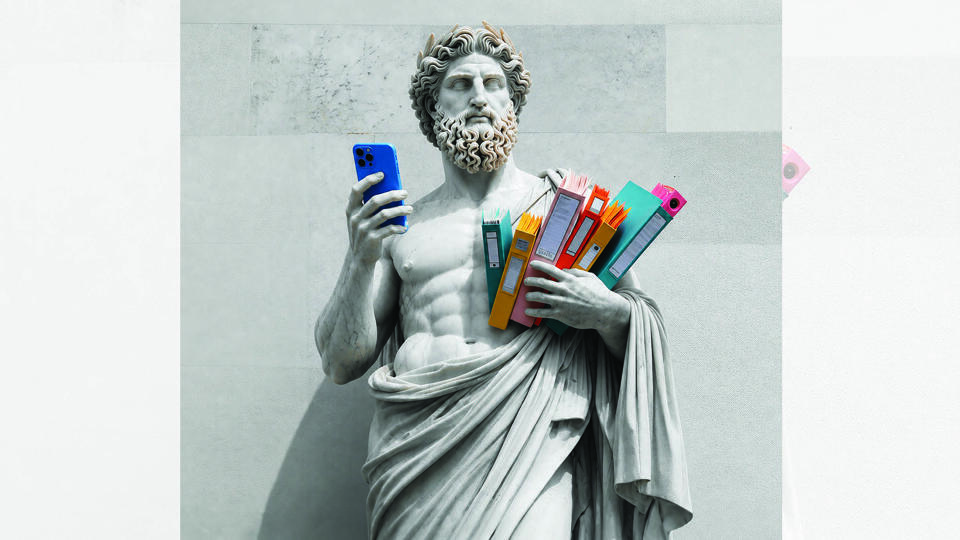
A new breed of scholar-fluencers are treating Bollywood gossip, reality TV and memes as case studies for philosophy, sociology and feminist theory. Take notes
How do we solve the problem of Urvashi Rautela? She claims to be the “first Indian woman to win Miss India Universe twice” and “the first Indian actress to be complimented by Leonardo DiCaprio”. Both dodgy claims. But the breeze with which Rautela brags about them is what fuels the memes, what keeps her in the limelight. And it’s surprisingly what keeps Prerna Subramanian’s academic juices flowing.
Subramanian is assistant professor at OP Jindal Global University, where she teaches interdisciplinary courses on mobility justice, feminist media and urban studies, and writing. On Insta as @DoctorOfPopCulture, she refers to Rautela as the Tall Poppy of Indian pop culture. The term comes from an ancient Roman story, in which king Lucius Tarquinius Superbus chopped off the tallest poppies in his garden to signal that even the most powerful people were not invincible. Today, it refers to society’s tendency to cut down people who are too confident.
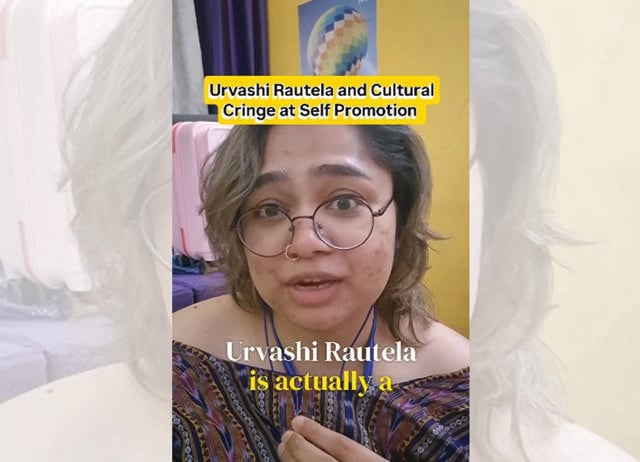
Subramanian’s other explanation for Rautela’s appeal: She’s a “folk devil”. This is a more recent term, coined by South African-British sociologist Stanley Cohen. It refers to the person we collectively turn on, when everything is spinning out of control – basically the whipping boy. Her Reels weave in philosopher Michel Foucault’s theories about a neoliberal individualistic society when she demonstrates that Rautela, desperate to stand out, is simply echoing the fantasies of our society.
Class is not dismissed. Stay back. If Subramanian’s analysis seems both cerebral and slightly unhinged, consider how popular she is: 62K followers on Instagram, over 400 comments on a recent video about how Bollywood actors reacted to last month’s student protests on social media. She is part of an Instagram cohort of academics that’s dragging Hegel, semiotics and dialectics out of the dusty library and into the same universe as Kim Kardashian. How, exactly, did pop culture end up with a PhD syllabus?

Today I learnt
Nerds saw this coming. In the mid-2010s, fans were writing dissertations on Harry Potter, Supernatural and The Hunger Games on Tumblr, dissecting everything from queer subtext to class politics. YouTube was already the place for video essays about the feminist subtext in The Devil Wears Prada (2006). TikTok shrank those ideas into 60-second explainers before Instagram gave them a glossy, algorithm-friendly makeover. Actual academics signed on to show that the internet isn’t a distraction from culture, but is culture itself.
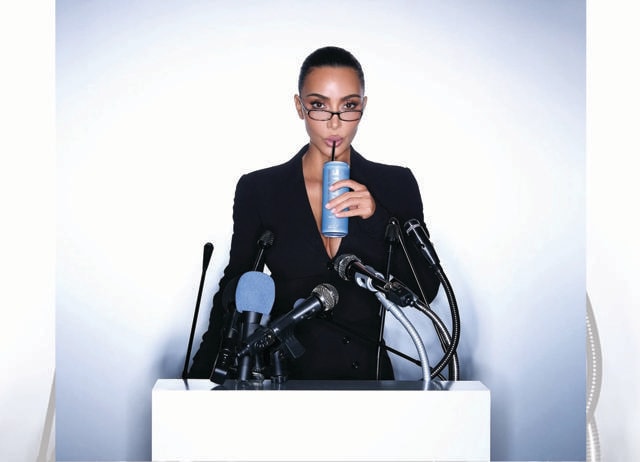
Fall into the rabbithole that is @KardashianKolloquium. American author and psychotherapist MJ Corey dissects the world through the Kardashians. Corey brings in the theories of French philosopher Jean Baudrillard, Jamaican-British sociologist Stuart Hall and German philosopher Georg Wilhelm Friedrich Hegel to explain how the family came to dominate popular culture. Her upcoming book, Dekonstructing the Kardashians, aims to show how Kim, Khloe and the gang tap into our “fundamental human anxieties around race, sex and death”.
Subramanian turns the same analytical lens on Netflix’s Desi Bling. She argues that the way Satish Sanpal and Dyuti Parruck treat their wives mirrors the tired sexism of WhatsApp jokes – nagging wife; trapped husband. She also assigns viewers extra reading: American philosopher Cornel West’s works, in which he argues that “justice is what love looks like in public”. In the comments, one follower, @Nandini_1978, says we need to remind ourselves of what “real love” looks like, and how women should heed how men treat them, outside of society’s expectations. Deep thoughts, garnished with Likes.
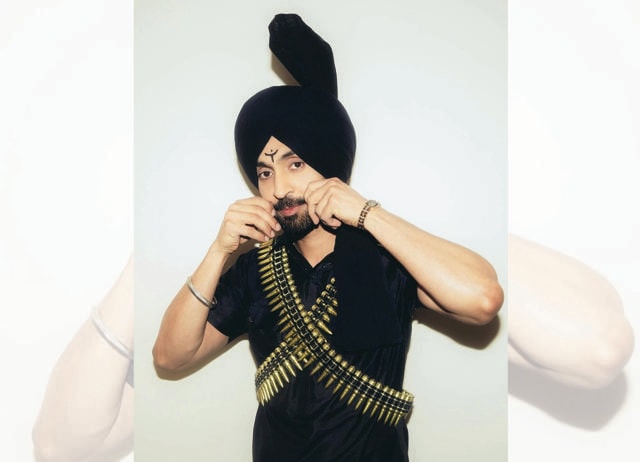
Maalvika Bhat (@MaalvikaBhat) who’s working towards a PhD in Computer Science and Communication at Northwestern University in the US, has been making other geeky connections. “Pop culture is often dismissed as frivolous, but it can be very revealing of our moral preoccupations,” Bhat says. In one of her Reels, which has about 180K views, she talks race, feminist theory and Diljit Dosanjh. She looks at how White women temper their appreciation of the conventionally attractive man with a tinge of embarrassment. That, Bhat says, is “so revealing of their anxieties and fears about who they might be attracted to.” It’s the kind of racism that casual observers would never notice.

Theory of everything
In one Reel, Bhat brings in Pull and Demand Inflation to explain why you might be crushing on someone at the moment: During inflation, “things aren’t getting better, but their price keeps increasing”. Similarly, at moments of personal flux, your “flood of unspent attention” is likely to be poured into the nearest person, not necessarily the best one. It’s the kind of relationship advice that makes more sense than Mercury being in retrograde. Her followers have used the corollary to build a wider network of friends and devote their energies to hobbies, rather than crushes.
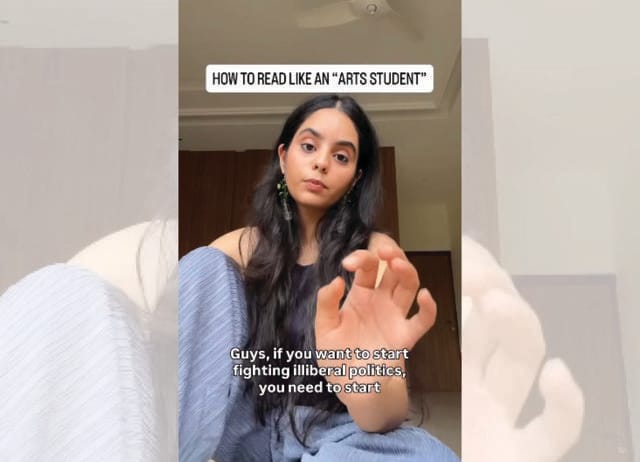
The academics keep busy – there’s enough happening in politics and pop culture every day to fuel 30-second Reels. Last month’s protests calling for the resignation of education minister Dharmendra Pradhan gave Padmakshi Sharma, a former legal journalist and independent researcher a great opportunity for a tutorial (@Padmakshi.Sh). Her video, How to Read Like an Arts Student helped viewers see the undercurrents of how the protests were playing out in the media: “Focus on the adjectives,” she told her 93.6K followers. “Is it a legal protest or an illegal protest? Is it a moving speech or an anti-national speech? Is there any evidence to back the adjective?” The comments are filled with viewers thanking her for giving them the tools to read the news more critically.
Do the honours
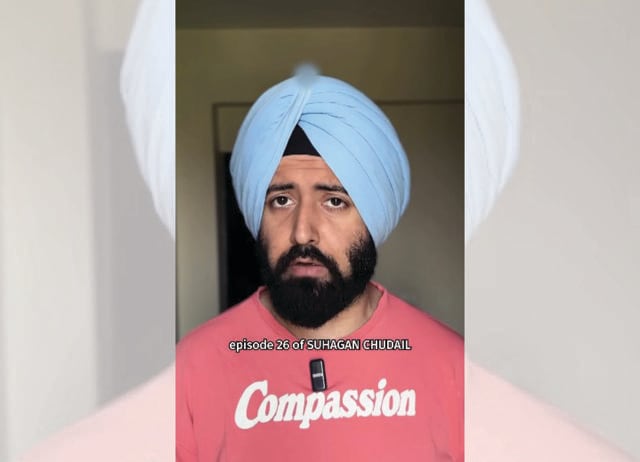
Other academics merely decode what you didn’t notice in mass-market shows. Nihal Singh Majithia’s (@NihalSinghMajithia) reviews of the 2024 Hindi fantasy drama Suhagan Chudail is one of Instagram’s unlikely hits. The show has dodgy CGI, melodrama and a witch (chudail) who hunts husbands to stay young forever. But Majithia, who studied art and history, approaches it the way he would a classic by Nolan or Kurosawa. When the chudail’s black cat is neutralised by a cloud of vermillion, he points out that the sindoor is a symbol of marital power. He picks up on the show’s redeemable qualities. “Even the chudail has agency to make decisions, to progress in her life and her career as a witch,” he says. Some of the Reels have 1.8 million views.
Corey recently linked Foucault’s Panapticon theory (that people can be controlled when they believe themselves to be under constant surveillance even if no one is watching) to Kylie Jenner’s endorsement of Meta glasses. The post has 2.7 thousand likes. In the comments, class is fully in session. “Kylie was non-consensually filmed constantly her entire childhood and is now shilling a product to non-consensually film everyone else constantly,” says one user, hoping to explain why she isn’t fazed by the creepy gadget. “It’s intergenerational transmission of abuse,” pipes in another.
Top of the class
Most academic influencers says their audience heavily skews female. “Society doesn’t really give women the space to talk about themselves. If they do, it’s dismissed as self-obsessed,” says Bhat. “Pop culture becomes a way of talking about the world — and often about themselves — without framing it that way.”
And women tend to be more participatory too. Under Majithia’s videos on Suhagan Chudail, viewers leave insights that he missed: That even as a witch, the woman character is expected to be self-sacrificing, while the male lead breezes through life on the privileges of his birth and gender. Like a university seminar, the conversation moves beyond what happens on screen to ask what it says about gender, power and the world outside the story. And both the professor and students have something new to learn.
Sanjana Manaktala, national initiatives and policy lead at the ed-tech non-profit Rocket Learning, follows a bunch of geeky pop culture accounts. She says that academics like Bhat and Subramanian “make cultural theory visible to people who otherwise might never encounter it” and “refuse to believe that what’s happening around us is ‘not that deep’.” The lessons are useful. “If we apply the same critical thinking we use to solve a maths or physics problem to the way human beings relate to one another, that’s essentially what pop-culture analysis is. It helps us understand ourselves. It will only become more important as AI becomes a bigger part of our lives.”
For Bhat, it’s a lighter approach to a more rigorous world of academia, where she has to research for months, if not years, before she puts something out. “Plus,” she adds. “It’s fun.”
From HT Brunch, August 8, 2026
Follow us on www.instagram.com/htbrunch


