E-Paper



Parts of north Delhi have city’s worst air quality, pollution control body says
To be sure, air pollution in Delhi has been at its worst in the first week of November this year, breaching levels not seen since January

 Prefer HTon Google


Jahangirpuri, Wazirpur, Alipur, Bawana and Mundka topped a list of most polluted areas among 39 localities in the national capital where air quality is monitored regularly, according to an analysis by the Delhi Pollution Control Committee (DPCC).
The DPCC marked the 39 localities based on the average AQIs reported at these stations between November 1 and November 8.
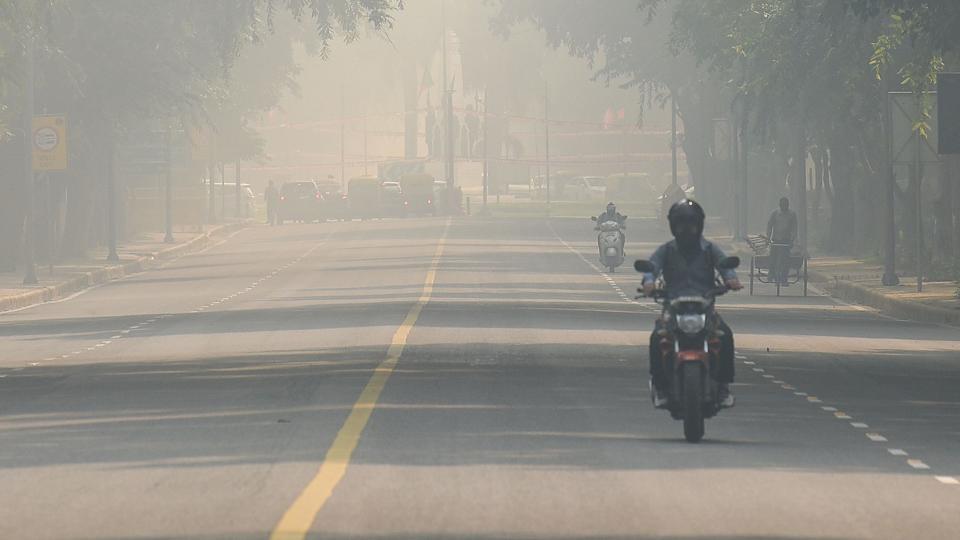
To be sure, the air in Delhi has been at its worst in the first week of November this year, breaching levels not seen since January. The city recorded the season’s first ‘very poor’ air day on November 2 — for the first time since June 9 — and its first ‘severe’ air day on November 5, for the first time since January 19, according to data from the Central Pollution Control Board.
The localities were marked on the basis of the number of ‘severe’, ‘very poor’ and ‘poor’ air days recorded during the first eight days of the month.
Jahangirpuri, Wazirpur and Alipur, all located in north Delhi, recorded five severe air days — from November 4 to November 8. Bawana, Mundka, Narela, Sonia Vihar and ITO recorded four severe air days each during this period — from November 5 to November 8, the analysis shows.
After recording the cleanest October air for at least six years, Delhi’s air quality quickly spiked to dangerous levels on November 1, according to DPCC.
Senior environment department officials explained that Jahangirpuri, which topped the list of the most polluted areas in the Capital, regularly records higher than city-average pollution readings primarily because of the location of the air quality monitoring station in the area. They said that open burning of garbage and biomass in nearby slum areas also adds to the high pollution levels in the area.

Officials attributed the toxic air in Wazirpur to an industrial cluster in the area. They also added that open garbage burning was rampant in Jahangirpur and Wazirpur, and acted as the primary contributor of particulate matter levels in these two areas.
Explaining the reasons behind high pollution levels in Alipur, the officials said it was emerging as a new pollution hot spot. They said high movement of heavy trucks and other traffic around Sanjay Gandhi Transport Nagar as well as the Bhalswa landfill could be the main factors responsible for the toxic air in the area.
With air levels consistently in the severe, and nearly severe zones in Delhi, health experts have advised residents to take precautions especially during morning hours when pollutants usually are at the highest levels. Doctors have warned that long-term exposure to the toxic air can lead to several health problems to people of all age groups, including increase in blood pressure, under-development of lungs in infants, and chronic lung conditions cancers, low immunity, and depression among adults.
Environment department officials said area specific action will be taken to curb pollution across the city. “There will be area-specific action that is required to fix pollution sources in these areas and the municipal agencies have been asked to sprinkle water, settle dust and look at any sources of pollution that can be fixed immediately,” a senior environment department official asking not to be named.
A senior Met department official said Delhi recorded the cleanest October this year since record-keeping because of above-average rainfall recordings and the late withdrawal of monsoon. However, it also delayed the stubble fires in Punjab and Haryana.
“Because of a late monsoon withdrawal, the window for stubble burning also shortened. This meant that the farm fires peaked around Diwali. The blatant violation of the ban on firecrackers this year and the contribution of stubble fire pushed the air in the severe zone. Also, northwesterly winds, low wind speed and falling temperatures are not helping with dispersal of pollutants, ” the official said.
Anumita Roychowdhury, executive director (research and advocacy), Centre for Science and Environment (CSE), said that to tackle specific, area-wise pollution concerns, Delhi needs localised air quality management plans.
“While there is a larger plan that is in place in the form of the Graded Response Action Plan (Grap) and the Delhi government’s winter action plan, we also need plans on the localised level to function simultaneously. Many of the pollution hot spots have very specific geographical or demographic make, which are unique only to that area. The solutions for these unique problems also need to be unique and targeted,” Roychowdhury said.