The Delhi government has issued and notified a new standard operating procedure (SOP) mandating authorities undertaking projects that necessitate the felling of 50 trees or more to obtain clearances from the Supreme Court-appointed Central Empowered Committee (CEC), under the Delhi Preservation of Trees Act (DPTA).
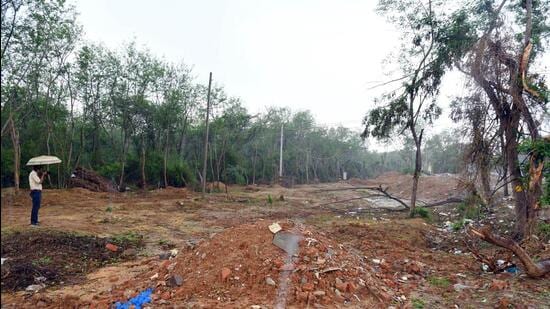
The SOP, issued as a gazette notification dated April 24 and submitted to the Delhi high court, modifies the earlier process, wherein only tree officers from the forest and wildlife department had the sole authority to assess such requests. Under the revised protocol, the CEC’s approval will now be required in all cases involving 50 or more trees, a move, officials said, aimed at ensuring transparency and compliance with recent court directives.
The change comes on the directions of the Supreme Court and Delhi high court, which have raised concerns over the indiscriminate felling of trees and inadequate implementation of DPTA by local authorities. The high court also asked the forest department to be involved in the planning stage of infrastructure projects, to ensure that ecological considerations are built in early.
While tree officers will continue to process requests for the felling or transplantation of up to 49 trees, all cases meeting or exceeding the 50-tree threshold will require review and approval from the CEC, in addition to a tree officer’s initial permission. The CEC currently reviews all permissions for commercial and tree-felling activities in forests across the country.
{{/usCountry}}While tree officers will continue to process requests for the felling or transplantation of up to 49 trees, all cases meeting or exceeding the 50-tree threshold will require review and approval from the CEC, in addition to a tree officer’s initial permission. The CEC currently reviews all permissions for commercial and tree-felling activities in forests across the country.
{{/usCountry}}“In case of any illicit felling of 50 or more trees, the CEC will be informed by the tree officer within twenty-four hours of receipt of such information,” the SOP said.
A senior forest official said there are multiple cases in both the high court and Supreme Court on tree and tree-related felling, stating this SOP is aimed at bringing clarity and a defined structure to the process. “The courts in the past have asked for an SOP to be devised. The new SOP clearly states for any instance where more than 50 trees will be felled, the permission will have to be given by the CEC, which normally takes a look at forest-related cases,” the official said.
According to the notification, tree officers will inspect the project site upon receiving an application and assess whether the felling or translocation of trees is essential. The officer is expected to recommend the bare minimum number of trees that must be removed, after carefully examining the site.
The CEC will, in turn, examine all relevant details of the proposal and determine whether the request should be approved as is, modified, or rejected. The committee will also have the power to revise the terms and conditions of any granted permission. The SOP has been formally concurred with by the CEC and is now in effect, officials added.
Bhavreen Kandhari, an environmental activist and a petitioner in multiple court cases, seeking the protection of trees in Delhi, said the SOP adds additional layers of paperwork, but these are mostly procedural checkboxes.
“Mature trees are often lost in the name of development, and tree transplantation and compensatory planting don’t make up for that loss. CEC’s role in reviewing large scale tree felling adds another layer of oversight but it faces the same challenges as the forest department of enforcement, transparency, and scientific compliances. That does not help in protecting the environment as our laws and constitution demands,” she said.
Stay updated with all top Cities including, Bengaluru, Delhi, Mumbai and more across India. Stay informed on the latest happenings in World News along with Delhi Election 2025 and Delhi Election Result 2025 Live, New Delhi Election Result Live, Kalkaji Election Result Live at Hindustan Times.
Stay updated with all top Cities including, Bengaluru, Delhi, Mumbai and more across India. Stay informed on the latest happenings in World News along with Delhi Election 2025 and Delhi Election Result 2025 Live, New Delhi Election Result Live, Kalkaji Election Result Live at Hindustan Times.